After transforming a Centre County farm, longtime restaurateurs prepare for what’s next
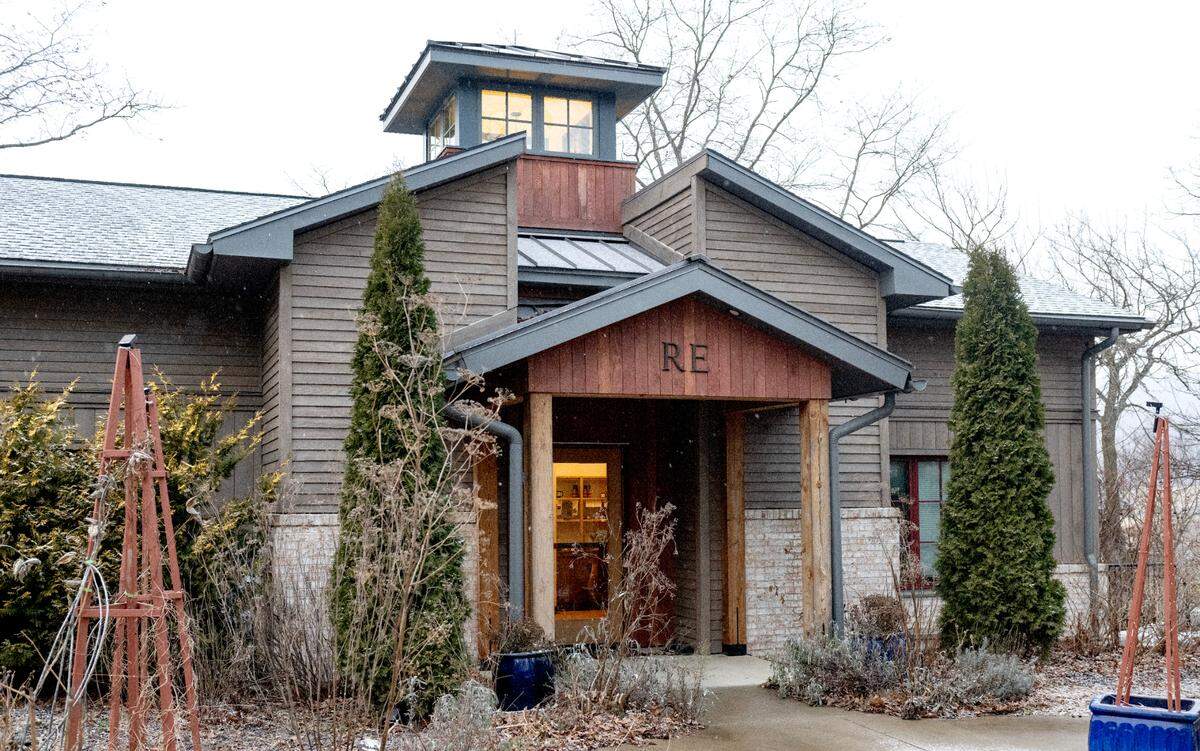
Driving the roller coaster hills of Fillmore Road near the State College Regional Airport, I was immediately taken back 40 years. I made a left off the road at the RE Farm sign and continued up the tree-lined lane to the soaring barn-like building that dominates the bluff overlooking the valley creased by Buffalo Run Road. The first time I drove up the lane was in 1983 to help my friend Leslie Shallcross cater the wedding of George Downsbrough, Jr. and Tamara Arpaszew.
It was a different age, but in some ways, very similar.
Back then, the senior Downsbroughs raised sheep and had an extensive garden surrounded by robust herb plants. Subsequent small dinner parties for the Downsbroughs relied on their own lamb, vegetables and herbs from their garden. The apple pies for dessert used apples from their trellised dwarf trees.
After the Downsbroughs, Tom and Sara Songer bought Windswept in 1992 and used it as a bed and breakfast, as well as a wedding venue. In late 2016, the 57-acre farm was purchased by Duke and Monica Gastiger, who had big plans for the property. The couple were long-time restaurateurs (Spats, The Rathskeller) and knew the hospitality business, but they wanted to raise awareness about just how good the food and the dining experience can be when you source your ingredients from your own terroir. They wanted to connect the diner with something beyond the food on the eclectic collection of thrift store china — with the land, the farm animals and vegetables, and the artistic interpretation of their kitchen staff.

The Gastigers envisioned a farm-to-table restaurant and were determined to manage the farm with rotational grazing and cover crops to enrich the soil naturally. The farm uses no chemical fertilizers, and the animals raised there nourish the soil. Though the original house on the property was taken down because it wasn’t energy efficient, the new building is based on its footprint. It is crafted with many recycled and repurposed building materials.
The floors were originally the State College North Building’s gymnasium floor — and required much planing and refinishing to make them suitable. Old wooden apple crates from Harner Farm are incorporated into useful shelving near the entryway, and a collection of old shovels comprise the “Shovel-iers,” the ceiling light fixtures in the main dining room. It is serious business here, with a touch of whimsy.
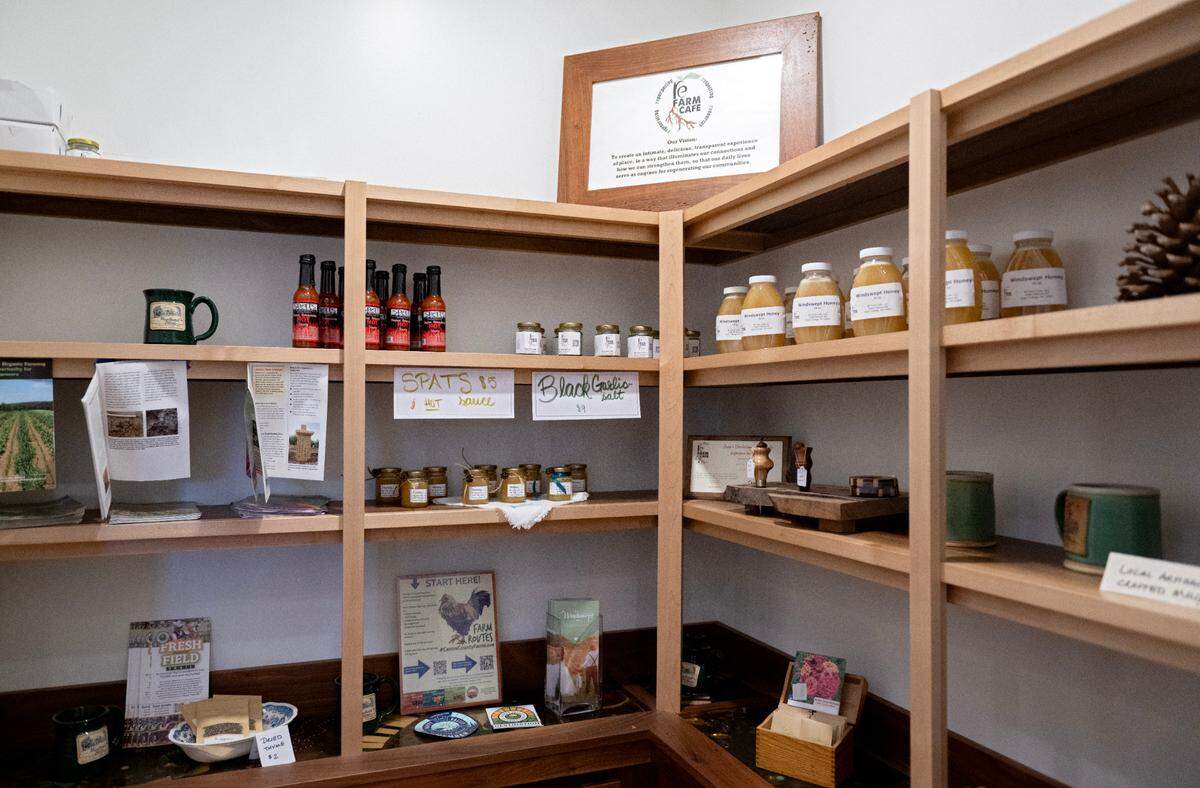
The walls in the dining rooms are bare, underscoring the minimalist decor and drawing the eye to the view out the windows, sweeping in every direction. Diners can sit outdoors in good weather, survey the 7 to 9 acres of vegetable production, and be glad that an enterprising farmer is taking care of business for them. Ten acres of woods on the property are dedicated to forest agriculture and shiitake logs guarantee a harvest even if the capricious wild mushrooms don’t emerge. A beekeeper manages the hives and produces the honey used on-premise. Five wells collect all the water used on the property, so the farm is its own water authority.
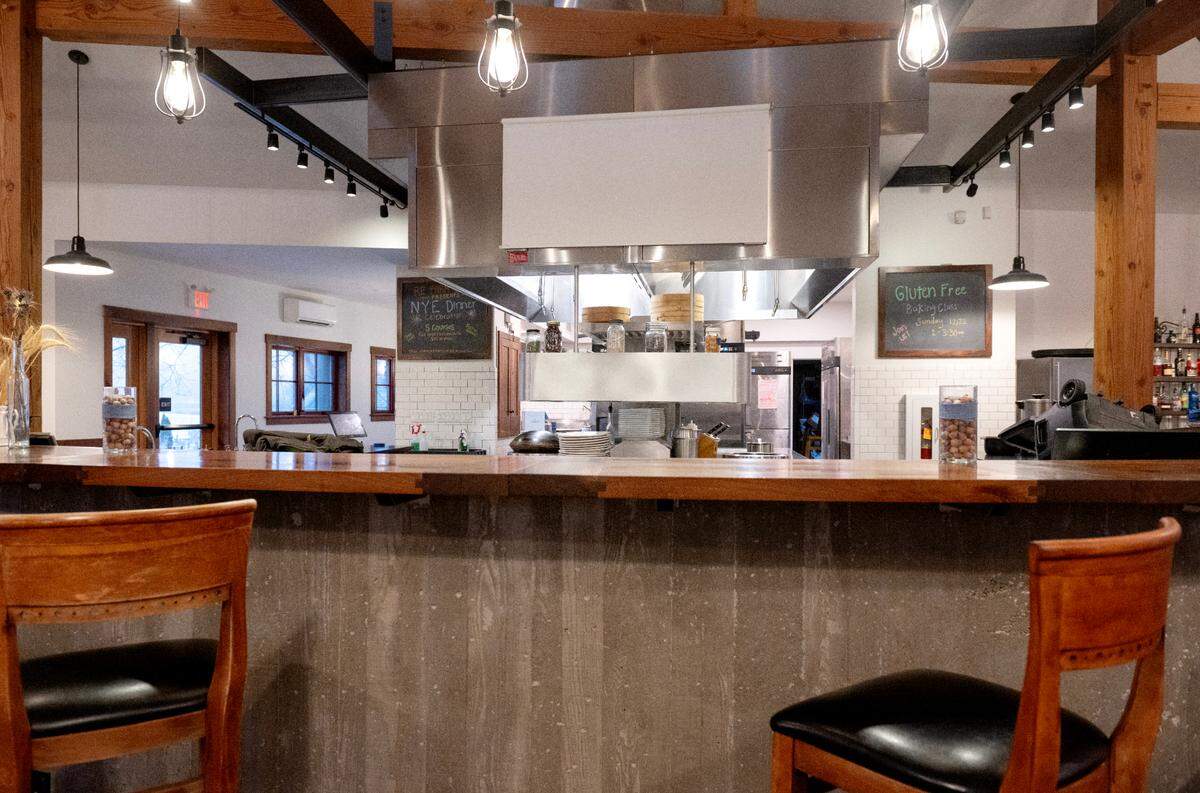
RE Farm partnered with West Penn Power to create a property that maintains net zero energy use as part of their agreement with the utility through their West Penn Energy Fund. Solar panels on the barn supply the energy needed, and a state-of-the-art induction open kitchen mitigates the heat that commercial kitchens typically generate. Diners can sit at a counter, watch the chefs (called composers at RE Farm) prepare their food, and engage with them during dinner. Induction cooking equipment heats food quickly through precise heat control provided by the high-performance glass-ceramic surface. The cookware is heated but not the surface or surrounding area, so very little heat escapes into the room.
When asked if he was a farmer in a former life, Duke Gastiger laughed and said, “I grew up in Brooklyn, so, no. Monica was trained as a landscape architect and now works full-time as a speech and language pathologist in the school district. We have learned a lot. We know all about tractors now. And we live near the greatest resource to help us figure out the agriculture part — Ag Extension at Penn State.”
Duke and Monica Gastiger are setting the stage to ease into retirement, but not any time soon.
“We look forward to passing the baton to the next owner to build on the foundation of what we have established here,” said Duke, standing at the window of the RE Farm dining room, his arm indicating the pastures, fields, and gardens at rest on a cold winter day in January, “but we hope that the next owner shares our vision of sustainability and repurposing. We have really good people that work here, from all different backgrounds, to make this happen. From June to November most of the products are from our farm or other local farms.”
RE Farm, 1000 Fillmore Road, State College, is open Thursday from 5-10 p.m. and Friday and Saturday from 5-11 p.m. Sundays are often busy with cooking classes, such as a Lebanese class on Jan. 26 with guest chef Ghadir and head composer Brenda Palmer. A vegan cooking class and a ravioli workshop are also scheduled on Sundays in the next few weeks. Check out their website for more info. The property is also available for special events and is a very popular wedding venue, currently booked through 2027.

Weekly dinner options include fixed-price four-course meals and ala carte options from the menu. Reservations are encouraged but not necessary. There is a full bar with Pennsylvania beers, mixed drinks with PA craft spirits, and an interesting selection of North and South American wines.
“We want people to continue to connect,” said Monica, “and we hope everyone in our community tries us out.”
RE Farm is listed for sale, so if you are aligned with the ideals, have deep pockets, and want to continue the legacy of Windswept Farm, step right up. All the ducks are in a row.