
‘It’s opened up a ton of opportunities.’ Look around Jana Marie Foundation’s new home
Following about five months of preparation, the Jana Marie Foundation has moved into its new home, one that will bring more opportunities to the nonprofit that’s focused on youth mental health awareness and suicide prevention.
The nonprofit officially moved into its new office at 432 Rolling Ridge Drive, Suite 3, on Feb. 19. The new space is about three and a half times larger than its former location at 1372 S. Atherton St., founder and director Marisa Vicere said.
She hopes that the new space will allow the nonprofit to reach more people, too.
“This new expansion has already been great for us and we’ve only been here for a little over a week,” Vicere said Friday. “We offer a lot of programs and courses for young people and their communities, but previously, with our old building, we didn’t have the space to hold multiple at once, or to hold programs with large groups.
“Now though, we’ve got the space to do all of that, and then some. It’s opened up a ton of opportunities already.”
When walking through the front doors of the new building, visitors are greeted by a large lobby, with the artwork of program attendees adorning the walls.
The lobby also serves as a place to hold private trainings and courses. Before expanding, private services couldn’t be held without the staff clearing the room or leaving the building. Now, the new room can be closed off for privacy.
Among other decorations is one of the humanoid sculptures that are part of Jana Marie Foundation’s Stompers Project, constructed entirely from recycled pieces of shoes. The sculptures, located in various places across Centre County, are meant to “stomp” out the stigma surrounding mental illness.
To the right of the lobby is a group counseling and support room, a space where parents can spend time learning about the reasons behind their children’s emotions.
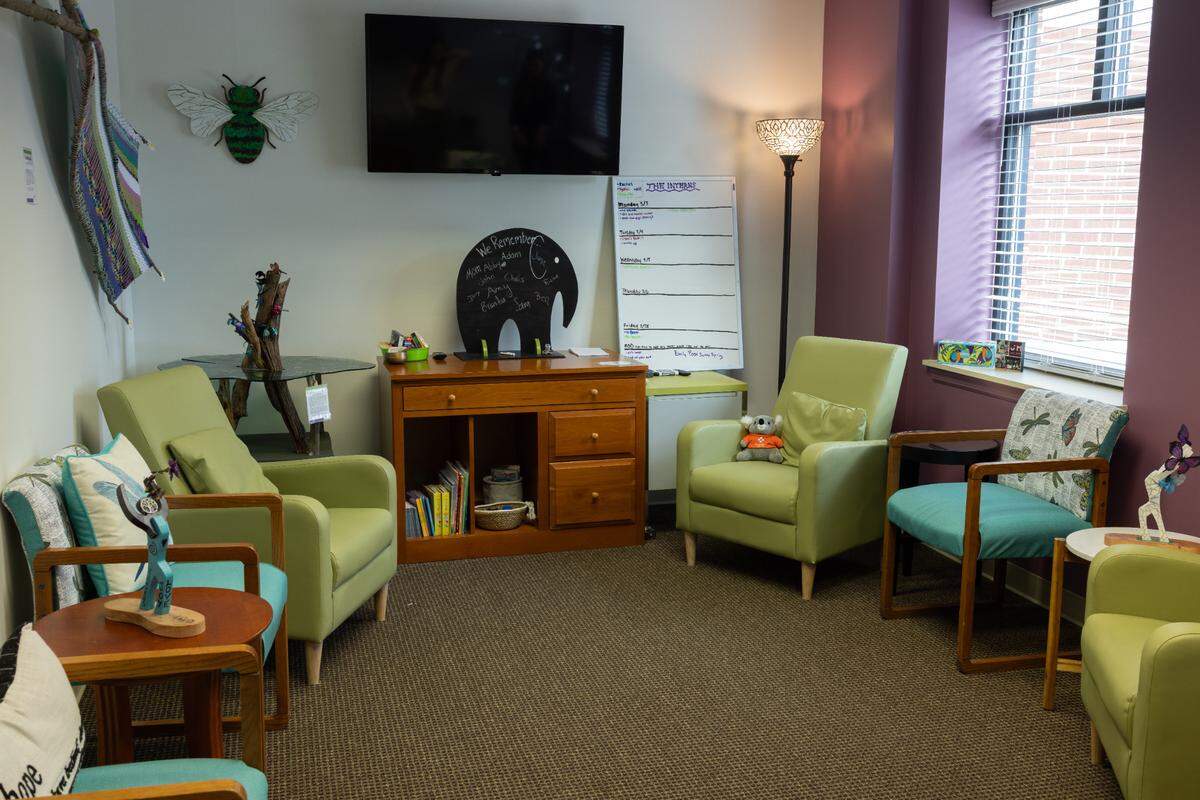
“Sometimes parents have a hard time understanding why their child is experiencing suicidal thoughts, or why their child is acting the way that they are — we offer adult programs to help them grasp that,” Vicere said. “A child should feel comfortable enough to share with their parents the problems that they’re having, but that can be tough if there’s a lack of parental understanding there.”
A hallway leading to the back of the building past staff offices connects the group counseling room with kitchen area, where a dual staircase leads to the second floor.
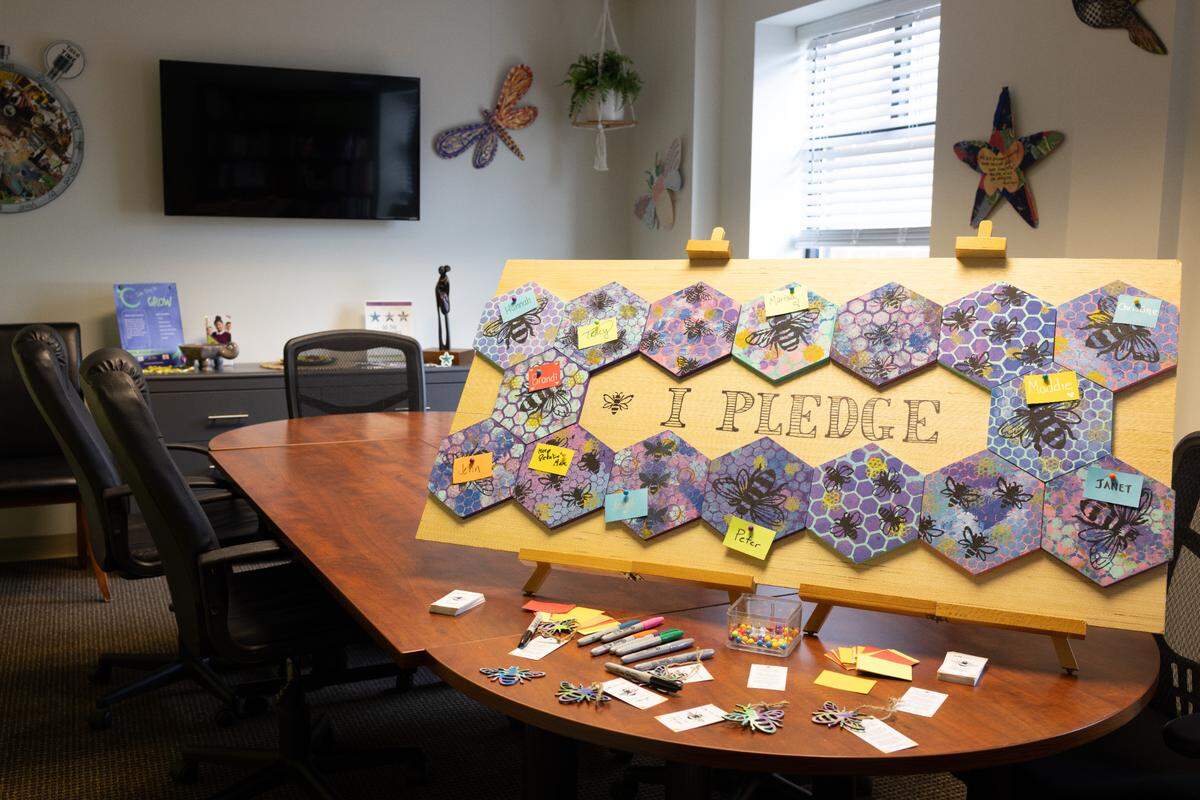
At the top of the steps sits Mo, a 5 1/2 foot tall elephant-shaped chalkboard that’s the foundation’s mascot. Mo is short for “Mokita,” which means “a known truth left unspoken” in the language of Kilivila, spoken near Papau New Guinea.
Mo, who is featured throughout the new space, represents “the elephant in the room,” and provides a place for people to acknowledge their “elephants,” and the many ways that they cope with them.
One of the two rooms on the second floor serves as a hangout space and contains a stage, a miniature ping-pong table, a piano, a video game station and large circle of chairs, meant to help encourage dialogue and connection through circular discussions.
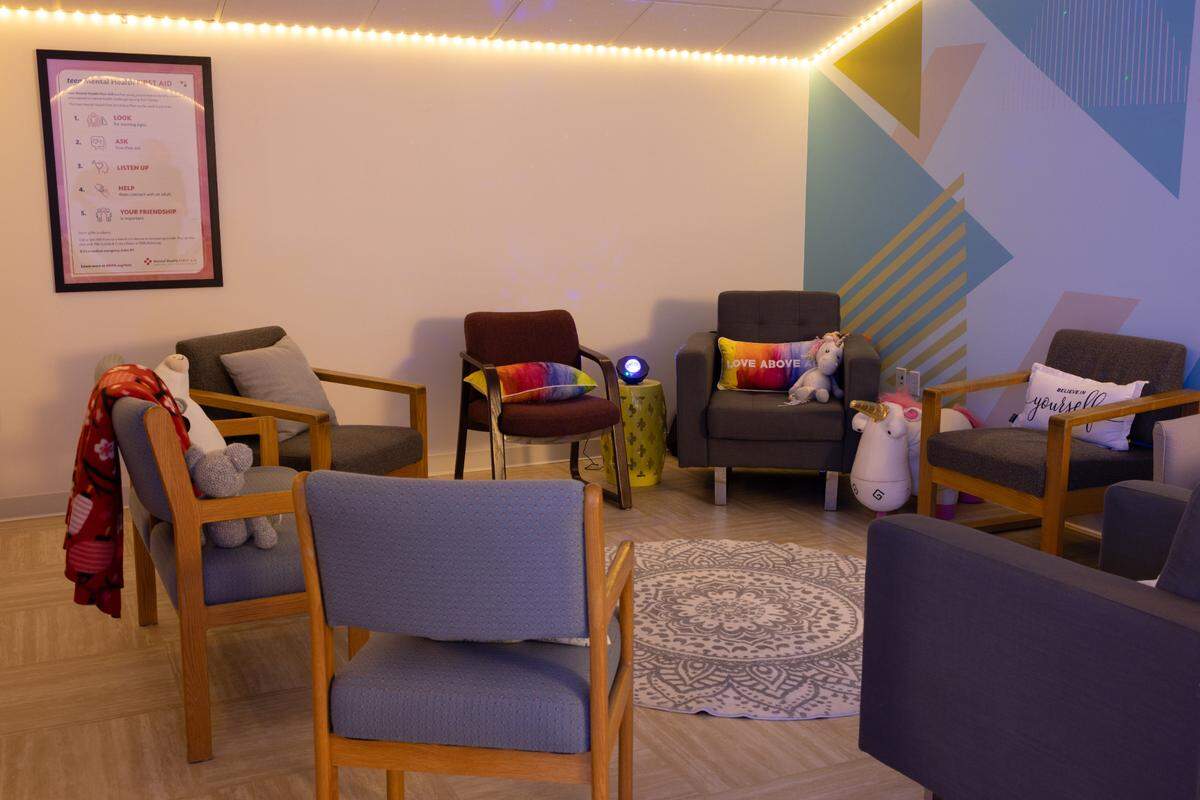
“One of our main goals here is to encourage dialogue about mental well-being and suicide, which are rather unpleasant topics to open up about, especially if you’re younger,” Vicere said. “That’s why we provide all of these activities. Sometimes its easier to have a serious talk with someone while they’re playing a video game, or after they’re done acting silly on stage.”
The largest wall in the room is painted green, blue and purple. Green represents the international color for mental health awareness, blue represents a cool, relaxed feeling and purple is in honor of Jana Marie Vicere, Marisa Vicere’s sister who died by suicide 2011 after a lifelong battle with depression.
The other second floor room is called the “messy room,” where artwork is done. Artistic and creative expression are two crucial components of the services that the foundation offers, with each art project being symbolic of something greater.
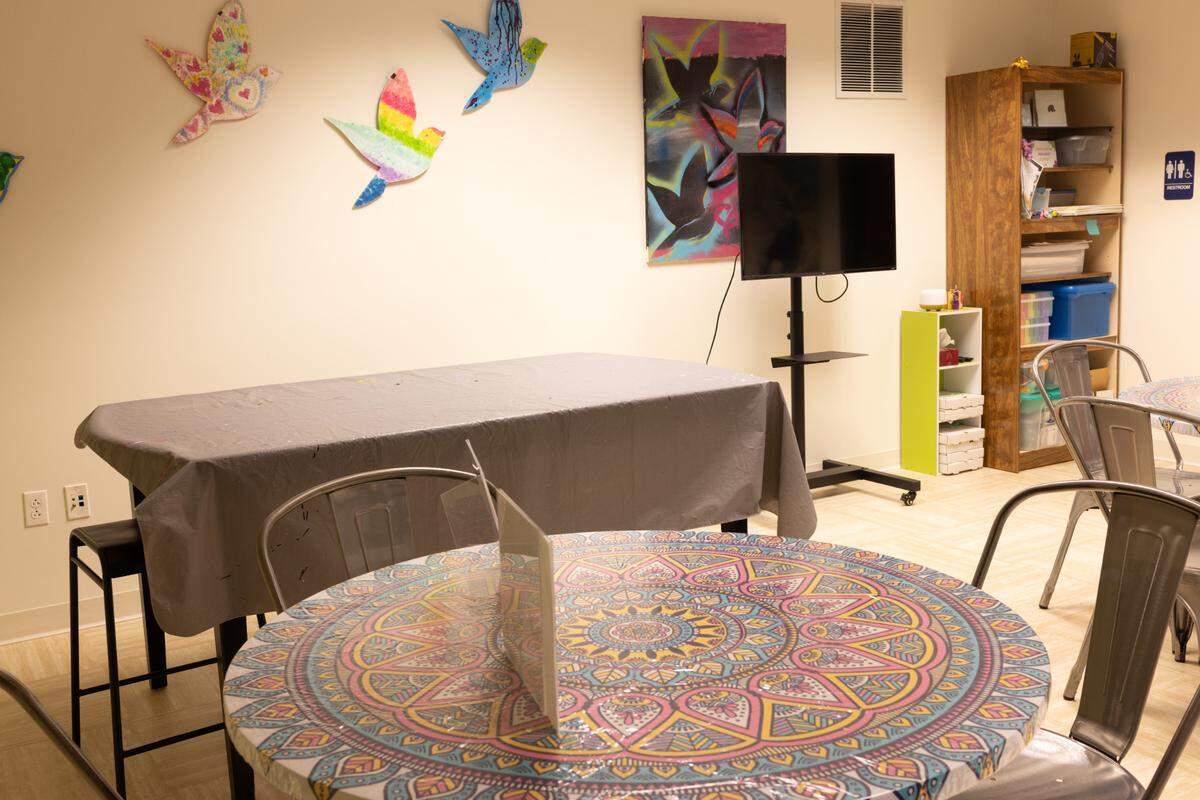
“Whether it be expressing yourself through art, music or movement, we want the people that utilize our programs to know that — much like themselves — everything they do here has a meaning,” Education Program Specialist Janet Gorman said.
Some of the projects that the foundation has done and will continue doing include the Stomper sculptures, single-line self portraits and “Birds of Hope,” or painted birds used to educate people about hope, healing and mental health during May, Mental Health Awareness Month.
The foundation’s expanded space isn’t the only thing that has employees excited. Thanks to a recent grant, a new sprinter van was purchased that will allow the foundation to take its services on the road.
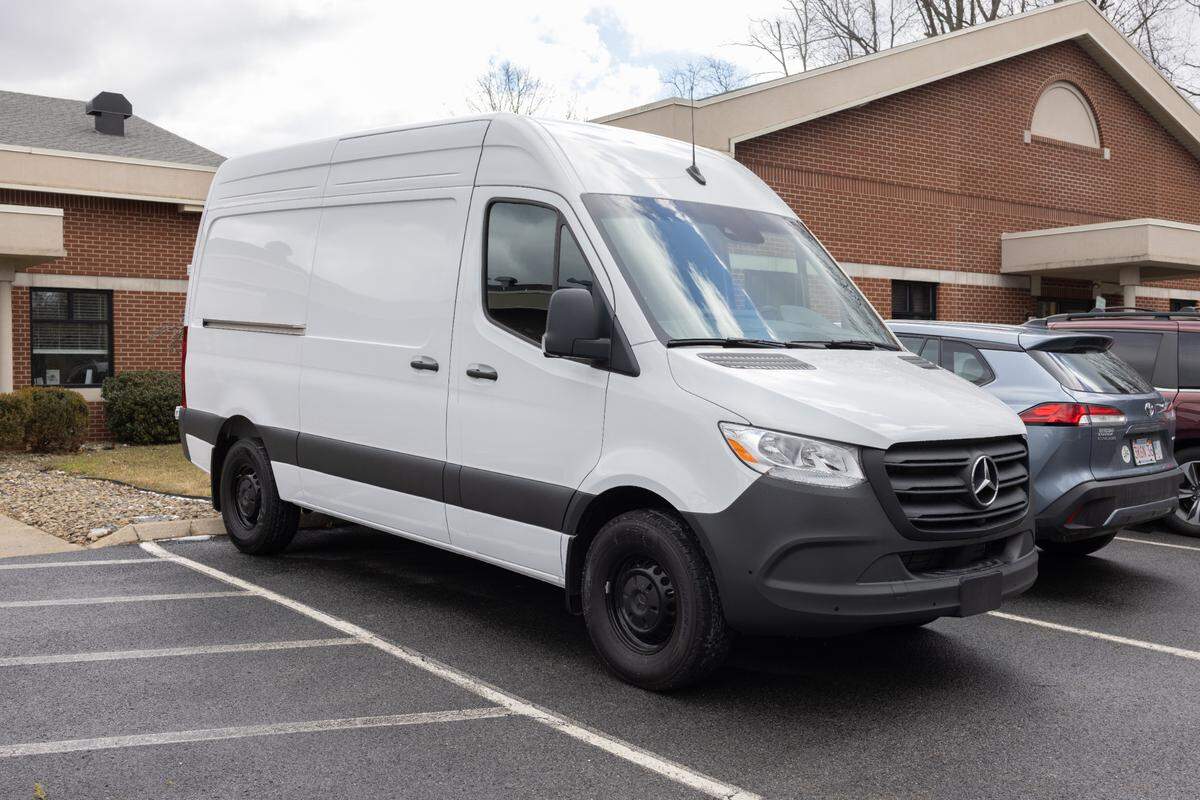
“We aren’t sure how we’re going to decorate the outside of the van yet, but the inside will be like a mobile calming space,” Vicere said. “It’ll be set up like a living room with cushioned seats, a TV, a bookshelf and some storage that’ll contain some more of our resources. We’re hoping that it’ll eliminate the barriers that have been there for people in the rural communities we serve.”
For more information on the Jana Marie Foundation, visit its website at janamariefoundation.org.
This story was originally published March 4, 2025 at 5:40 AM.