
Planning Commission gets early look at new Penn State housing project. What’s next?
AI-generated summary reviewed by our newsroom.
- Penn State wants to construct a 1,500-bed housing project for non-first year students.
- It's a public-private partnership between the university and Greystar Development East.
- Greystar and Penn State expect to start construction by spring 2026.
The State College Borough Planning Commission got a first look Wednesday at preliminary plans for a new Penn State student housing project that looks to bring about 1,500 additional beds to campus.
The project’s four buildings would be constructed in the southeast corner of campus between Hastings Road and College Avenue, where a long-term parking lot is now located.
Only non-first year students would be allowed to live in the apartments, which was a strategic decision made by the university to accommodate more growth. Since more freshmen are being enrolled, the university needed an additional space to house upperclassmen.
The project is a public-private partnership between Penn State and Greystar Development East. Since a ground lease for the project was approved by the university’s board of trustees in November, it has not been without controversy. Teamsters Local 8 President Jonathan Light took issue with the partnership contracting out work that is typically done by union members, and at least one trustee questioned if the development that’s close to the Lasch Football Building will cater to football players and other student-athletes.
The university has said any non-first year student will be eligible to live there, which Greystar Director Daniel Nickerson reiterated during Wednesday’s planning commission meeting.
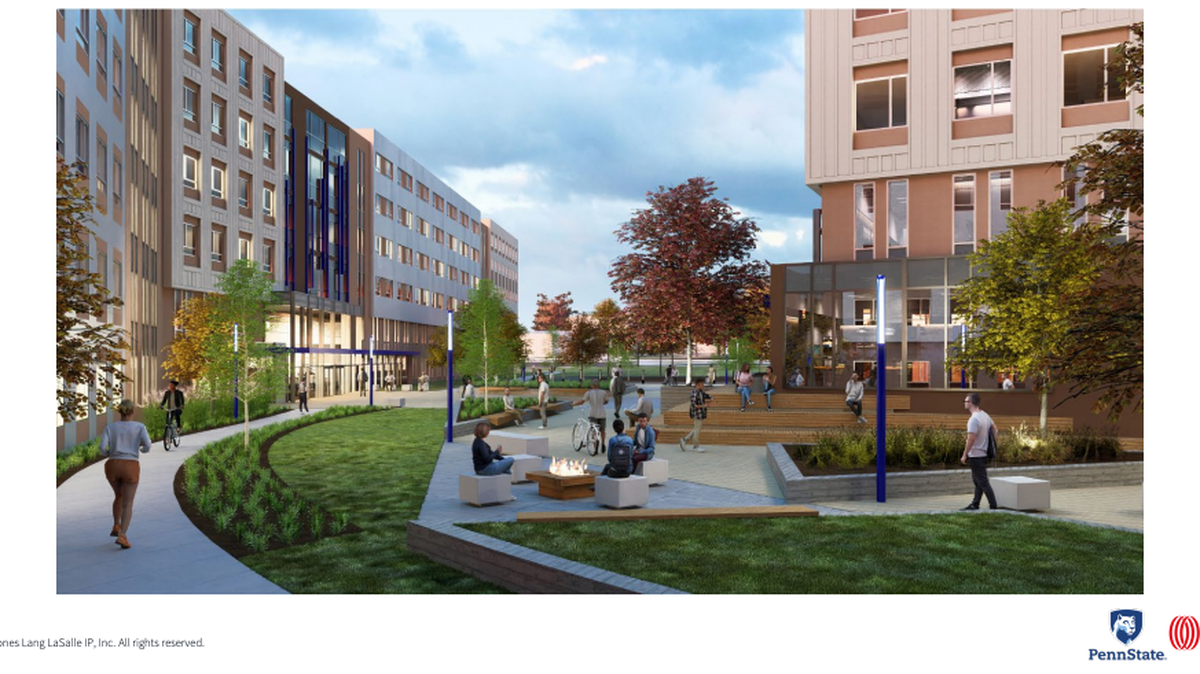
According to Nickerson, 55% of the project’s apartments will be four-bed units, 25% will be two-bed units and the remaining 20% will be single-bed units or studios. Every unit will also come with its own washer, dryer and kitchen, and each apartment building will come with some wellness-geared amenities.
“The overall design philosophy is providing additional affordable student housing that really focuses on the amenities that students need, and not necessarily extra stuff — like we don’t have a pool on site,” Nickerson said, comparing the new housing complex’s amenities to the “fancier” amenities seen at more expensive, suite-like apartments in downtown State College.
“We try to focus our amenities around study spaces and some fitness and gathering spaces,” he added. “The affordable component has a very high priority.”
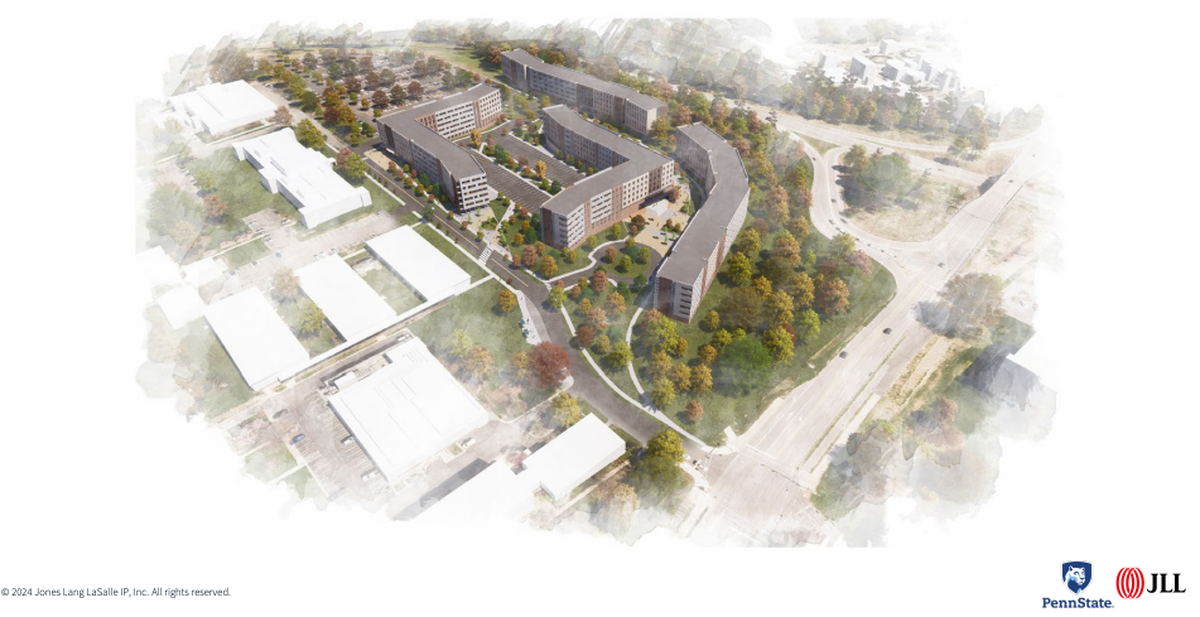
In addition to the various spaces, each of the project’s buildings will house a bike storage area, and a bike trail will also run through the development that will eventually link up with the shared-use bike path College Township is currently working on.
A nature area will be located in the middle of the development that will preserve some of the campus’ historical trees, and about 750 parking spaces will be made available for the project, or one parking space per two beds.
While the project’s many amenities and expansive plans were, for the most part, greeted with thumbs-ups from the planning commission, member Anita Genger wasn’t sold on the project’s affordability. She asked how much the apartment units would cost, whether rooftop conduits were going to be installed for solar panels and if students from branch campuses would be able to live there.
Nickerson said because of how early the project is in its development stage, he couldn’t answer questions about cost or solar panels. Any non-first year student coming to Penn State from a branch campus would be eligible to live in the apartments, he said.
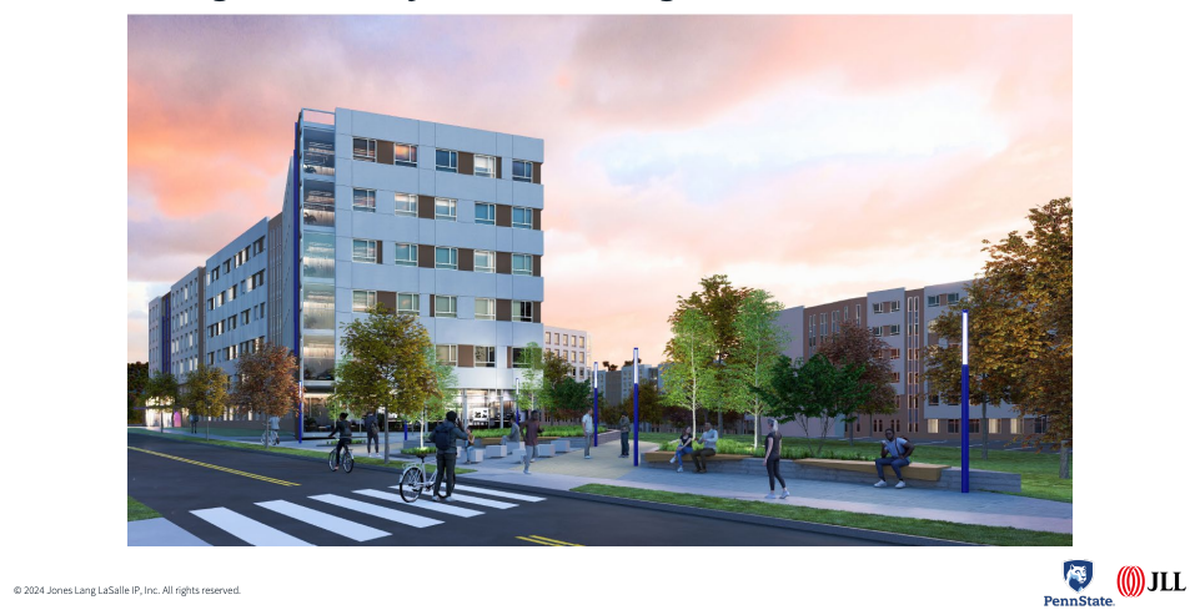
Moving forward, Greystar and Penn State’s next step in the housing project’s development process is to finalize and submit an official land development plan to the borough for review. Because the plan presented Wednesday was a preliminary plan, no vote was taken.
Once all plans are approved, Greystar and Penn State expect construction on the project to begin in spring 2026. The project would be completed in two phases — the first phase is expected to be completed by the 2028 academic year, and includes the construction of two apartment buildings housing 850 beds.
The second phase, which includes the construction of the the final two buildings and 650 beds, is expected to be completed by the 2029 academic year.
Penn State has not disclosed terms for the ground lease, including how long it would last or how much the lease costs.
When official development plans are submitted, they will be seen and discussed at future State College Borough Planning Commission meetings, which take place at noon on the first Wednesday of the month, and at 7 p.m. on the third Thursday of the month.
The eventual plans will also been seen at future State College Borough Council meetings, which take place at 7 p.m. on the first and third Mondays of each month.