Should Centre County have automated speed enforcement? Some leaders think so
AI-generated summary reviewed by our newsroom.
- Centre Region managers urge state lawmakers to expand automated speed cameras.
- Studies show crashes fell; PennDOT cites fewer speeding vehicles and work‑zone crashes.
- Commission highlights privacy, due process and revenue concerns and recommends caps.
The top executives of at least two Centre Region municipalities hope state lawmakers expand the use of automated speed enforcement cameras, which have shown an ability to reduce fatal crashes in Pennsylvania but are not without critics.
A bipartisan, 101-page report released Wednesday gave state lawmakers the most detailed look yet at the pros and cons of expanding speed enforcement systems that are currently only used in Philadelphia, the turnpike and work zones.
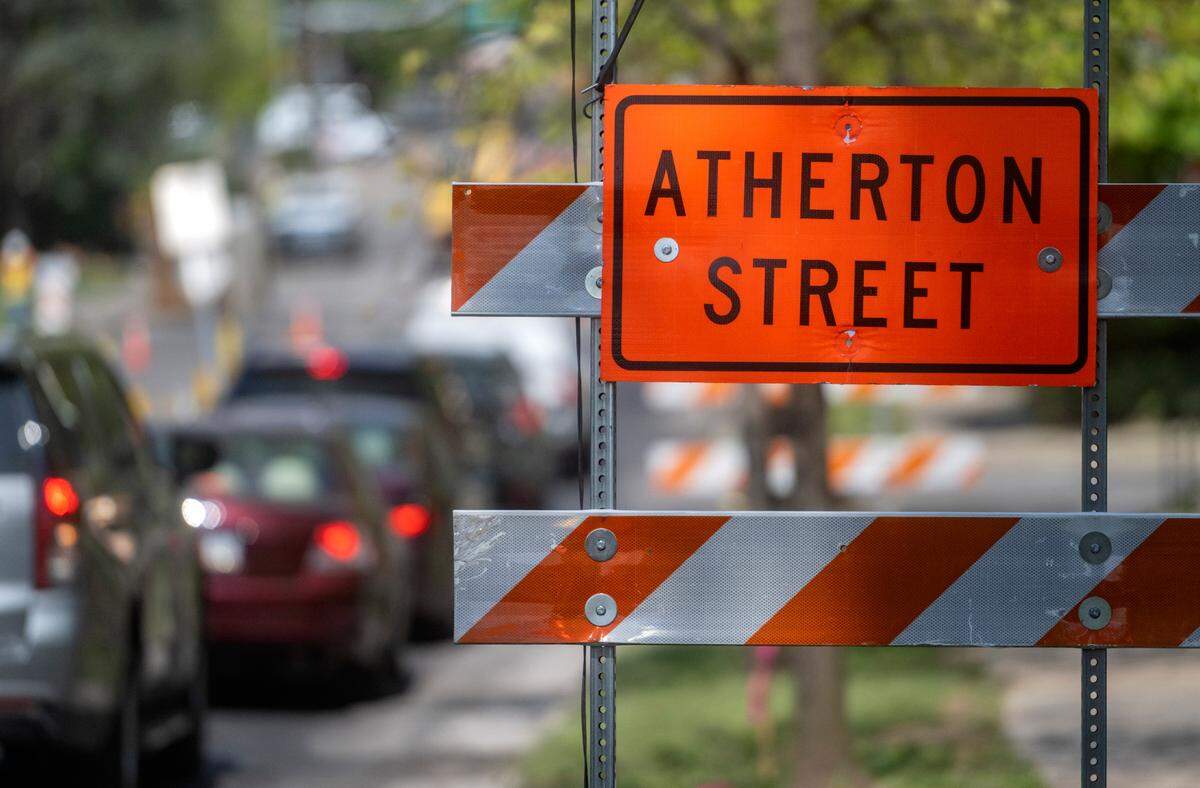
Patton Township Manager Amy Farkas has been the most vocal advocate for expansion in Centre County, specifically along the bustling Atherton Street corridor, and is cited in the report.
“We’re just looking at this opportunity as just another tool we can put in that safety box that we can go out and tell our residents: ‘We are trying to make this corridor better,’ ” Farkas said in a November interview with the state’s Local Government Commission.
What is automated speed enforcement? How does it work?
High-resolution camera systems use radar to capture images of vehicles, their license plate and other data when drivers are detected to be exceeding the speed limit by 11 mph.
A first offense results in a warning letter, a second offense is a $75 fine and following offenses are a $150 fine. Violations do not add points to your driver’s license.
Philadelphia said it paid $2,995 per month for each camera. The fees include the cost of the camera, maintenance, the backend system, staffing and a walk-in customer service center.
What are the benefits?
The bipartisan commission said the programs used in Pennsylvania have shown a “measurable safety improvement.”
Vision Zero, a traffic safety advocate in Philadelphia, said fatal and serious injury crashes fell by 34% and all injury crashes dropped by 20% compared to similar streets without automated speed enforcement.
The state Department of Transportation, meanwhile, said there was a 32% decrease in speeding vehicles during peak construction season. At a time when there is a national increase of work zone crashes, Pennsylvania reported 26% fewer after automated speed enforcement went into effect.
Supporters also say it would be a more effective tool for municipal police departments in Pennsylvania, which are the only agencies in the U.S. that cannot use radar. They’re instead limited to outdated and time-consuming technology. Bills to authorize radar use by municipalities have repeatedly been unsuccessful.
What about the criticisms?
Some have raised privacy concerns, wondering who and what is captured in the photos taken by the systems as well as who has access to those images. Should the data, for example, be available to track a person of interest in an unrelated criminal investigation or assist with immigration enforcement? The systems in both Philadelphia and work zones have restrictions.
Others are concerned about due process. The driver may not be the vehicle’s registered owner, and the latter is the one who would receive the violation and be responsible for contesting it.
Perhaps the most common criticism, much like radar, is that automated speed enforcement would be exploited as a revenue source for municipalities — a claim the commission and local township managers rejected.
The commission said some enforcement systems — either initially or as driver behavior changes — cost more to operate than they generate in revenue. PennDOT and the Pennsylvania Turnpike reported spending $1.6 million more than it brought in from violations since 2019.
In Philadelphia, the revenue that can be generated by automated speed enforcement is capped at 2% of its annual budget. If the program is expanded, the commission said a similar cap may mitigate some public concern.
The report said it may also be wise to dedicate some or all of the revenue to specific purposes rather than allowing the money to funnel into a municipality’s general fund, which is not dedicated to a specific program.
“This is about safety. This isn’t about us wanting to catch people,” Farkas told the commission. “I really don’t want to catch you. I want you to slow down so that the corridor is safer and that people can get across.”
College Township Manager Adam Brumbaugh, who told the Centre Daily Times he is also in favor of automated speed enforcement in school and work zones, said concerns about revenue generation is not a reason to discount the systems.
Targeted and limited use of the cameras would not produce a windfall of revenue for a municipality, Brumbaugh wrote in an email.
“This is much more a safety issue than a revenue issue,” Brumbaugh said.
State College Manager Tom Fountaine did not directly answer whether the borough supports expansion, but said in an email that State College and other Centre Region municipalities worked alongside Farkas.
A message left with Ferguson Township was not immediately returned.
What comes next?
It’s not yet known how state lawmakers view the idea and the commission did not offer an opinion, instead using the report as a starting point and leaving it to all legislators.
It suggested PennDOT develop a list of problematic corridors statewide as one data point to see whether the case for expansion is compelling, as well as exploring alternatives such as radar, changes to road design and modifying traffic signals.
“Automated speed enforcement technology is a powerful tool, but it is not the only tool that should be considered,” the commission wrote in its report. “Deployed well, ASE can modify driver behavior and effective safety improvements. Utilized indiscriminately or without thoughtful planning, it can be a source of deep frustration and distrust for the public.”