State College council debates resolution calling for ICE reform. ‘We need to stand up’
AI-generated summary reviewed by our newsroom.
- Council postponed vote on proposed ICE-reform resolution.
- Members debated risks, local actions and protections for immigrant residents.
- Officials cited past borough resolutions and sought concrete protections for residents.
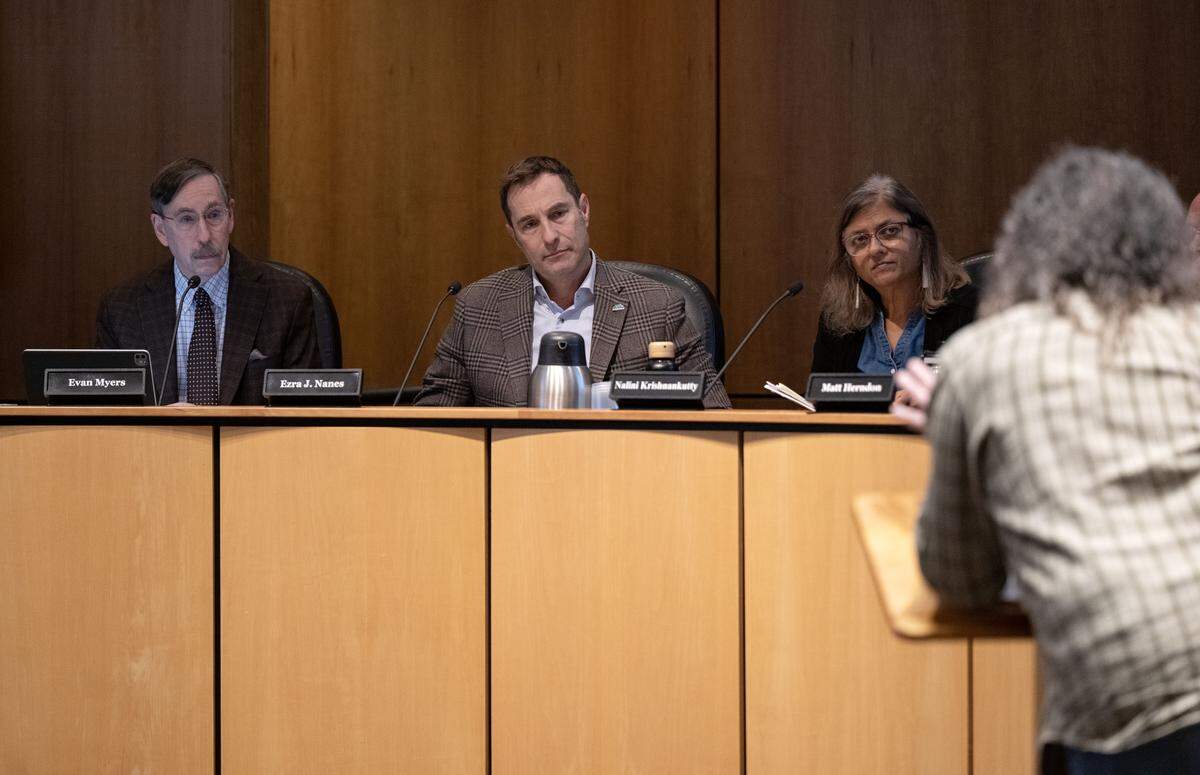
After more than an hour of debate and public comment, the State College borough council postponed a vote on a resolution Monday that calls for federal authorities to make “timely and meaningful reforms” to Immigration and Customs Enforcement operations.
The proposed resolution, brought forward by council member Matt Herndon, comes in the wake of two deaths in Minneapolis this month at the hands of federal immigration officers.
“This resolution does not seek to adjudicate the facts of any ongoing investigation or judicial proceeding, but rather expresses concern regarding the constitutional implications raised by publicly available information and reported federal enforcement practices,” the resolution reads.
It also lists five actions, including prohibiting federal agents from using masks or face coverings to conceal their identities during enforcement actions, ending the use of violence force or chemical agents against peaceful protesters, observers or humanitarian assistance, respecting the authority of local and state investigation involving federal agents, and more.
“I understand that these incidents happened far outside of our jurisdiction but when I took my oath of office, I swore to uphold the Constitution of the United States, and the same is true for all of us elected Borough Council members,” Herndon said while introducing the resolution. “So I think this resolution is very pertinent to our duties, and I hope it helps to remind elected officials at higher levels of government to uphold their own oaths to the Constitution.”
Council President Evan Myers urged the council to adopt the resolution, noting it was only a start and there was still a lot of work to do. Council member John Hayes said the council can call for accountability through the resolution, which includes not having masked, anonymous agents. As a white man, Hayes acknowledged that people who look like him may not “bear the brunt of this,” but he also said he needs to be able to look his children in the eye, or in 25 years from now, his grandchildren, and say, “I said enough, and this was shameful, and it’s time to stop.”
But while the council as a whole seemed to be in support of the message and intent of the resolution, some worried it wasn’t backed up by actions, and that it could have the opposite effect in the community.
Ultimately the council voted to postpone a vote on the resolution until the next meeting, which would give members more time to think about it and propose amendments. The next meeting is scheduled for 7 p.m. Feb. 9.
A good first step or causing unnecessary harm?
Council member Nalini Krishnankutty said she’s been horrified by the actions taken by ICE since last spring. She’s typically a vocal person and would have spoken out against it but was advised by legal minds and immigrant scholars about the need to “walk a fine line,” she said. Instead, she’s been doing work in the background.
It’s important to think about who will be impacted by people speaking out, she said. She wondered if the council members speaking out a certain way could cause ICE to come to State College, a concern other members voiced as well.
“I’ve been trying a lot to figure out what we can do as local government. What can we do? Because the resolution, is it just going to be performative and then create a backlash without an action to support it? So what can those actions be?” Krishnankutty said. “And I have reached out to our manager about this, and I know that what I am really looking for, is something that we can do that is actually an action, and not just this.
“And I don’t know at this point whether this resolution is something that I can stand by, because it doesn’t lead us to actions we could take.”
She pointed to an executive order signed by the mayor of Chicago, which gives the Chicago Police Department a procedure to follow if they witness or receive reports of ICE agents involved in illegal activity, the Guardian reported, and where to send the evidence. Krishnankutty asked if police in the borough, and Ferguson and Patton townships could work together to take action locally.
Borough Manager Tom Fountaine said he would get more information for a future meeting, and referred to some policies and programs the borough currently has related to this. He said the police department has trainings this week, and local police departments have been working together to develop some of the information requested during the meeting, he said.
Council member Gopal Balachandran also had concerns about such a resolution drawing “unwanted attention” from ICE to the borough. He said he’s heard from immigration lawyers and others who deal with DHS and ICE that echoed that thought.
He agreed with the substance of the resolution but was skeptical. In the “worst analysis,” he said it could harm the people who it is supposed to help.
“I think this community needs to really understand who bears the cost of a resolution like this. I can guarantee you that for me personally, when I look at a resolution like this, I know that the cost of it is probably borne by people who look like me, who have names like mine, like Gopalakrishnan Balachandran, right? It’s going to be borne by other people who look like me, who might have names that are as complicated, as polysyllabic as my name is, and it’s not going to be worn by certain other people,” he said.
Council member Kevin Kassab had similar concerns, saying anyone who says this resolution won’t cause retribution “is fooling themselves.” He urged the council and community to come up with ideas on how to protect the residents.
State College Mayor Ezra Nanes, who does not have a vote on the matter, said he is supportive of the resolution and did not think it was an “either/or” situation, but a “both/and.”
“It’s important to say the truth and to speak clearly our values and the way that this council and the community views this situation. There are many actions taking place in the community and within this borough to support our immigrant population,” Nanes said. “But we need to do all of them, not one or the other. So I agree that we need to continue to take action and look for ways to protect the people of this community.”
Herndon said he is ready to vote in favor of any proposed ordinance that protects residents from violence but didn’t think it needed to be done at the same time as the resolution, and that the resolution was a first step.
“I don’t think there’s any hiding from this, and I think defending the Constitution is worth this risk, and I believe that risk will be borne by all of us eventually,” Herndon said.
“I don’t think we can hide. I think we need to stand up. And I think the time is now.”
Has the borough done anything like this before?
The State College borough has a number of resolutions and codes on the books passed by councils related to diversity, equity and inclusion.
In 2017, the council passed a resolution that, among other things, stated enforcing immigration law is a federal responsibility, and not a local responsibility, the council will not voluntarily assist in any federal efforts to apprehend, detain or deport residents. It also states the council is supportive of the State College Police Department’s practice of not asking victims or witnesses about their immigration status.
A couple of years later in 2019, the council passed another resolution to expand it, which addresses children being separated from their parents, or arriving at the border alone and detained in poor conditions.
See the proposed resolution as it was presented to the council on Monday below.