Pa. officials get look at ‘spectacular journey’ of Centre County 3D concrete printing company
AI-generated summary reviewed by our newsroom.
- Innovate in PA 2.0 could earmark up to $100M for diverse innovation areas.
- X-Hab 3D’s MX3DP concrete printers offer 1-hour setup, smaller crew and cost savings.
- Company could seek funding to expand its fleet; it already partners with Penn State.
While visiting a Centre County company that uses 3D concrete printers to create houses, military-related products, artificial coral reefs and more, state officials highlighted a newly proposed program Thursday aimed at innovative companies like X-Hab 3D Concrete Printing.
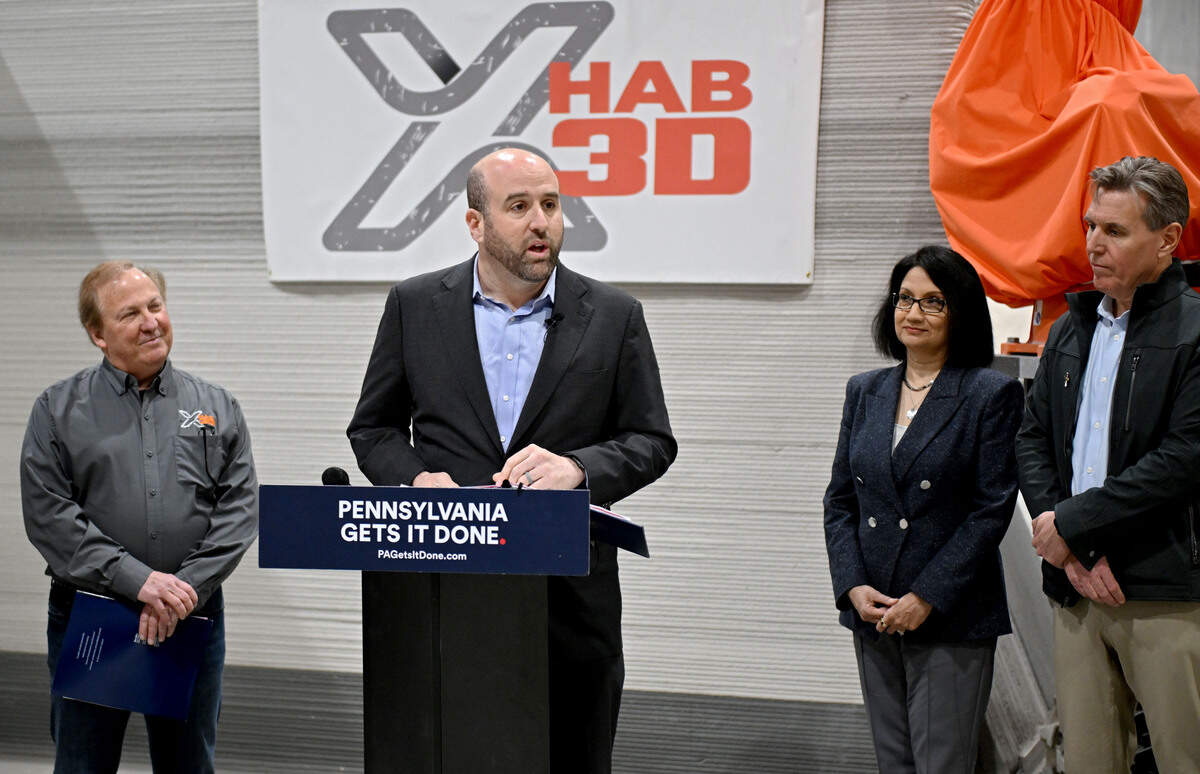
Led by Pennsylvania Department of Economic Development Secretary Rick Siger, the event was held at X-Hab 3D’s manufacturing plant located in the former Corning Glass factory at 3500 E. College Ave. The business is among those across the commonwealth that could benefit from the Innovate in PA 2.0 program, Siger said.
The program is included in Shapiro’s proposed 2026-2027 budget, and would earmark up to $100 million for innovation in the areas of opportunity laid out in Pennsylvania’s 10-year Economic Development Strategy, including life sciences, robotics and technology, energy, manufacturing and agriculture.
X-Hab 3D, founded in 2021, was held up as an example of a business that’s leaving a mark on Pennsylvania’s innovation economy. At the event — which included a brief overview of the facility — officials lauded the company for being both a state- and country-wide leader in its field.
“X-Hab 3D is a really cool company that is an amazing example of how innovation is a force for progress and growth in real world applications, in this case, like construction, among so many others,” Siger said. “I had a chance to walk around a little bit to see what X-Hab 3D is doing, and printing concrete is a huge step forward in construction for safety, speed and quality.”
X-Hab 3D’s projects and plans for the future
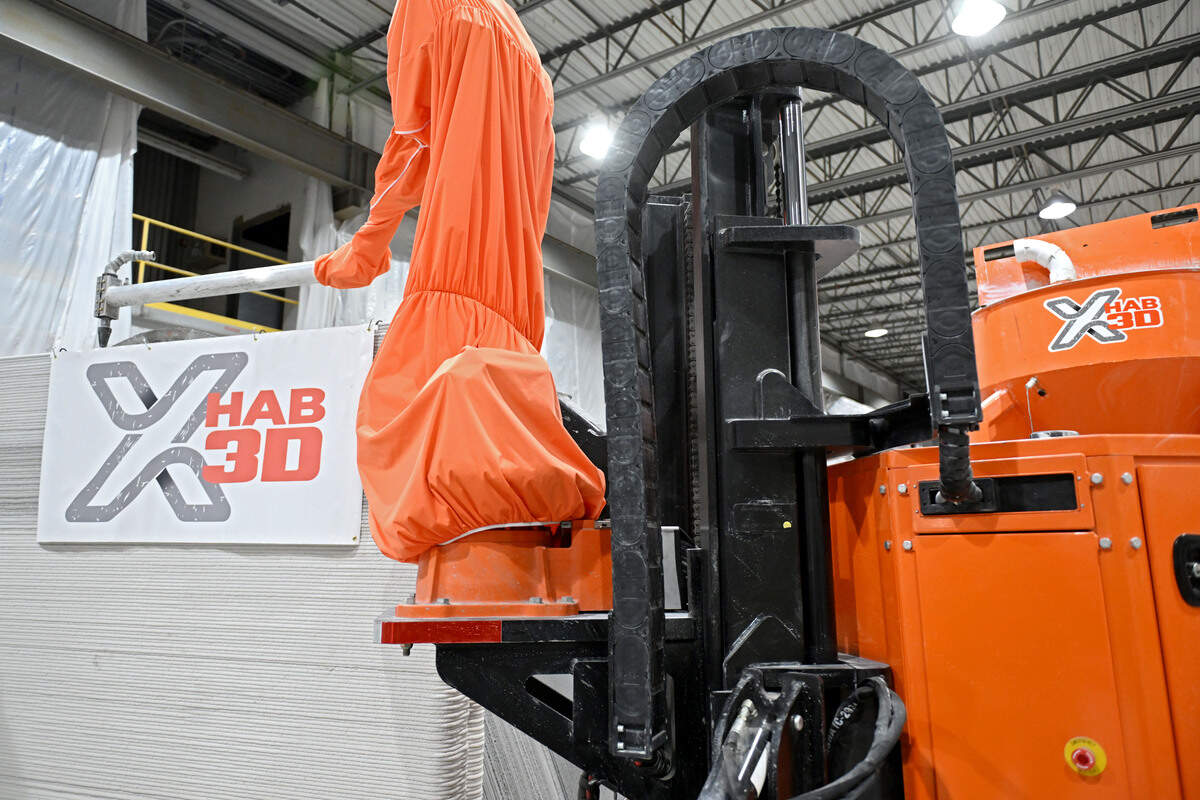
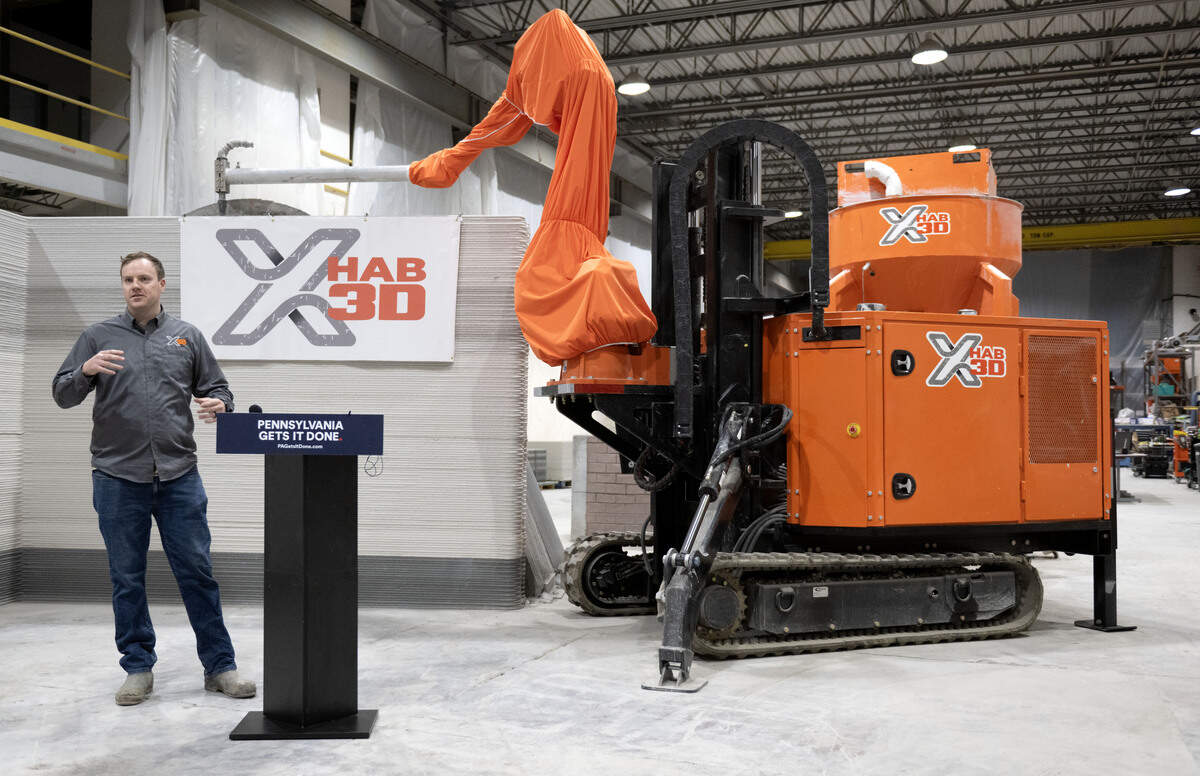
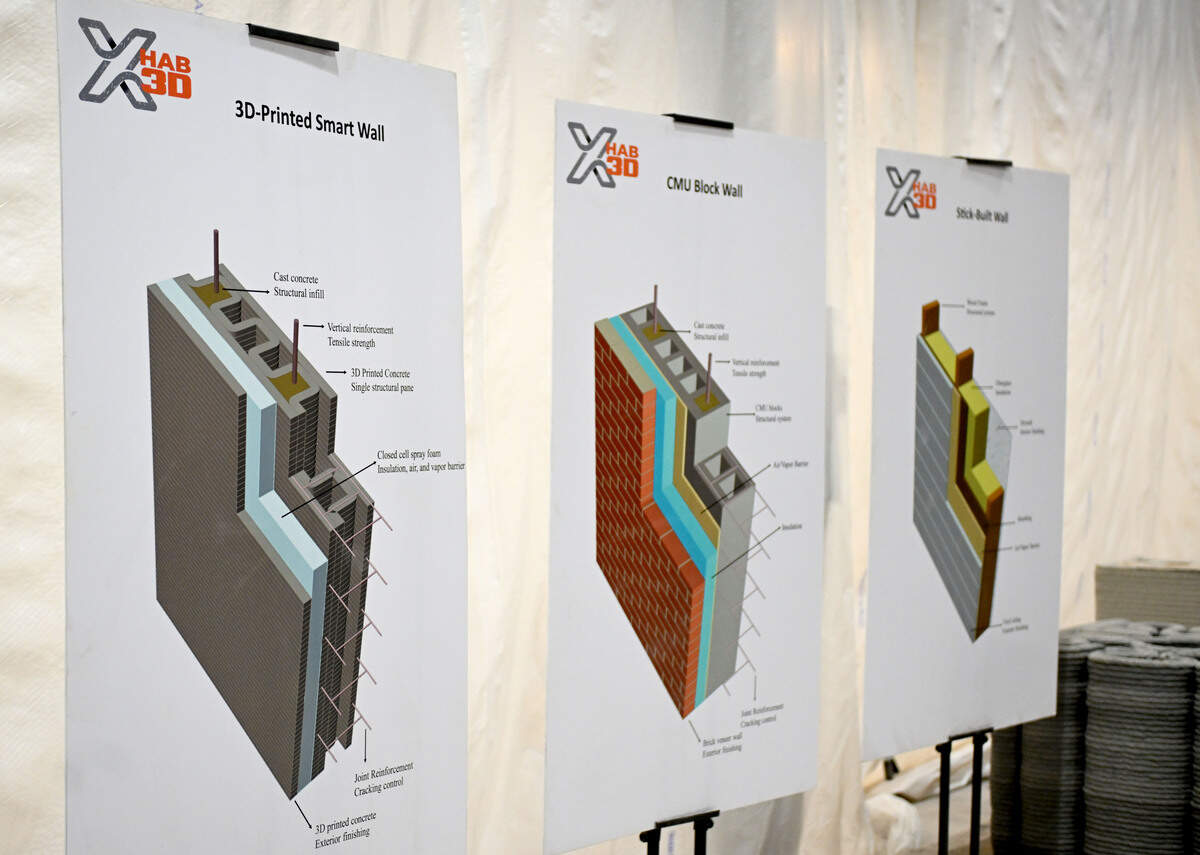
According to Bruce Kraselsky, X-Hab 3D’s co-founder, chair and CEO, the Mobile Expeditionary 3D Printer (MX3DP) systems that his company manufactures come with a full range of benefits compared to traditional construction methods. That includes a one-hour setup time, faster construction speeds and a smaller three-member crew, which in turn saves both time and money.
Additionally, a diesel generator built into the printer means that it can be used without connecting to an immediate power source, and the printer’s robotic arm, with a maximum height of 22 feet, contributes to the machine’s high precision level. The printer also can be, and has been, used in nearly any rural or urban environment.
So far, X-Hab 3D has completed or is working on projects in the freezing landscape of Nome, Alaska, at the Warfield Air National Guard Base in Maryland and even right here in Centre County. It’s part of a collaboration that is making the first 3D-printed home in Pennsylvania possible, built in Boalsburg in partnership with the Habitat for Humanity of Greater Centre County.
“We’re tackling one of the world’s largest and least digitized industries — construction,” Kraselsky said. “Productivity has lagged for decades, and the challenge is becoming more acute as labor shortages intensify and infrastructure demands accelerate.”
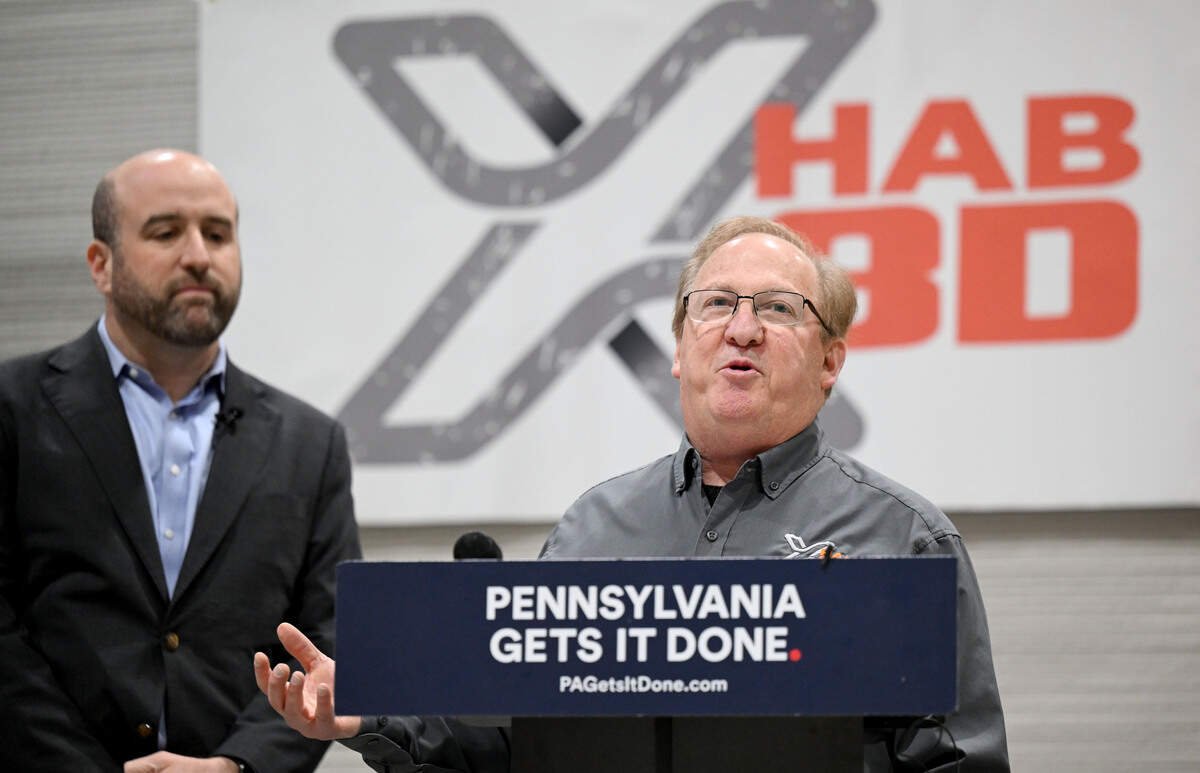
Through the help of Shapiro’s proposed program, Kraselsky hopes to turn X-Hab 3D into a “globally competitive business.” He also added that the majority of his company’s products are designed, developed and produced in Pennsylvania, primarily in Centre County.
X-Hab 3D’s products don’t stop at their massive printers though. To make its operations flow smoothly, the company had to create three new products — the printer itself, an eco-friendly concrete mix and a real-time digital design software, where the 3D printing process starts.
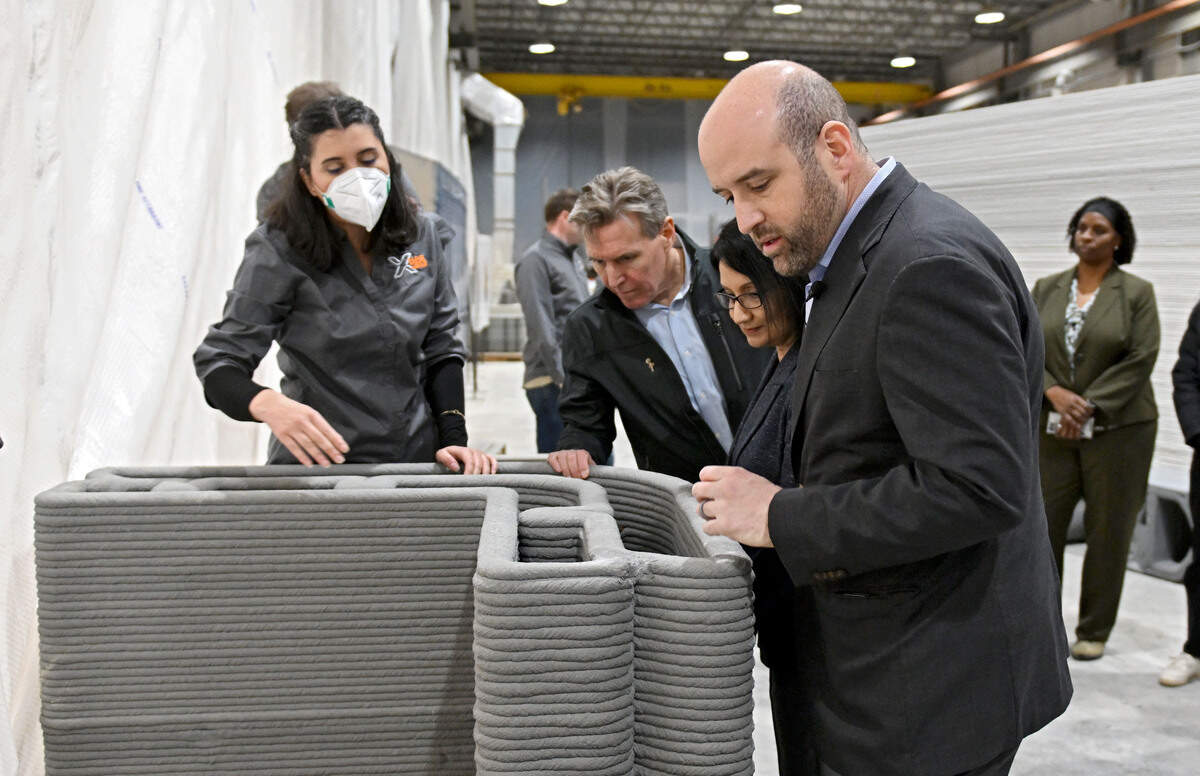
First, the overall blueprint of the structure that’s being built is broken into smaller, individual designs. For example, a 3D printed home would see its blueprint broken into separate walls, floors, etc. that can be printed out, one layer of concrete at a time.
Those designs are translated into what X-Hab 3D Director of Design Automation Paniz Farrokhsiar called the “robot’s language,” and are then ready for printing.
The company’s roots and Penn State partner
The idea for the innovative company came about in 2019 after NASA issued a callout for research institutions to develop new materials that withstand conditions on the surface of Mars.
With support from Invent Penn State, the idea for X-Hab 3D was hatched, and eventually grew into the company that it is today.
“Penn State is proud to partner with X-Hab, whether it’s our faculty, whether it’s our students, the workforce of the future — we’re eager to collaborate to advance knowledge, drive innovation and deliver those benefits to society,” Penn State President Neeli Bendapudi said Thursday. “It takes an ecosystem, and that is what we are building right here in Happy Valley.”
Steve Brawley, president and CEO of Ben Franklin Technology Partners, which also partners with X-Hab 3D, added that he’s “thrilled to be an investor, a stakeholder and a participant” on the “spectacular journey” that the concrete printing company has undertaken.
Moving forward, X-Hab 3D is looking to expand its fleet of six total concrete printers, and would use funding from Shapiro’s proposed program to do so, although the total cost of a printer and how long it takes to make one was not shared.
“Every time I come [to X-Hab 3D] I’m inspired,” state Rep. Paul Takac, D-College Township, said Thursday. “Our commonwealth has tremendous potential, but we know that potential by itself does not translate into energy. We have to make the strategic investments that make success stories like X-Hab happen.”