
DNA analysis helped crack another Centre County cold case. It’s not the first time
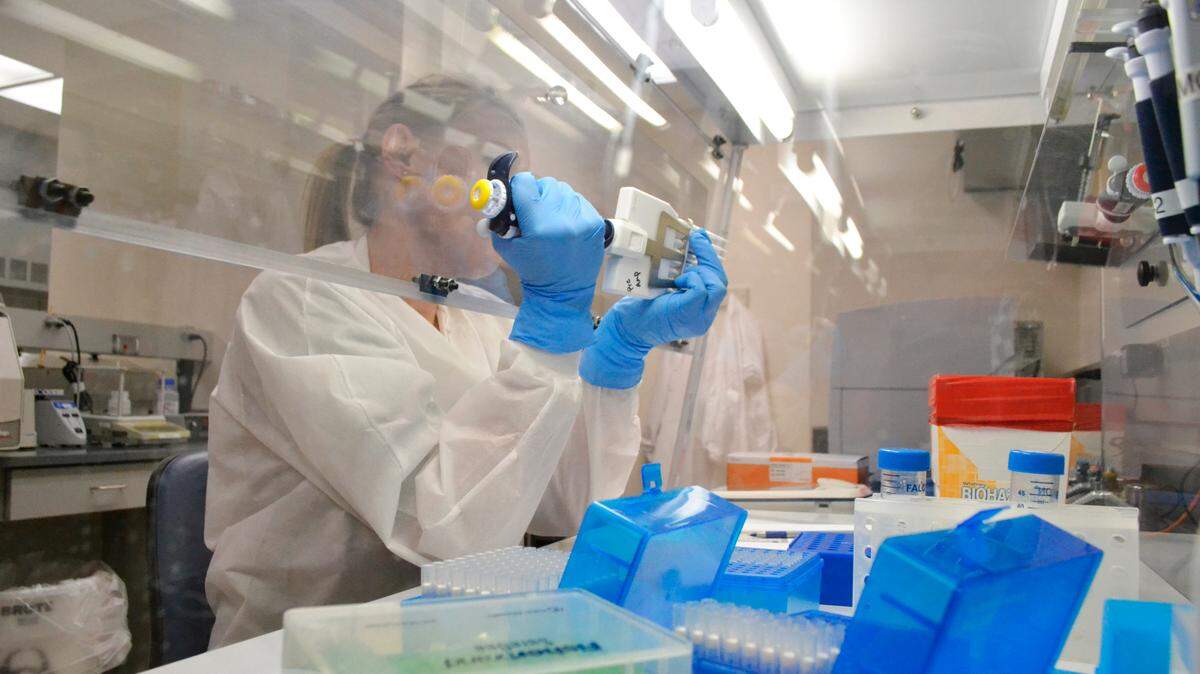
Centre County officials seem to have cracked yet another decades-long cold case.
County prosecutors said Tuesday they are prepared to charge a Michigan man with the 2000 rape of a woman at a State College-area golf course. Advancements in DNA technology ultimately helped investigators find their suspect, 51-year-old Kurt A. Rillema.
University police believe Rillema is responsible for the rape of a 19-year-old at knifepoint as she jogged near the 18th hole of Penn State’s Blue Course golf course, officials said Tuesday. The alleged assailant was previously arrested for his reported involvement in a 1999 rape at a golf club roughly 30 miles north of Detroit.
About 20 university police officers were involved with the investigation over the years, officials said. Investigators have known the left-behind DNA matched evidence collected from the alleged rape in Michigan since 2004, but they could not match the sample with an identity until investigators entered it into a genealogy database, reopening the investigation in 2021.
Genetic genealogy came into prominence in April 2018 when detectives made an arrest in the decades-old Golden State killer case by tracing collected DNA back to a suspect by examining relatives.
That process, Centre County officials said, led police to believe one of three brothers was responsible for the 2000 attack. A plastic foam cup retrieved after Rillema discarded it matched evidence collected from the alleged rapes in State College and Detroit, finally advancing the case after more than 20 years.
Advances in DNA technology have helped local investigators crack a number of cold cases in recent years. Here’s a quick look at a pair of examples in the State College area from the past few years.
Hospital samples lead detectives to assailant decades later
A Mifflin County man was arrested in October 2021 on felony charges of rape, aggravated assault and robbery. He was accused in the 1995 rape of a Penn State senior who was attacked along the 900 block of South Pugh Street in State College, investigators wrote.
“This is one of the most — if not the most — violent episodes I have seen in 23 years,” Centre County First Assistant District Attorney Sean McGraw said during Williams’ preliminary arraignment.
Following the attack, passersby found the victim disrobed from the waist down and covered in blood during what was then graduation weekend. She was later treated for skull, facial and jaw fractures.
Although a half-decade passed without an arrest, an arrest warrant was issued in March 2000 for “John Doe” based on DNA collected from the scene. The move was made near the end of the case’s five-year statute of limitation. It was one of the first instances of the filing of such an arrest warrant in the eastern U.S., Centre County District Attorney Bernie Cantorna said.
Years later, investigators used a genetic genealogy analysis to help borough detectives close in on Williams. DNA from a sample collected by the hospital that treated the victim’s injuries helped connect detectives with at least two of Williams’ relatives.
Once Williams was identified as a suspect, a pair of detectives went undercover at a Mifflin County High School football banquet to try and obtain any utensils Williams used, but the plan backfired when Williams did not eat or drink at the event. The officers did manage to collect a discarded fork, knife, spoon, napkin and plate used by one of William’s relatives.
Later on, an officer collected three trash bags from outside Williams’ home. Detectives found six bottles full of tobacco and saliva, police wrote, which provided DNA that matched samples collected by the hospital.
Williams posted $100,000 bail in December 2021 to be released from the Centre County Correctional Facility. His trial date has not been set, but prosecutors argue he could face up to 23 years in prison if convicted.
DNA evidence helps convict ‘very sophisticated rapist’
A Port Matilda man was sentenced to at least three decades in state prison after he raped four former Penn State students between 2010 and 2017. The women, all either 19 or 20 years old, were attacked at random in State College’s densely populated Highlands neighborhood.
McGraw, Centre County first assistant district attorney, said Jeffrey P. Fields, the assailant, was a “very sophisticated rapist.” Centre County President Judge Pamela Ruest said the rapes were “calculated, planned attacks on vulnerable women.”
DNA samples collected during rape examinations at Mount Nittany Medical Center ultimately helped identify Fields as the assailant. Fields never challenged the evidence presented against him between his July 2020 arrest and his trial nearly two years later.
State College police detectives Stephen Bosak and Nicole Eckley spent nearly a decade examining the four women’s rapes through an investigation that began in August 2010. They eventually identified Fields through the use of genetic genealogy, a process in which DNA samples are matched with profiles from genetic testing companies for consumers.
That search narrowed to Fields’ parents, who have only one biological son. They offered their DNA samples in July 2020 and showed they were, with near 100% certainty, the assailant’s mother and father.
Bosak, who has served State College police for nearly 40 years, told one of the victims’ fathers he would not retire until the case was solved. Today, he remains on duty nonetheless.
%202.JPG)