
What will happen with Subu Vedam? Centre County judge to make decision on new trial
AI-generated summary reviewed by our newsroom.
- Centre County judge now weighs Subu Vedam’s bid to overturn a 1980 murder conviction.
- Defense cites suppressed FBI evidence suggesting Kinser was shot with a .22 rifle.
- A new trial may be unlikely due to witness deaths and missing physical evidence.
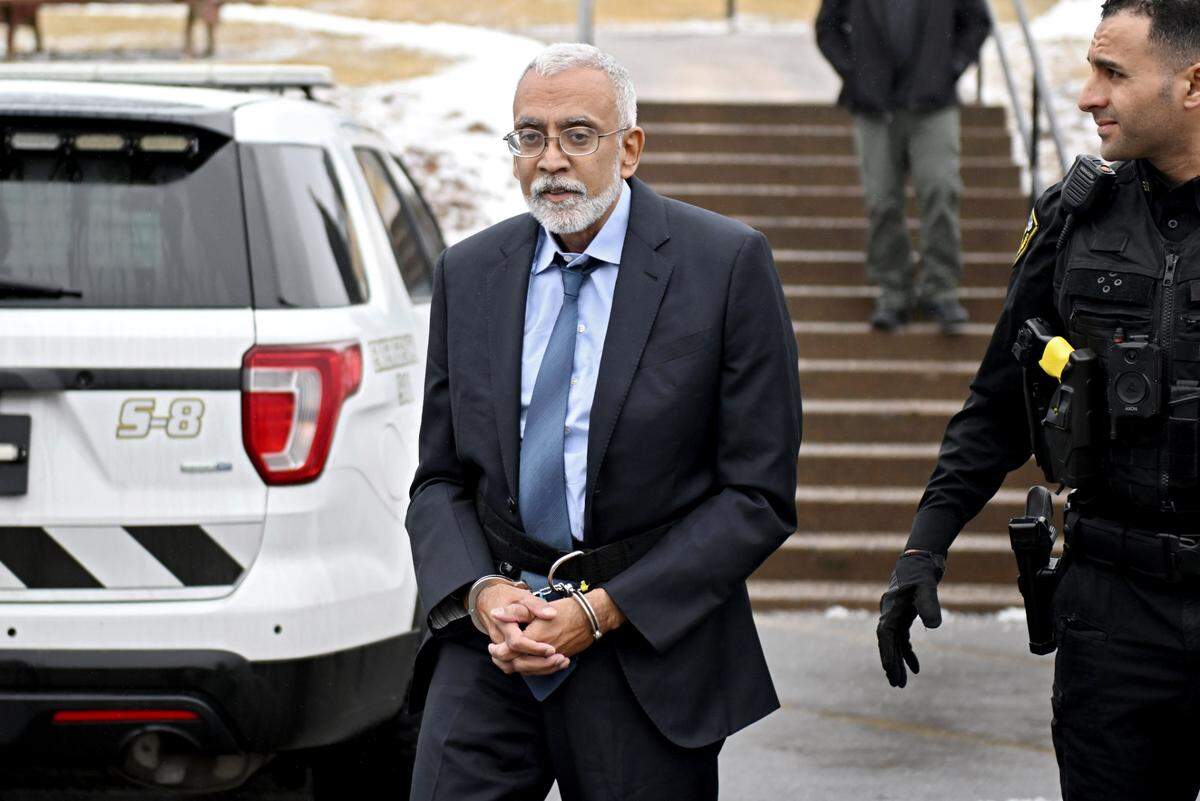
The fate of a State College man who has been incarcerated more than four decades for a killing he says he did not commit now rests with Centre County’s top judge.
Prosecutors submitted their final response Monday, one that argues Subramanyam “Subu” Vedam’s first-degree murder conviction in the fatal 1980 shooting of a Boalsburg man should stand.
Vedam’s defense team filed its capstone argument in May, seeking to “end the nightmare that has spanned his entire adult life.” The 63-year-old has been in state prison since June 1983.
With the hay in the barn, the decision belongs to Centre County President Judge Jonathan Grine. He’s given no indication of when he will issue his ruling on whether Vedam will have a new trial and there is no deadline.
Vedam was convicted of first-degree murder in the killing of Thomas Kinser, whose decomposing remains were discovered in September 1981 by two hikers in the wooded Bear Meadows. Vedam is the last known person to have seen the 19-year-old alive.
Centre County prosecutors alleged Kinser was killed by a .25-caliber bullet fired from a pistol Vedam purchased shortly before Kinser’s disappearance. No weapon has ever been recovered, but the only bullet found among Kinser’s remains was a .25 caliber.
The conviction has withstood appellate review for decades, but Vedam’s defense lawyers argue a handwritten note and FBI report turned over for the first time in January 2024 undermines the theory put forward by former Centre County District Attorney Ray Gricar.
Based on what they say was an undisclosed measurement of the size of the wound in Kinser’s skull, they believe he was killed by a smaller .22-caliber bullet fired from a rifle. Had the note been available at the time, defense lawyer Gopal Balachandran argued there would have been a reasonable likelihood of a different outcome at trial.
Vedam was found guilty in the circumstantial case and sentenced to life in prison without parole.
“The questions surrounding who actually killed Kinser may never be answered. Nevertheless, it is clear from the suppressed evidence and the full record that Vedam was not the one responsible,” Vedam’s lawyers wrote. “What is also clear is that the trial he received, with critical evidence withheld from this trial lawyers, was not fair in any sense of the word.”
Grine received a crash course in forensic anthropology during a two-day hearing in February. A handful of the field’s leading experts testified for hours about the minutiae that defines their profession — everything from keyhole defects and bone shrinkage to lead residue and how bullet calibers are estimated.
Centre County First Assistant District Attorney Josh Andrews and Assistant District Attorney Matt Metzger were scathing in their criticism of Vedam’s top expert Ann H. Ross, saying the North Carolina State professor’s opinions were unsupported by scientific research and established standards.
Every one of her conclusions, they wrote in their 60-page filing, were “fatally flawed.”
“Dr. Ross ... abandoned the standards of her profession and contradicted her own published research to get to the result she wanted so she could advance her subjective conclusion that there was an injustice in this case,” Andrews and Metzger wrote.
They also said research and evidence have shown there is no statistical difference between the wounds caused by .22-caliber and .25-caliber bullets. And merits of Vedam’s claims aside, Andrews and Metzger argued they were an untimely attempt to relitigate his case.
Should Grine side with Vedam, it’s not exactly clear what the practical effect could be. He could grant Vedam a new trial, but prosecutors have already said it would be difficult — if not impossible — to retry him.
At least seven key witnesses are dead, including Gricar, the forensic pathologist who examined Kinser’s remains, the FBI special agent who analyzed the bullets and shell casings, and Kinser’s parents.
Those who are alive, meanwhile, likely will have “faded memories” from the early 1980s, Andrews and Metzger wrote. Further complicating a potential retrial, Kinser’s remains and other physical evidence are no longer available.
Appeals could follow Grine’s ruling, and Vedam has also pursued claims in federal court.
If he’s successful in proving his innocence, Vedam would become the longest-serving inmate in Pennsylvania history to be exonerated. He’s been imprisoned at Huntingdon state prison for about 42 years. The record is 40 years, eight months, 11 days, according to the National Registry of Exonerations.
This story was originally published June 30, 2025 at 4:29 PM.