
Judge vacates murder conviction of State College man imprisoned more than 40 years
Centre County’s top judge on Thursday vacated the first-degree murder conviction of a State College man who has served more than 40 years of a life sentence for a killing he says he didn’t commit.
Centre County President Judge Jonathan Grine granted Subramanyam “Subu” Vedam, 64, a new trial after finding county prosecutors violated his due process rights and deprived him of a fair trial in 1988.
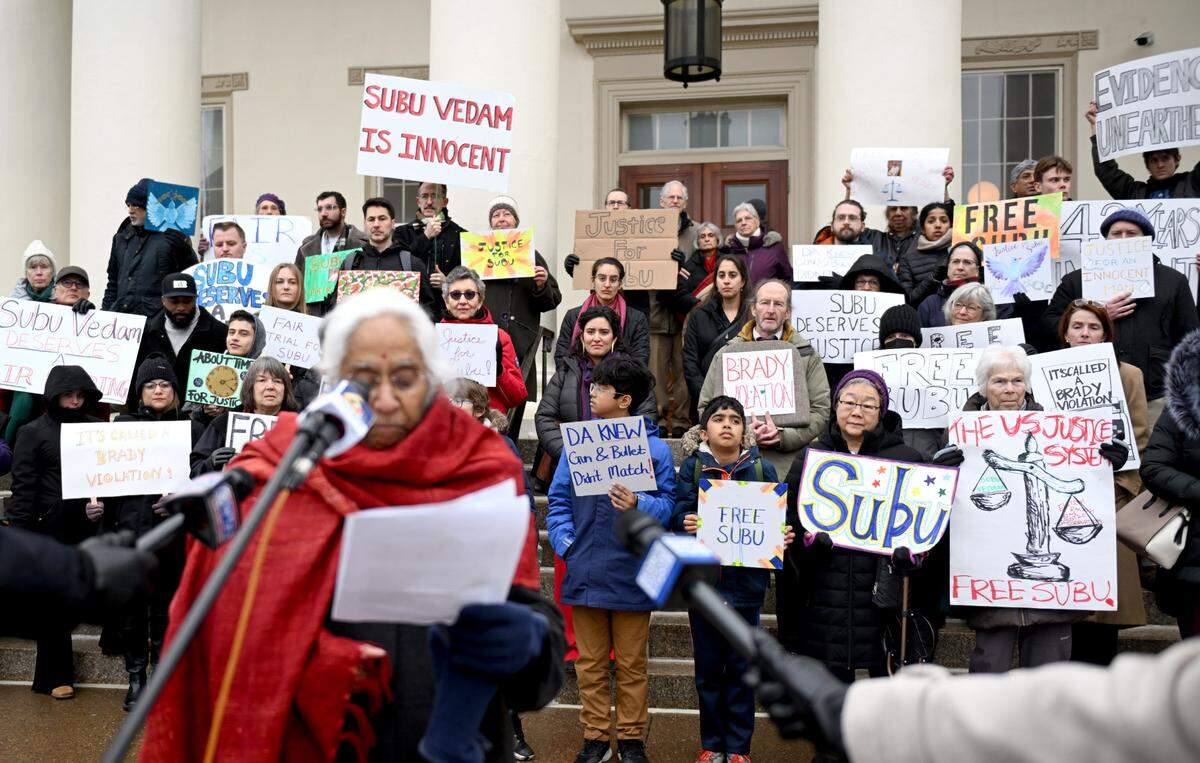
“We’re infinitely thankful that the court has upheld the most sacred principle of our justice system in recognizing that Subu was deprived a fair trial, and we’re hopeful that this is the precursor to his final exoneration and release from prison,” Vedam’s niece Zoë Miller-Vedam said in a statement. “The case against Subu, which was always blatantly unfounded, completely crumbles in light of the evidence we now know the prosecutor concealed.
“A fair trial, where this evidence would finally have its day in court, will unequivocally show that Subu was convicted for a crime he didn’t commit.”
She said Thursday’s ruling is the first step toward “restoring integrity to a justice system that failed not only Subu, but the community that depends on it to fairly investigate crimes and hold the right people accountable.”
“But most importantly it is a testament to Subu’s stalwart commitment, in the face of so much unfathomable suffering over the last 42 years, to obtain truth and justice even when the system put so many obstacles in his path,” Miller-Vedam said. “It is also a tribute to the unwavering support of the community members that have stood with our family to remedy a glaring wrong by a justice system that acts in their name.”
It was not immediately clear how prosecutors plan to proceed after the momentous decision.
They previously said it would be difficult — if not impossible — to retry Vedam. Key witnesses have died, while those who are alive likely have faded memories from the 1980s. Further complicating a retrial, some physical evidence is no longer available.
Prosecutors could also appeal Grine’s ruling within 30 days or drop the circumstantial case altogether, which would result in Vedam’s release from Huntingdon state prison. He remains incarcerated there, where he’s spent about two-thirds of his life.
Centre County District Attorney Bernie Cantorna and lead defense lawyer Gopal Balachandran have previously been tight-lipped about the possibility of clemency or a plea deal to a lesser charge that would see Vedam released from prison.
Cantorna expressed confidence in the verdict and Vedam’s conviction Thursday even after Grine’s ruling. A pretrial conference is scheduled for November.
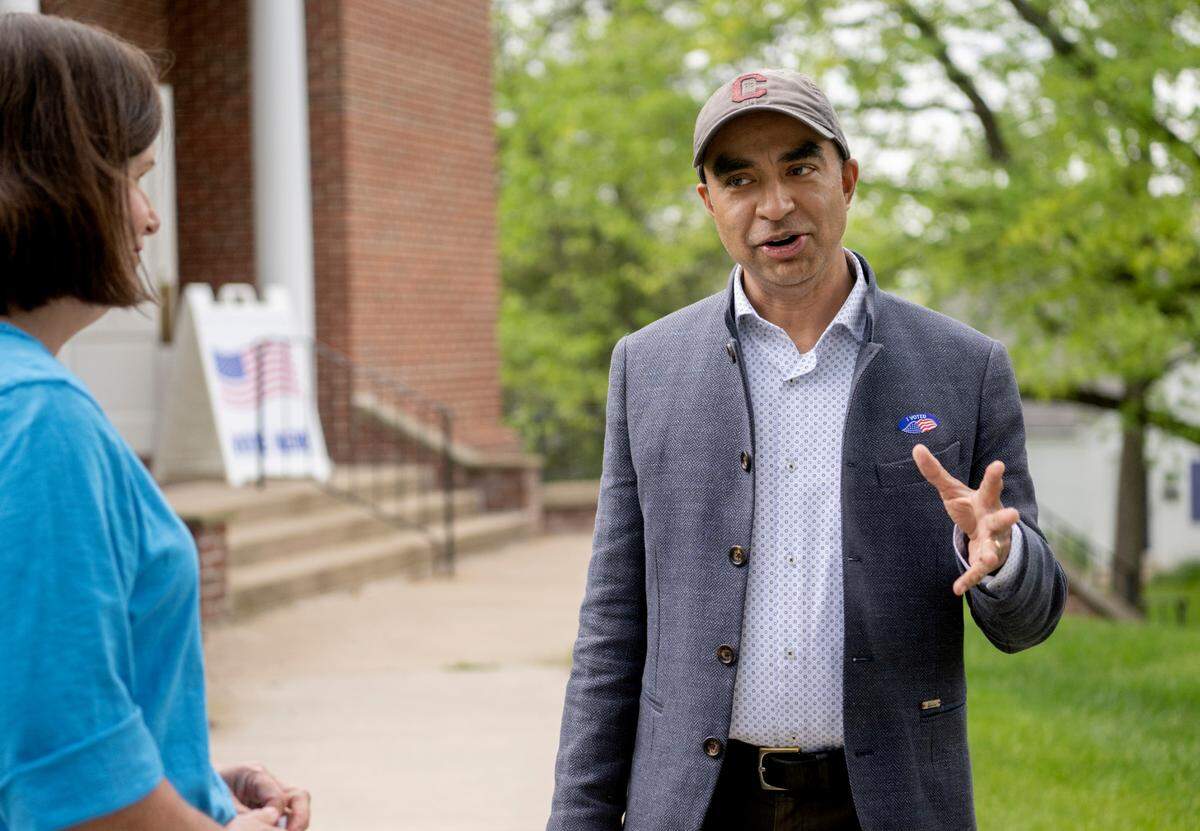
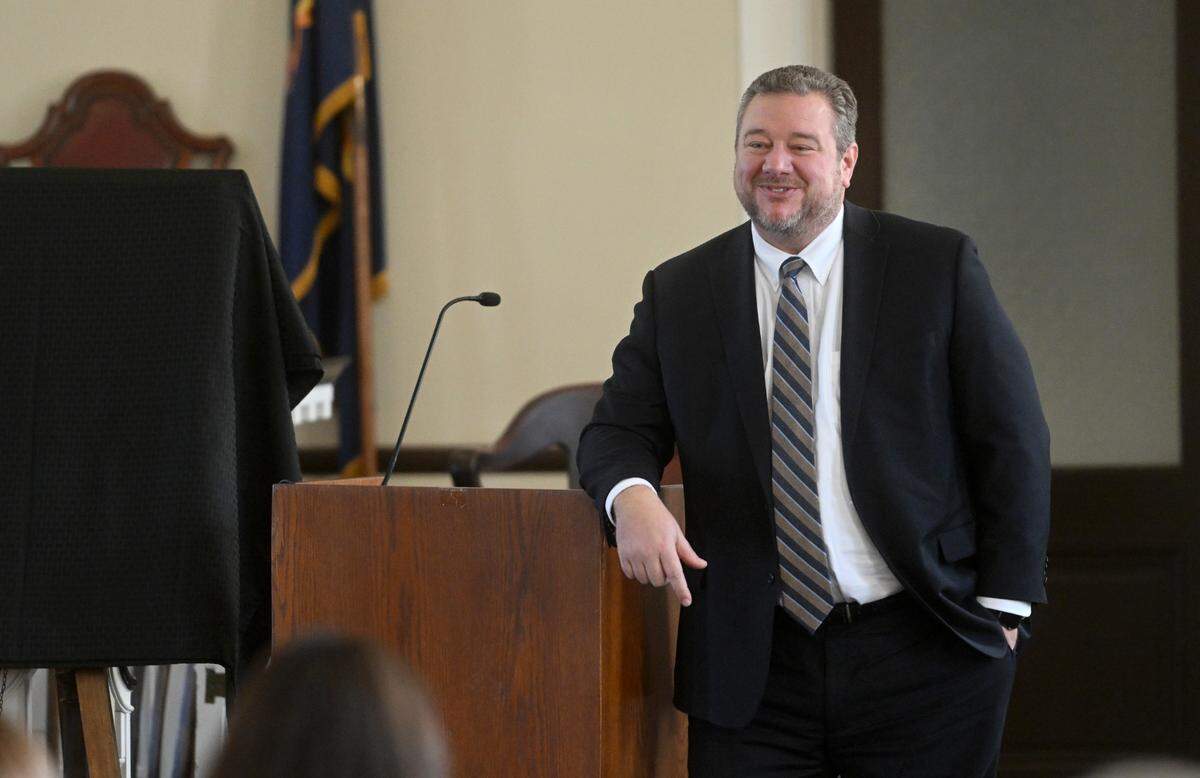
“In the meantime, the office will consider all its options, including the merits of appealing today’s ruling as well as retrying the case,” Cantorna said in a statement. “We are sensitive to how difficult and confusing this news is to the surviving family and friends of Mr. Kinser, and we are committed to following the facts and the law in pursuit of a just outcome.”
Vedam’s lawyers said in a statement that an appeal would only “perpetuate the deplorable injustice Vedam has suffered.”
“We are thrilled that Judge Grine substantiated what we have argued all along — that Subu was wrongfully convicted when prosecutors in his original trial withheld key information and failed to correct false testimony, inflicting 42 years of injustice on him,” Balachandran said in a statement. “While this DA’s office was not involved in Subu’s original prosecution, they have a moral responsibility to correct this injustice immediately.
“We urge D.A. Cantorna to end Subu’s anguish and begin to remedy the blight on our justice system without delay. We believe it is both the only principled decision that can be made and the only way to salvage the honor of a justice system that has been called into question by this case.”
Vedam was convicted in the fatal December 1980 shooting of Thomas Kinser, a 19-year-old Boalsburg man whose remains were found in a sinkhole about nine months after he had gone missing. Vedam was the last known person to see him alive.
At Vedam’s trial in February 1988, prosecutors alleged Kinser was killed by a .25-caliber pistol Vedam purchased shortly before Kinser’s disappearance. No weapon has ever been recovered, but a .25-caliber bullet was found in Kinser’s remains.
The conviction and his life sentence without the possibility of parole withstood appellate review for decades. Vedam’s best opportunity to challenge his conviction came in 2021 when Cantorna’s office voluntarily allowed his lawyers to review their files.
Among the reams of documents, Vedam’s lawyers said, was an undisclosed handwritten note detailing a specific measurement of the wound in Kinser’s skull. It was believed to be written by then-District Attorney Ray Gricar.
Grine said no amount of due diligence would have enabled Vedam to obtain the specific FBI measurement until it was turned over in January 2024.
Vedam’s lawyers have argued the .25-caliber bullet is too large to have caused the wound in Kinser’s skull. Instead, they believe he was killed by a smaller .22-caliber bullet fired from a rifle.
In his 29-page ruling, Grine said there was a “reasonable probability” the jury’s judgement would have been affected if the crucial evidence was provided. It could have “severed the link” between Vedam and the alleged crime, Grine wrote.
“The Commonwealth cannot meet its burden of demonstrating beyond a reasonable doubt that this error did not contribute to the verdict, and consequently, (Vedam’s) conviction cannot stand,” Grine wrote.
This story was originally published August 28, 2025 at 10:56 AM.