
With school safety in the spotlight, what role do school resource officers play in State College?
UPDATE: State College Area School Board approved both memorandums of understanding on Sept. 19 to continue school resource officers at their current levels. Board member Carline Crevecoeur abstained from both votes, citing a lack of data and community input on SROs before the vote.
State College Area schools have long utilized school resource officers, but a national debate over school safety has led to questions about how they’re utilized.
On Monday, the board will vote on memorandums of understanding between the district and State College Borough and Patton Township to provide school resource officers. The MOUs will allow the three officers — two from State College and one from Patton Township — to remain stationed across the district.
The three officers are an estimated $320,000 cost to the district, a $20,000 increase from the 2021-2022 school year.
The item brought some debate during public comment at an Aug. 30 Culture Climate and Learning Committee meeting, with parents divided on having armed officers in the schools. While some wanted the district to remove the officers entirely, others asked for additional officers to be stationed at elementary schools.
The officers are currently stationed at State High, the Delta Program and Park Forest Middle School. The MOU on Monday’s agenda calls for no change to that setup.
“We’re talking about high schools and middle schools but our most vulnerable population is our elementary schools,” one parent said at the Aug. 30 meeting in support of increased SRO presence.
Three speakers asked for additional data and research around SROs and felt the district should solicit more information on how students feel about the presence of SROs. Researchers have found that Black students feel less safe around police officers and are disproportionately likely to have negative interactions with police in schools.
“We need to look at what the right thing and the best way to spend money as a district,” another parent said during the meeting.
SCASD also employs two full-time security personnel at the high school as well as ten security officers from Standing Stone, a security consulting company. Standing Stone also provides one security officer for each middle school.
With school safety in the spotlight nationwide, both parents and board members have asked for clarity around the role of law enforcement in school buildings.
What is an SRO’s role?
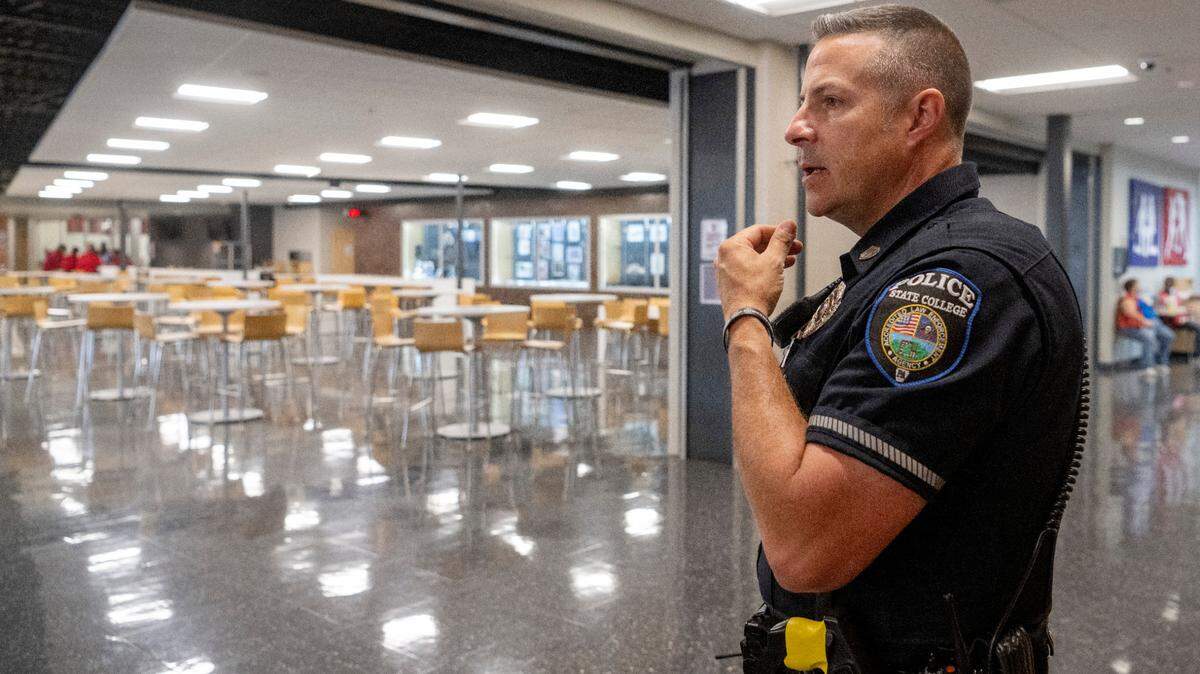
SROs are officers employed by a law enforcement agency who are stationed at a school. They act as a liaison between the district and local law enforcement and provide security as well as deal with crimes committed on school property.
John Aston, an SRO working in State High, said he has no control over school policy violations, meaning most situations are handled by the district unless it escalates to a more serious crime.
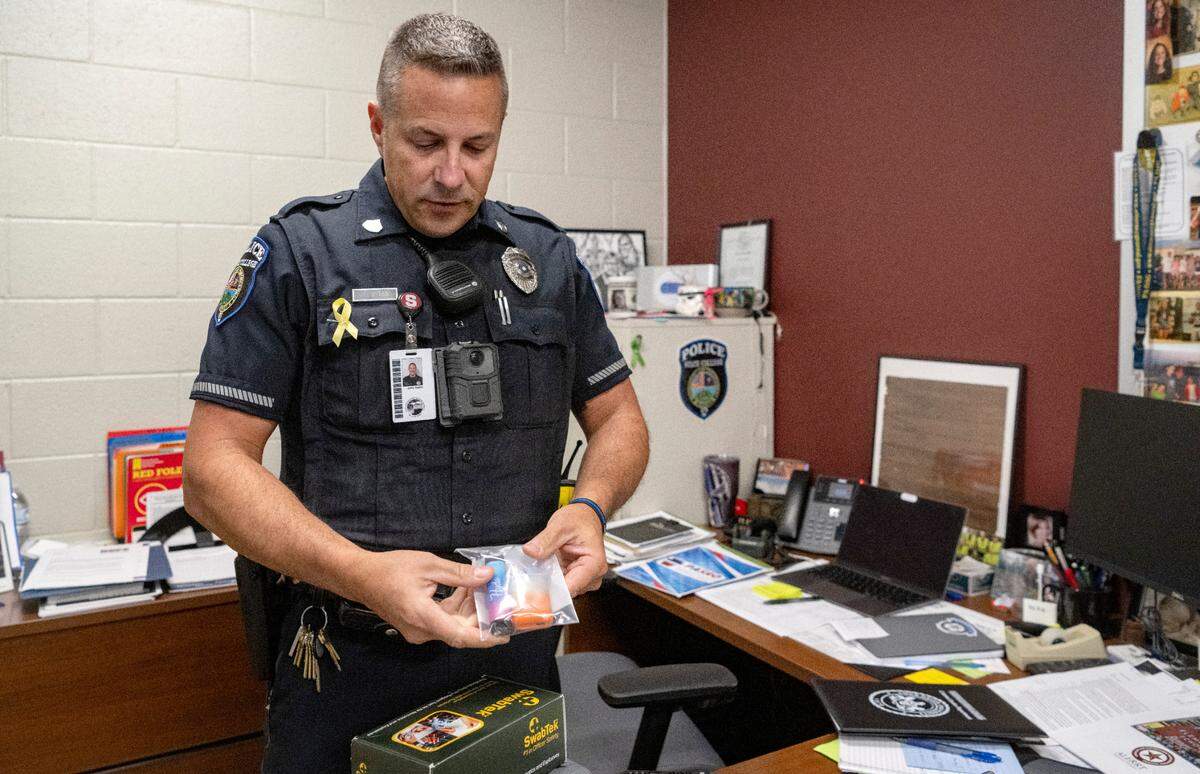
Juvenile detectives are called in to investigate cases involving minors, although Aston can help interview witnesses, write reports and assist on the case. In the five years Aston has been at State High he said he’s never made an arrest.
Aston also helps monitor Safe2Say, the anonymous student tip line, to communicate with administrators and police about reports of crime, drug usage and mental health problems. Aston said he’s used Safe2Say tips to call in welfare checks on students in a mental health crisis and can also inform administrators or counselors on cases affecting students or their families to help provide context.
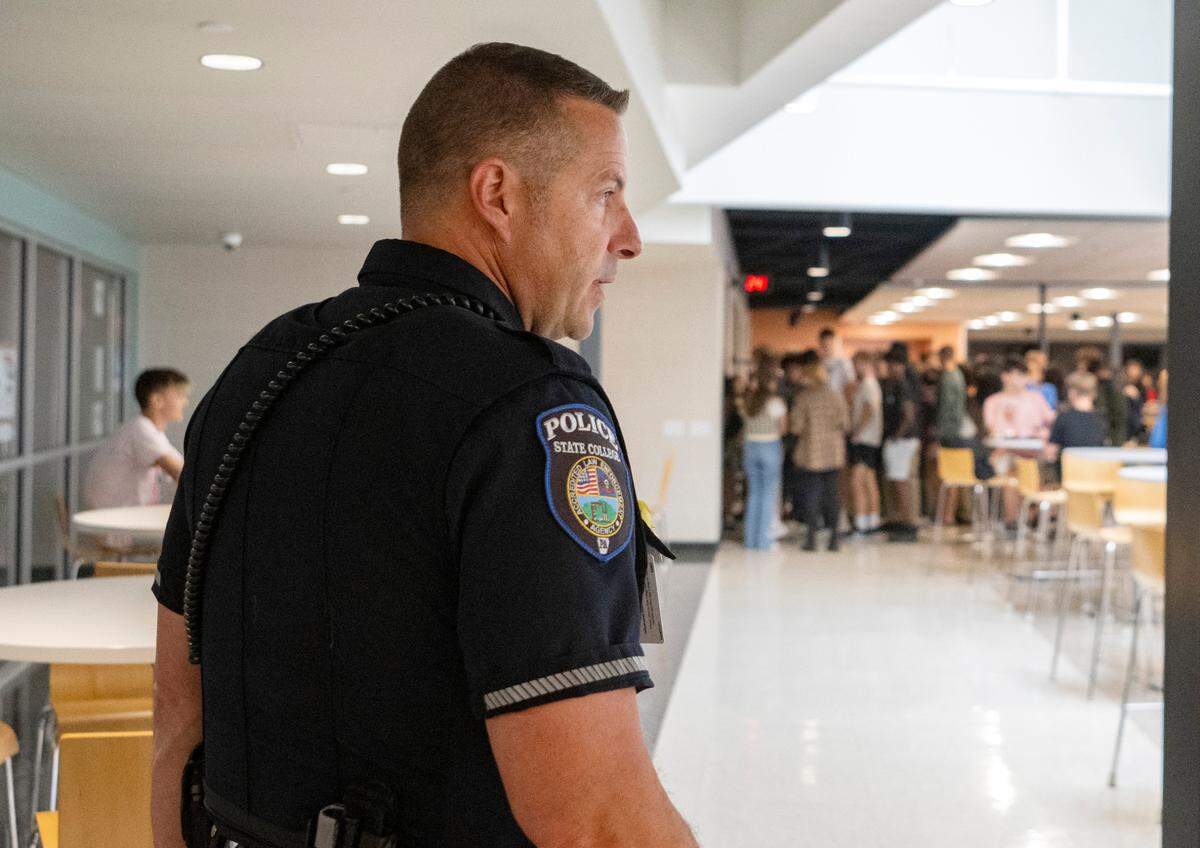
Aston also deals with safety education for students and staff, presenting in health classes, conducting mock traffic stops for driver’s ed students and informing administration on emergency safety protocols.
One vital part of Aston’s job is educating students and staff on different emergency scenarios, like lockdown or run, hide, fight situations. He teaches about locking doors, creating barricades and how to react quickly in an emergency like a school shooting.
Why don’t SCASD elementary schools have SROs?
The board confirmed that under the MOU, the Park Forest officer would routinely check in on two of the elementary schools but there would not be a permanent officer at any of the elementary schools. Aston is on call for several of the other elementary schools but unable to leave the high school during the day.
Although the National Association of School Resource Officers recommends one officer for every 1,000 students, it’s not feasible for every district. SCASD’s student population is nearly 7,000 students and more resource officers would be costly.
Providing an additional eight officers to staff the districts elementary schools would also draw staff from local police departments.
“There’s no way we could staff eight schools every day, it’s impossible,” Aston said.
Local departments routinely drive by or check on schools and have ways to enter buildings in the case of an emergency.
How do SROs fit with the district’s push toward restorative justice?
SROs have long been at the center of the school-to-prison pipeline debate, a point board member Carline Crevecoeur brought up during the Aug. 30 meeting. A study from the nonprofit organization Research for Action found that Black and Hispanic students are disproportionately arrested and referred to law enforcement. Additionally, Pennsylvania districts with more students of color spent roughly three times more on security.
But Aston argued against the concept of a school-to-prision pipeline, saying school resource officers in the district rely heavily on restorative justice through the Youth Aid Panel, a community organization in Centre County that provides alternatives to first-time juvenile offenders. The student meets with the panel of community members and performs a community service or act of restitution to help them understand and atone. Graduation from the program clears the juvenile’s criminal record.
“I disagree with the philosophy of ‘we don’t want to police interaction with the students,’” Aston said. “We’ve built on this triad of mentoring students, being an informal leader and educator and being there for safety and security.”
Aston says that not all officers can become SROs, it takes a certain personality type and many hours of training. The board also interviews any incoming SROs, which Crevecoeur said is a vital part of the selection process.
“It is important to me that all the committee members feel safe and comfortable with having SROs and I like the fact that we get to choose our SROs, we get to interview them and get to know them,” Crevecoeur said.
The MOUs with the police departments are renewed annually, and Monday’s agenda says that the district will use the Pennsylvania School Climate Survey “to collect data on safety and security, including the perception of SROs within our schools and how they can best utilize them throughout our district.”
The board will meet at 7 p.m. Monday at the Panorama Village offices.
This story was originally published September 18, 2022 at 6:00 AM.