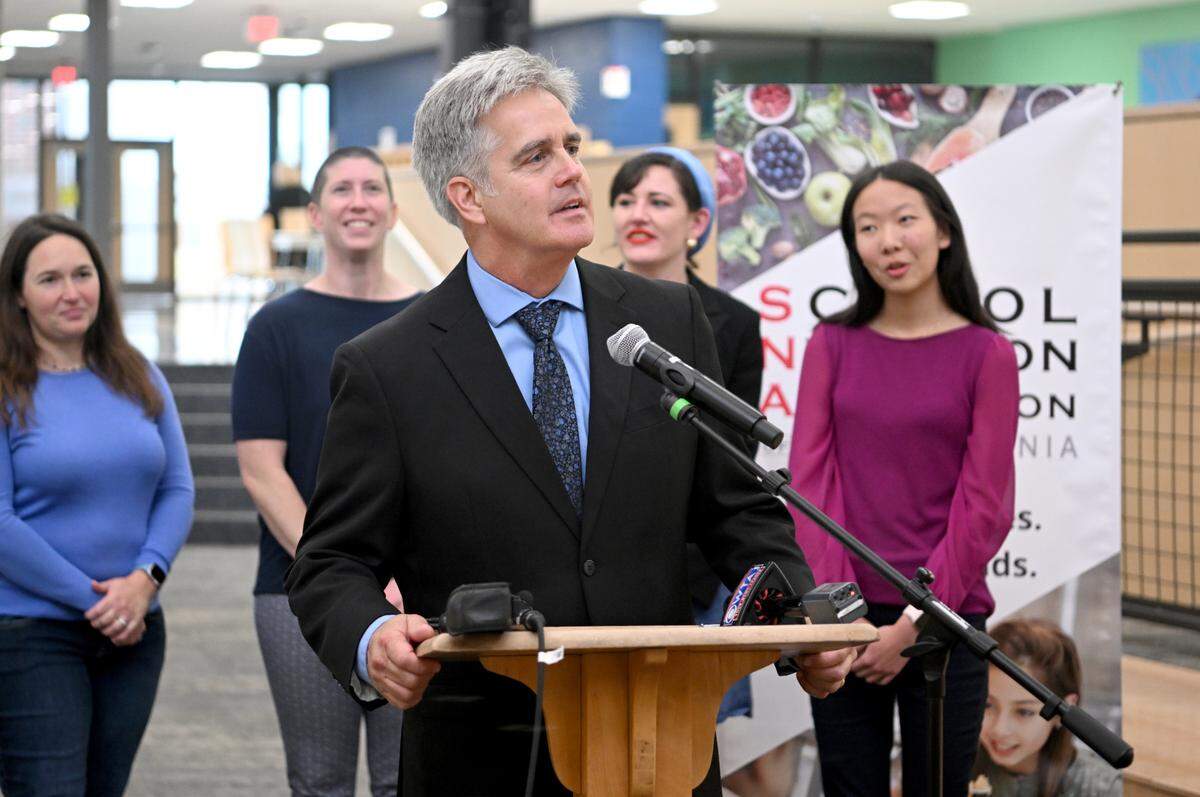
Rep. Conklin, State College school district call for universal free meals for K-12 students
Advocating for universal free meals for school-aged kids, Rep. Scott Conklin, D-Rush Township, visited the State College Area High School Wednesday to talk with students and educators about the need.
Conklin is a co-sponsor of House Bill 2829, which would amend the Public School Code of 1949 to provide free school meals — breakfast and lunch — to all K-12 students.
During the COVID-19 pandemic, the federal government covered the cost of school meals for all students. But Congress declined to extend the program for the 2022-23 school year, meaning families had to start paying for lunches again, or sign up for free and reduced meal programs. (In September, Pennsylvania Governor Tom Wolf announced a universal free school breakfast program for all public and private school students in the commonwealth, which began this month. It will continue through this school year.)
Conklin said food is at the core of setting a child up for success.
“A lot of times we think about trigonometry, we think about biology, we think about science. But one of the most important things that we can give our children is the ability to not have food insecurity. To give them that ability that they can start out their morning with breakfast (and) know at lunchtime, they have something to eat,” he said. “Because if you really want a child’s mind to work, you have to give it more than just an education. You have to give them that very substance that helps them grow.”
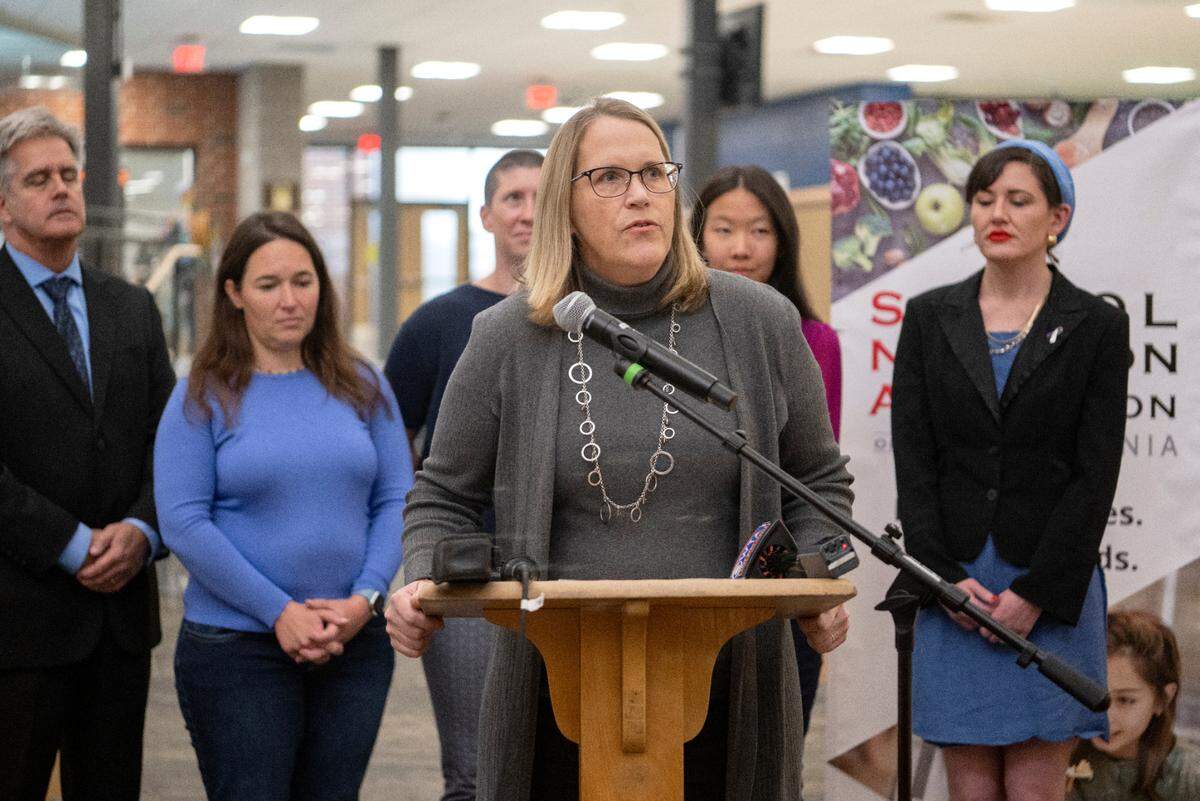
When every student had access to free meals, it was clear that it benefited students, families and educators, Megan Schaper, State College Area School District food service director and president of the School Nutrition Association of Pennsylvania, said.
“Obviously, access to school meals reduces childhood hunger but the benefits do not end there. They also decrease obesity, reduce absenteeism, reduce discipline problems and result in fewer visits to the school nurse. School meals help students to be more attentive and are associated with better academic performance, and reducing the barriers accessing meals ensures that more students reap these benefits,” Schaper said.
Claire Chi, a junior at SCASD and a junior student member of the Pennsylvania State Board of Education, said through the several nonprofit and governmental organizations she participates in, she is connected with diverse student voices statewide. Students in every geographic region and of all socioeconomic statuses have told her the universal free meals mitigated the stress and stigma associated with access to food assistance.
“A universal school meal program would relieve food insecurity exacerbated by the pandemic, support child nutrition for every K-12 student in Pennsylvania and ensure equitable access to a full learning experience in schools statewide,” Chi said.
Schaper said every year they receive applications for free meals from families who don’t qualify but are still struggling. The application for free and reduced meals does not consider anything beyond the income and number of people in the family, she said. If a family is struggling due to extra medical bills, for example, but doesn’t meet the income guidelines, they won’t qualify. A lot of people who could use the assistance are falling through the cracks, she said.
Jim Fogleman, head custodian at the middle school Delta Program, said during the pandemic, more kids ate, regardless of if they qualified for free or reduced meals. But now that lunches are no longer free, less kids are eating in the cafeteria.
“If we set a guideline and just pick a certain number, we’re not truly helping all the kids. I think it’s important that this bill passes for that very reason. Because if you look now, the number of kids that sit out in the cafeteria in the morning with nothing in front of them is enormous,” Fogleman said.
By providing free meals, it will also reduce the administrative burden of processing “complicated meal applications” and collecting school lunch money, Schaper said. It also eliminates student meal debt, bolsters school budgets and allows school nutrition programs to purchase better quality food and staff the kitchens.
“I know that this legislation has the potential to transform school cafeterias so that we can serve children better,” she said. “...Taste tests, school gardens, local purchasing and scratch cooking all become more possible when we re-envision how we fund the school cafeterias.”