
Test data shows pandemic’s impact on Centre County students’ test performance, growth
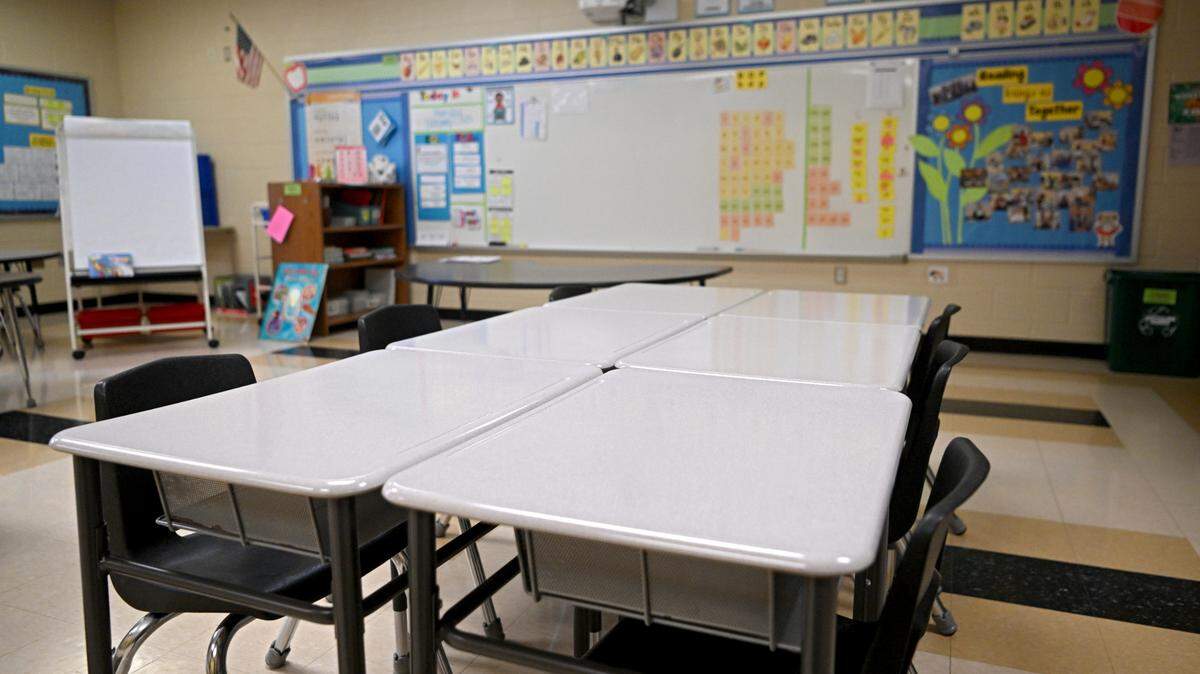
In schools across Pennsylvania, assessment results are still trailing pre-pandemic levels, and Centre County school districts are no different.
According to data released last fall by the state Department of Education, scores were down across Pennsylvania in the Pennsylvania System of State Assessment and Keystone exams for the 2021-22 school year. Centre County follows the statewide trend of math lagging behind science and reading scores in both growth and proficiency.
“We know that assessments show point-in-time data that does not reflect the full scope of learning happening in classrooms across the commonwealth, and we expect student performance will continue to improve as students and educators proceed with a more normalized, uninterrupted year of in-person learning,” then-acting Education Secretary Eric Hagarty wrote in a November press release.
In the fall, the National Association of Education Progress released data showing a severe dip in testing scores across the nation, including Pennsylvania. On Jan. 24, U.S. Education Secretary Miguel Cardona warned states against penalizing schools for low NAEP scores, but state evaluations under the Every Student Succeeds Act of 2015 still rely on the state assessment.
Centre County educators, administrators and board members have expressed their commitment to prioritizing pandemic learning losses, both academic and social. School boards, including State College Area and Bellefonte Area, have been analyzing testing data to determine where students are struggling most. Bellefonte’s board discussed updates to its district comprehensive plan during Tuesday’s meeting.
“Really what’s most important as we try to get out of that hole that was created is the actual growth of the student,” board President Jon Guizar said. “We really want to see them grow and get back on track.”
How does the state measure growth and proficiency?
Starting in the fall of 2018, Pennsylvania revamped its method of evaluating school progress, launching the PA Future Ready Index.
The PA Future Ready Index is an online database that compiles schools’ test results, including proficiency, growth, attendance and graduation rates. The PA Future Ready Index uses data from districts, and Keystone and PSSA exam results.
Growth is tracked through the Pennsylvania Value System of School Assessments, which uses PSSA and Keystone data to track year-to-year growth in math, reading and science. Schools receive separate scores for proficiency and growth in all three subjects.
Students from grades 3-8 in Pennsylvania take the PSSA exams in math and English once a year, with fourth and eighth grade students taking additional tests in science.
The data from the PA Future Ready Index can also be broken down by race, gender and economic status so parents and educators can see what goes into the test scores.
Act 13 Building Level scores went into effect for the 2021-2022 school year as part of Act 13, a law targeting educator effectiveness that was signed by former Gov. Tom Wolf in March 2020.
Scores are based on a 100-point scale, using academic achievement, academic growth and attendance to provide an overall measure of how an individual school is performing. Building scores use data included in the PA Future Ready Index to determine a building’s overall score as part of the state’s educator assessment process.
Scores comprise three categories: proficiency, growth and attendance. Scores are also adjusted based on the number of economically disadvantaged students a building has. Act 13 scores factor into the Pennsylvania Department of Education’s evaluations of educators but also provide an overall score for each school building across the state.
Centre County schools’ scores range from 93.9 to 54.9, with State High leading the pack and Philipsburg-Osceola Area Middle School at the tail end. More than half of Centre County schools hover in the 70-point range.
“It’s kind of a synopsis of all of the pieces, not just the assessment scores, but other components that make up what’s going on in your building to come up with that Act 13 number,” said Tracey Boone, curriculum director for Bald Eagle Area School District.
Centre County schools have mixed results
Across the state and local districts, math is lagging behind science and reading scores in both growth and proficiency. Only five of the 30 Centre County schools met the state’s math proficiency goal for the 2021-2022 school year: Corl Street Elementary, Radio Park Elementary, Ferguson Township Elementary, Bellefonte Area High School and State High. The state’s average score for math proficiency is 35.7%, more than a 30-point discrepancy from its own goal.
But several local schools are excelling in science, showing high proficiency scores. Out of 30 schools, only two, Philipsburg-Osceola Area Middle School and Philipsburg-Osceola Area High School are below the state average, and 14 surpassed the state’s 2030 goal.
P-O Superintendent Gregg Paladina said the district has focused on science curriculum in the elementary schools in recent years, but getting students interested in science can be difficult at higher levels. Philipsburg and Osceola Mills Elementary schools are above the state’s 2030 science proficiency goals, but the middle and high school science proficiency ranks are among the lowest in the county.
“The kids weren’t being taught science in the elementary for years and we revamped the whole program. Teachers worked hard on that,” Paladina said.
Bellefonte Area School District is also making hands-on science a focus at the elementary level, Assistant Superintendent Kris Vancas said.
“It’s not the old traditional textbook-based science, it’s a lot of exploration and discovery and discussions,” Vancas said. “It’s very hands-on.”
English proficiency is also scoring lower than educators like, with districts looking at the mechanics of how literacy is taught in the early years of education. Boone said BEA is focusing on how K-4 teachers teach English and reading and how educators are taught about literacy at the university level.
“We know that sadly we need to work on some literacy, especially in our early grade levels,” Boone said. “And we’ve put some things in place to do that. We’re going to look at professional development in the areas of how to teach reading.”
How do districts use this data?
Across the county, educators agree that test scores alone cannot show a complete picture of learning. Many districts use MTSS, Multi-Tiered Systems of Support, to target schools and individual students struggling with learning.
Schools are still trying to bounce back from the repercussions of COVID, Penns Valley Assistant Superintendent Sherri Connell said. For younger students, last year may be the first time they had taken state tests in a more regular school environment.
“I don’t really like the word ‘catching’ kids up because they’re where they are, we just need to continue to see growth and that’s really what we’re looking for,” Connell said.
Connell said the PSSA presents data from 30,000 feet, providing an overview but not close enough to see all the details of a student or district. But it does provide information on broad trends across schools or districts. A drawback to state testing is educators’ inability to see individual questions, leaving teachers to search for what concepts students are missing.
Boone agreed, calling tests like PSSA and Keystone a “snapshot in time,” recording one moment of the student’s progress. Using scores in the MTSS framework can help educators investigate where the breakdown in learning is happening.
Parents can also choose to have their students opt out of state testing, which can negatively affect district scores, Paladina said. Attendance in school and in state tests impacts PA Future Ready and Act 13 Building Level Scores. Paladina said the district’s most pressing concern is attendance, especially for P-O’s middle and high schools, whose scores fall below the state average.
Scores don’t always show a district’s long-term progress as well. Osceola Mills Elementary, for example, ranks 10th in the county for Act 13 scores but has shown radical growth over the past decade.
“I’m very, very proud of our elementary school scores,” Paladina said. “We pulled them out in the lowest of the state — Osceola Mills was second lowest in the state in 2012.”
Despite declining trends in test scores, the majority of Centre County schools are testing above state averages. Educators use the data alongside other measures to track overall growth and improvement.
“We’re still seeing areas where we want to grow and improve,” Boone said. “They’re not up at that 80% or 90% where we would like to see all our proficiency levels. So we’re gonna continue to work in that area.”