
Should State High keep using metal detectors? Some urge tighter security after threat
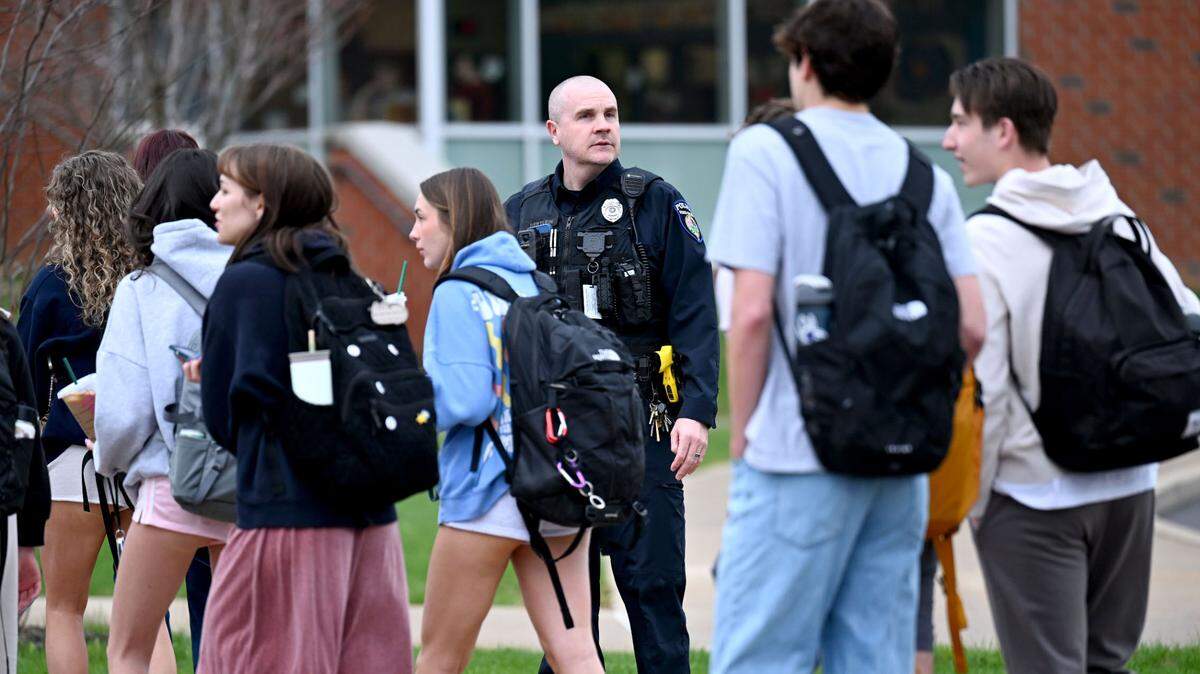
The State College Area School District has removed some security measures that were implemented after an alleged planned attack on State High was made public, though some community members are urging the district to reconsider.
As of Tuesday, State College Area High School and Delta Program students are no longer required to pass through metal detectors and other security screenings before entering their respective schools. The district began enforcing heightened security measures last week in response to the April 11 arrest of a man who allegedly planned to execute a school shooting on April 21 at State High. An increased police presence was also at the school as a precaution.
Moving forward, school security staff will continue checking the IDs of anyone entering State High and Delta buildings, Superintendent Curtis Johnson said in a letter to the district community.
“Because law enforcement continues to inform us that they have no evidence of an active threat against our schools, we will return to our normal arrival protocols tomorrow, without metal detectors,” Johnson said Monday.
While heightened security measures were in place, State High students were required to pass through metal detectors and offer up their bags, sports equipment, instrument cases and more for inspection. Delta students were checked over with metal detector wands during similar arrival screenings.
“This past week, with the implementation of metal detectors and the increased police presence, I can honestly say that I have felt the safest I have in my 29 years at this school,” Shai McGowan, a State High math teacher and president of the State College Area Education Association, said during public comment at Monday’s school board meeting, where she implored the district to continue using metal detectors, at least temporarily.
“It is disheartening to think we had to resort to such measures, but the reality is that these tools are vital in maintaining a secure learning environment for our students,” she added.
The initial deployment of the security measures prompted delays but no significant issues at State High, which ran on a one-hour delay April 14. That process gradually sped up over the week, largely aided by the use of three more metal detectors the district borrowed from Penn State.
State College’s school board voted unanimously Monday to approve the $54,348 purchase of three portable metal detectors that should “add an additional layer of physical safety and security on an as-needed basis to multiple locations,” administrators wrote in a memo. The three new metal detectors are identical to the two the district owns and will replace the devices borrowed from Penn State.
State High reported just a 64% attendance rate on Monday, the target day of the alleged planned attack on the school, according to a district spokesperson. Roughly 93.6% of the school’s 2,256 students were back in school on Tuesday. Despite security fears, those absences were considered unexcused unless students brought a note from their parents.
Community reactions to school security
Several community members, ranging from current State High students to district employees and parents, spoke during the meeting’s public comment period and urged the district to continue using metal detectors while police continue investigating a thwarted school shooting that would have targeted State High.
Ashley Schrag — who spoke at the meeting immediately after her daughter, a State High junior — encouraged administrators to hold off on plans to walk back tighter security measures while State College police continue investigating alleged plans for a school shooting at the high school.
“I think it’s dismaying that there’s a plan to stop using metal detectors tomorrow when they’re not done investigating leads,” she said. “I think we should be proactive, not reactive, when talking about the grave safety of students.”
Molly Martin, a district parent and professor of sociology at Penn State, spoke during public comment to offer the summarized results of a brief literature review, or a broad survey of credible, published sources, regarding school safety measures. She said her review found long-term metal detector use is more commonly associated with a lower sense of school safety, while random screenings and some non-technological measures were more effective.
“I recognize that there is a great deal of pressure, perhaps, to make the metal detectors permanent, but I would encourage the board to consider all safety options,” Martin said.
State College’s school board will host its next “conversation with the community” event at Barnes & Noble, 365 Benner Pike, at 7 p.m. Wednesday. Community members are invited to connect with board members on district-related issues, including school security.
Investigation continues
John Gardner, chief of the State College Police Department, spoke before the board Monday and said the main suspect behind the alleged planned attack on the high school was arrested. The department will continue investigating leads but remains confident there is no active threat against State High or other district schools, he said.
“I would have been comfortable sending my kids to school, knowing what I know now,” said Gardner, whose two children previously graduated from the school district. “I don’t take that lightly in saying that. That’s the best assurance I can give you right now.”
Police arrested Braedan Phillips, a 20-year-old man living in Milroy who previously lived in State College, on charges of conspiracy to commit murder and carrying a handgun without a license. According to a criminal complaint, he planned to execute a school shooting April 21 near the high school’s main staircase with “bombs” placed inside bathrooms.
An unnamed juvenile was also potentially involved, according to the criminal complaint, but law enforcement officials have only said that the investigation is ongoing. SCASD has not commented on whether students are being disciplined in connection to the investigation.
Phillips was denied bail as an “extreme danger to the community,” District Judge Casey McClain said at a preliminary hearing. Phillips’ preliminary hearing is scheduled for April 30.
Community members can contact State College police by calling 814-234-7150, emailing police@statecollegepa.us or submitting an anonymous tip online.
%202.JPG)