
Despite ‘reservations,’ State College district renews Young Scholars charter
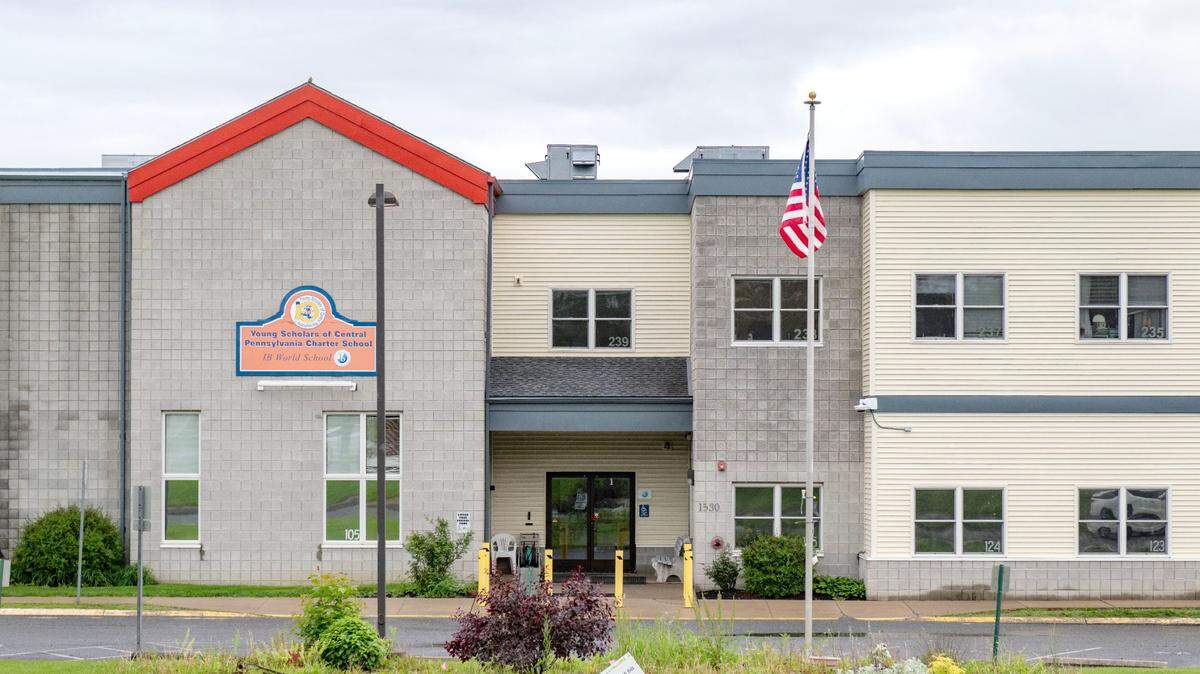
The State College Area School District has agreed to approve the five-year renewal of Young Scholars of Central Pennsylvania Charter School, but administrators say the move comes with reservations.
State College’s school board unanimously renewed Young Scholars’ charter through the 2029-30 school year Monday, just two weeks after district administrators outlined concerns with the school and its operations. Reservations regarding the renewal largely centered on the State College district’s financial contributions, low compensation rates for Young Scholars teachers and student achievement and curriculum.
During board discussions leading up to the vote, administrators and other district officials warned it would be difficult to potentially revoke or simply not renew the K-8 school’s charter because Young Scholars complies with current Pennsylvania charter school laws.
“With reservation, we recommend that the board approve this renewal request because [Young Scholars] complies with PA Charter School Law,” district administrators wrote in a memo summarizing the charter review process. “However, it should be noted that this differs from the laws our district must follow and does not align with the standards set by our Board of Directors.”
In discussions leading up to Monday’s vote, State College’s board members repeatedly took issue with Pennsylvania’s charter school laws and the standards they set for schools. But Young Scholars’ principal and CEO Levent Kaya asked the board to separate those issues when considering the proposal to renew the school’s charter.
“As you know, broader concerns about PA charter school law, cyber charter school funding, tuition rates, special education funding formula and political stances on [school] choice often arise when charter schools are being discussed, but none of those policy-level discussions are relevant to our renewal,” Kaya said. “Our school is not a cyber school. We have consistently operated with transparency and fiscal responsibility.”
Concerns with Young Scholars
During the renewal process, State College administrators submitted a 19-page report outlining the current conditions of Young Scholars’ education, certifications, staffing, finances, special education services and more.
In their report, administrators noted Young Scholars’ performance on the 2024 Pennsylvania State System of School Assessment (PSSA) — presented to students between the third and eighth grades — fell below district averages but exceeded state averages. No Young Scholars student groups met the interim goal and achievement targets established by the state for English/language arts or mathematics during the 2023-24 academic year, the report found.
Young Scholars is one of just six Pennsylvania schools to offer International Baccalaureate (IB) programming for both elementary and middle school-level students. The school says its IB curriculum emphasizes critical thinking, independent learning and global perspectives through unique programming, including the daily instruction of Chinese and Spanish, two of the world’s most spoken languages.
State College administrators noted the wide-ranging Young Scholars curriculum in their report but said many elementary units did not properly document Pennsylvania-set standards, while others were missing titles or did not “explicitly indicate” how content is differentiated for students. The charter school’s middle school curriculum was found to be organized clearly and consistently, State College’s report said.
Though the district’s report did not cite exact pay rates, administrators found Young Scholars’ teachers in 2023 were among the lowest paid in the state, ranking 772nd out of 782 Local Education Agencies. Young Scholars said its average teacher has 6.9 years of teaching experience, ranking in the bottom 6.9% of Pennsylvania’s Local Education Agencies.
Funding was a major sticking point during May 5’s board discussion surrounding renewing Young Scholars’ charter. State College’s district, which expects to pay $6.64 million in charter expenses under its 2025-26 proposed final budget, wrote in a memo that Young Scholars’ business costs are not reflective of district contributions.
“What was meant by that comment was that [Young Scholars was] not spending equivalently comparable dollars in specific areas as to what we do spend on our students,” said Randy Brown, the district’s finance and operations officer. “They were held to the same state requirement, but it’s a graduated scale depending on your annual budget.”
State College’s district sends the most money per student to Young Scholars each year, but less than half of the tuition-free school’s enrollment comes from the district. Through the current funding model, State College’s district paid Young Scholars $16,926 per regular education student and $36,252 per special education student in 2023.
The tuition Young Scholars receives from each sending school district can vary widely, administrators said. Larger and wealthier districts like State College’s can sometimes foot a more expensive bill than others.
“I think for our taxpayers, it’s important for them to understand, through no fault of our own, that we are effectively subsidizing the education of students from other districts when we have to send this money to the charter school,” board member Deborah Anderson said.
Kaya, who leads the Young Scholars charter school, penned a May 8 letter to State College administrators offering additional context on some issues, including allegations of improper educator certifications and efforts to increase teacher pay.
“Some elements of our school were noted as different from the district in the review. That’s by design,” Kaya said during Monday’s meeting. “Charter schools were created to be innovative and flexible, not identical to the school districts.”
Community members voice support for charter renewal
More than a dozen community members, including Young Scholars employees and parents, spoke in favor of renewing the charter during Monday’s board meeting. Minutes-long speeches implored board members to continue supporting the charter school due to its unique curriculum, welcoming community and transparency with families.
Carrie Irving, the mother of a 10-year-old Young Scholars gifted student with a disability, said she first identified the charter school as an option for her son thanks to its positive parent reviews and alternative curriculum. She used to drive 90 minutes to and from Young Scholars each day to make sure her son could attend and ultimately moved to Bellefonte to keep him enrolled.
“My son thrives at YSCP,” Irving said. “He comes home curious, he talks about what he’s learning — not just facts and figures, but ideas and values. He’s learning how to think, not what to think, and that is exactly the kind of foundation we should be protecting and investing in. YSCP is not only a great school; it’s a necessary one. In times like these, when quality education and incisive principles are too often at odds, YSCP proves we can have both.”
Young Scholars parent Shane Landherr, the owner of Forward Path Counseling in State College, said he has greatly enjoyed seeing his boys in kindergarten and the third grade learn new languages and become more curious about the world around them. As an employer, he argued Young Scholars provides additional value as an attractive educational offering in the area.
“Young Scholars being part of the educational opportunities in this area is attractive to recruiting and also retaining employees. I’ve had numerous employees who, when they started with me, were unsure if they would stay or if they’d leave. They’ve put down roots, they’ve started families, and the opportunities in education is a big part of that. I know Young Scholars is a part of that.”
Critiquing Pennsylvania charter law
Board member Gretchen Brandt said she has for years felt compelled to vote “yes” on charter renewals despite concerns over their operations. That feeling — one that suggests the board lacked the necessary oversight to enact significant changes to Young Scholars’ operations — was shared by many board members.
“I had some real problems with this document we received because it had significant red flags, and yet we’re told we should approve it because they still comply with the legal parameters,” board member Carline Crevecoeur said. “If at the end of the day we just have to approve it because they meet the legal parameters, then it’s kind of a waste. It’s a lot of time put into this, and yet we just have to approve it because it’s very hard to revoke it — especially if they’re meeting the legal requirements.”
Board member Peter Buck referenced comments from Eugene DePasquale, the former Pennsylvania auditor general, who once said the commonwealth’s charter school laws were the worst in the U.S. Pennsylvania charter schools seem to blur the lines between public and private schools, Buck argued, and are not subject to the same strictures as traditional public schools.
The district’s report highlighted some issues surrounding Young Scholars’ governance, including the lack of publicly accessible trustee meeting minutes, agenda documents or board bylaws. Kaya, Young Scholars’ president and CEO, wrote to the board and said the school is working to correct these issues, which would ordinarily land a traditional public school in hot water under transparency laws.
“You’re free to vote ‘no,’” Scott Etter, the district’s solicitor, told board members during May 5’s meeting. “If a majority of you vote ‘no’ and [Young Scholars officials] appeal it, which I assume they would do, we’d simply lose based upon the review of the administration.”
“The law is the law, and it does not give us a lot of latitude absent very, very, very extreme circumstances to do something,” Etter continued.
%202.JPG)