
Rep. Thompson’s whole milk legislation signed into law. What nutritionists, schools say
AI-generated summary reviewed by our newsroom.
- Congress enacts Whole Milk for Healthy Kids Act, restoring district milk choice.
- USDA guidance and district logistics may delay roll out until 2026–2027 school year.
- Experts say limited health impact expected; policy may boost dairy demand and farms.
U.S. Rep. Glenn Thompson, R-Howard, looked on as President Donald Trump scribbled his signature Wednesday on the Whole Milk for Healthy Kids Act, legislation close to Thompson’s heart that reverses the nationwide school ban on whole and 2% milk.
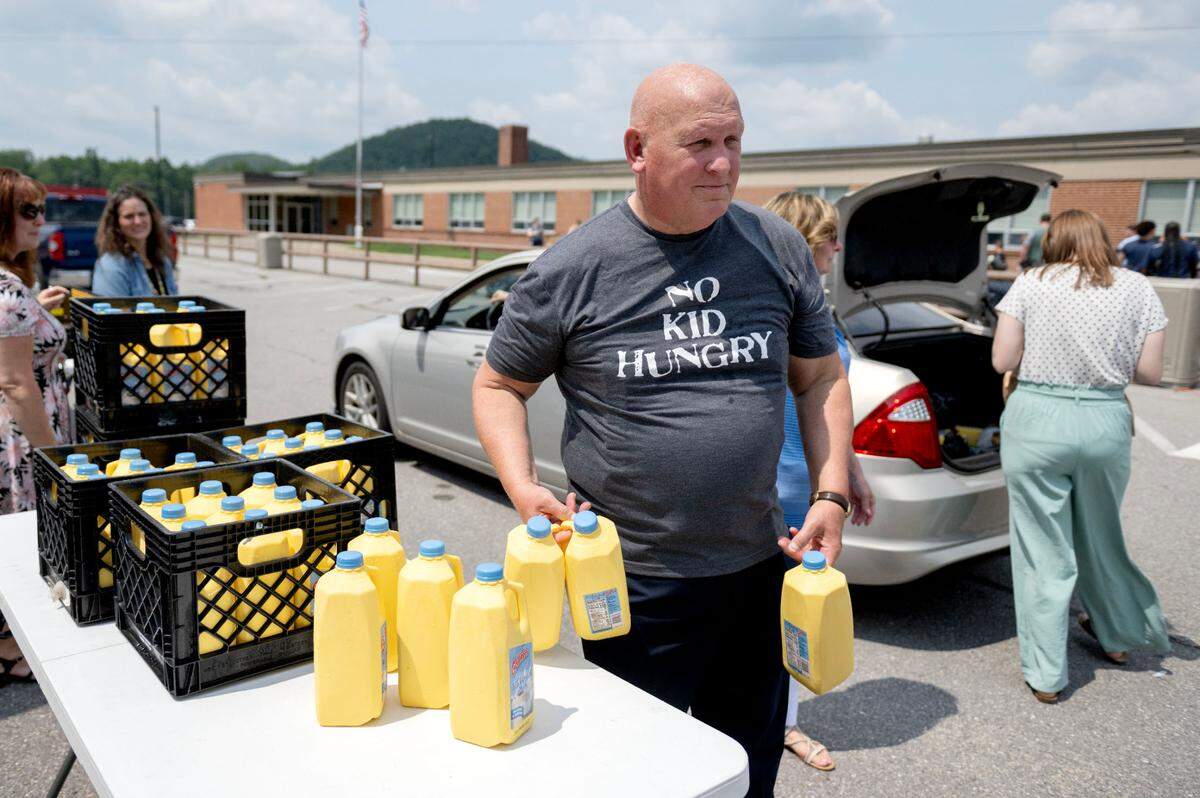
The bill that allows school districts to choose their milk offerings — from skim to whole, flavored and unflavored — is now officially law. But that doesn’t mean students will walk into the school cafeteria tomorrow and see cartons of whole milk sitting on shelves.
It’ll take time for the implementation — time for the USDA to issue guidance on compliance and time for school districts to update their menus. It’s possible some districts might not make any changes, as schools are not required to offer whole milk but are just permitted to. And it’s also possible other schools will not be able to make changes before the next academic year.
Still, for Thompson, this has been a long time coming. Whole milk and 2% milk were effectively banned from schools in 2012 due to an emphasis on low-fat dairy.
“I have worked for a decade to restore whole milk to our school cafeterias, which have been limiting healthy choices for students, but that changes today,” Thompson said in a written statement Dec. 15, when the bill passed the House. “Whole milk is an essential building block for a well-rounded and balanced diet, and students should have the option to choose the milk they love.”
The bipartisan bill received no formal opposition in either chamber. Co-sponsors included Democrats and Republicans alike, although Thompson was the primary sponsor in the House.
What do nutritionists say?
The issue of whole and 2% milk in schools came to a head in 2010, when dietary guidelines at the time viewed low-fat milk as healthier due to fewer calories and less saturated fats. At the time, studies suggested more saturated fats — even from whole milk — could contribute to childhood obesity and heart disease.
But a lot has changed since that time, when former President Barack Obama signed the 2010 Healthy, Hunger-Free Kids Act that banned whole milk in 2012. Today, further studies indicate saturated fats from healthy sources like milk are healthier than initially believed — although the extent of which remains unknown.
Kathleen L. Keller, a Penn State professor of nutritional sciences and the principal investigator of the Children’s Eating Behavior Lab, said the change is unlikely to make a significant impact on the health of American schoolchildren one way or another.
“Out of all the health-based decisions that the new administration has taken, a lot of which I think are definitely not a good idea, this one I’m a little ambivalent about,” Keller told the CDT. “I don’t think it’s going to have a huge negative impact if whole and 2% milk are brought back into schools.”
According to Keller, newer observational studies have shown that whole-milk drinkers have a lower risk of obesity and cardio-metabolic disease. But the “why” is not yet fully understood, as Keller reminded that correlation doesn’t necessarily equal causation.
When asked what she would recommend to parents hoping to do right by their children, the professor who earned her Ph.D. from Rutgers said there isn’t a one-size-fits-all approach.
“I think it’s one of those decisions where you have to kind of look at your particular family situation,” she said. “If you have a child that absolutely loves milk and they also maybe have been gaining weight, it might be an ideal time to switch to a lower-fat milk because your child’s getting a lot of their calories from milk.
“If it’s a family that has milk every so often and the child drinks the recommended amount of it and doesn’t really need to monitor excess weight gain, then I think there’s no clear reason to switch to a lower-fat milk.”
In almost every situation, Keller said, even whole chocolate milk still beats no milk at all.

What Centre County school districts are doing
Like many school districts around the U.S., public school districts within Centre County largely signaled last month that it was too early in the process to offer specifics on their plans.
Philipsburg-Osceola intended to make a decision only after receiving guidance from the USDA and state Department of Education, according to Thomas Martin, the district’s director of finance. Likewise, State College also implied it would wait on a decision.
Neither Bellefonte nor Penns Valley responded to a CDT message seeking comment. Only Bald Eagle Area told the CDT it already planned to offer whole milk — although the district acknowledged that likely wouldn’t happen before the 2026-2027 school year.
“Representative Thompson’s bill provides increased freedom of choice for students and parents wanting to choose whole milk, or wanting to choose alternatives to milk, within their school breakfast and lunch,” BEA district superintendent Christopher Santini wrote in an email. “This is not only a win for our local dairy farmers, it is also a win for our students. We applaud Representative Thompson for his work on this issue over the past decade. In our view, any time we can offer more options to our students, we are in favor of it.”
Santini was right about it being a win for local dairy farmers, a positive that’s at times been overlooked since the bill’s passage. According to the American Farm Bureau Federation, the country’s largest farmers’ organization, annual butterfat demand could rise by as much as 36 million pounds if just half of schools choose to offer whole milk.
“Even partial adoption could shift dairy demand,” an economist with the organization wrote, explaining whole milk contains about three times more fat than 1% milk.
What legislators around the U.S. are saying
This bipartisan bill received near-universal support, as this is something Thompson has pursued since at least 2013. As chair of the House Agriculture Committee and main sponsor of the House legislation, he played a key role in advancing it.
Here are a few of the statements from politicians in Pennsylvania and around the U.S. about it:
Statement from U.S. Secretary of Agriculture Brooke L. Rollins: “The Whole Milk for Healthy Kids Act marks a significant step forward in strengthening school nutrition and supporting America’s dairy farmers and is another win in President Trump’s efforts to Make America Healthy Again and to put Farmers First. ... The passage of the Whole Milk for Healthy Kids Act is more than a policy change; it’s a practical tool for promoting health nationwide and ensuring that America’s next generation thrives.”
Statement from U.S. Rep Kim Schrier, D-Wash, a lead co-sponsor of the legislation: “As a pediatrician, I know how important a balanced and nutritious diet is for children’s health and development, and I’m thrilled that my bipartisan bill has passed the House and is heading to the president’s desk. Ensuring that our children have access to a healthy diet is fundamental to their physical growth, academic performance, and overall well-being, and can set the foundation for lifelong healthy eating habits. Milk is a significant part of many children’s diets and contains essential nutrients that keep them full and healthy.”
Joint statement from U.S. Sens. Dave McCormick, R-Pa., and John Fetterman, D-Pa.: “This is a commonsense bill that benefits everyone. PA farmers supply the country with some of the best milk year-round, and instead of limiting choices in our schools, this will expand the nutritious and healthy options for our kids. We 100% have the backs of our farmers, students, and their families, and thank our colleagues in the House and Senate for getting this done.”
Statement from U.S. Rep. Tim Walberg, R-Mich.: “Good nutrition is the foundation of a child’s life, including his or her ability to learn and grow. Unfortunately, misguided policies removed whole milk from schools, stripping children of options to get important and essential nutrients—driving students to caffeinated and sugary alternatives that often do more harm than good. As chronic illnesses like diabetes continue to skyrocket among our nation’s children, it’s clear we must do more to ensure students have healthier options.”
Statement from U.S. Sen. Chuck Schumer, D-NY: “At long last, whole milk will return to school lunches! Milk is one of the best and healthiest options to give students the nutrition they need to learn and grow, and it has been restricted in our schools, hurting Upstate dairy farmers, for far too long. That’s why I was proud to stand with Upstate NY dairy farmers to call on the House to get the Whole Milk for Healthy Kids Act passed once and for all.”
CDT reporter Matt DiSanto contributed to this report