
Penn State’s student farm gets new name, future enhancements following $2M gift
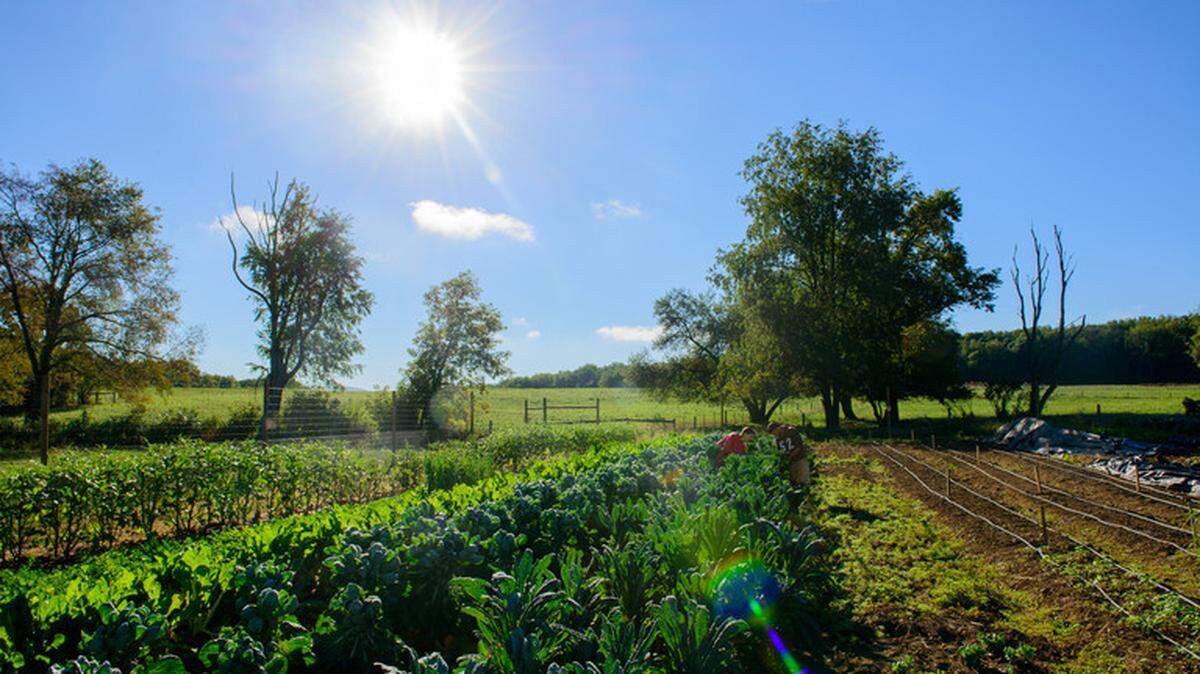
Penn State’s student farm has a new name and will soon see enhancements following a $2 million gift from Penn State’s 2020 Philanthropist of the Year, Keiko Miwa Ross.
The gift is part of a larger, $3.35 million gift from Ross to benefit programs at Penn State, including WPSU-TV and the University Libraries. Moving forward, the student farm will now be known as the Dr. Keiko Miwa Ross Student Farm.
As a resident at The Village at Penn State, Ross will be able to actively watch the progress her gift funds, as the farm is located right next door on Big Hollow Road.
The farm was established at that location in 2016, originally as a pilot. It wasn’t certain that Big Hollow Road would be the farm’s long-term home, said Leslie Pillen, associate director of farm and food systems within Penn State’s Sustainable Food Systems Program, but over the past few years the site has been identified as the best place to stay.
“That means Dr. Ross and other residents at The Village will be able to see us just down the hill from them for generations to come,” Pillen said.
The Student Farm offers hands-on learning experiences to students, while engaging the broader Centre County community with sustainable and local food systems. Produce from the farm goes to The Village, as well as to local food pantries around Centre County, as part of a gleaning program called the Community Harvest Project, which recruits students and community members to pick surplus produce both at the Student Farm and at the Penn State Horticulture Farm. The 2019 growing season resulted in 25,000 pounds of produce distributed to those in need around the county.
Despite this major impact, Pillen said the Student Farm’s community cultivation could be even more impactful. Community members are invited to a variety of events at the farm.
“People bring their families. Kids get to come and experience the farm,” Pillen said. “We’ll offer things like face painting or kid-friendly tours of the farm, so the younger generation can see what food looks like before it gets to the store or our plates.”
In 2020, events slowed in response to pandemic restrictions, but Pillen counts several virtual events in the fall as being “really successful,” including a film screening and multiple food way-focused panels.
“In November, we hosted an event called Native American Food Ways and had panelists talking about indigenous planting and agricultural practices and then one panelist talked about culinary practices and traditions within indigenous food ways,” Pillen said. “Those things, even though they’re virtual, still have an impact on the community.”
Now, she said, some of the Student Farm’s partners at the Bellefonte Children’s Garden are planning to incorporate indigenous food crops and education into the garden’s programming in 2021.
Beyond community impact, the Student Farm also plays a significant role in the educational experiences of Penn State attendees. Student Lex Trevelino joined the Student Farm Club in her sophomore year and believes it shaped her college path.
“Now, I am one semester away from graduating with a biological engineering degree and minors in international agriculture and environmental engineering,” she said. “I received a grant to conduct research on hydroponic lighting in the spring. ... The Student Farm has also encouraged me to continue to pursue a career in agriculture by applying to the Peace Corps agricultural sector.”
Ross’s gift will help the Student Farm extend its community outreach and student opportunities in more ways in 2021, as well as make enhancements to the farm’s infrastructure.
“Provost (Nicholas) Jones did approve some university funding that has enabled us to expand the farm, and so that work has been occurring throughout this year. It’s obviously gotten somewhat delayed due to COVID shutdowns, but it’s still moving forward,” Pillen said. “The timing of this gift is really exciting, because now these additional funds will enable us to bring some enhancements to the physical farm infrastructure and facilities that the initial funds from Provost Jones wouldn’t have maybe covered, that we had on our wish list for the future.”
On top of the physical impact of Ross’s gift, Pillen added, the funds also hold a special symbolic significance.
“It sends a very positive signal back to the university that our community values and appreciates the program. We do have a good relationship with the residents at The Village and I think this gift illustrates that,” Pillen said. “I think, in this time, we’ve all grown to really appreciate community in a new way. We can’t be physically together now, so while we’re really missing having our social connections and time with community, I think this gift gives us some hope and a reminder that we’ll return to that.”
To learn more about the Dr. Keiko Miwa Ross Student Farm, as well as upcoming Student Farm events, visit www.studentfarm.psu.edu.