Penn State is advising all students in 2 East Halls dorms to get tested for COVID-19. Here’s why
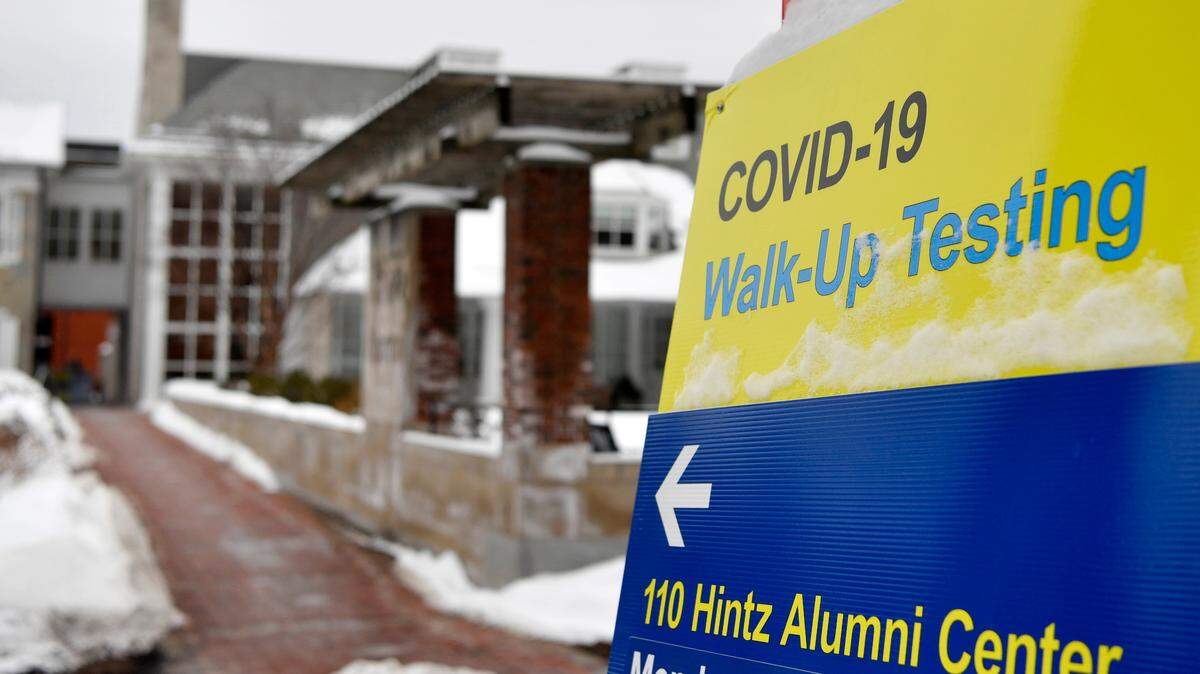
After an uptick of COVID-19 cases in two East Halls dorms, Penn State announced Wednesday it is urging students there — “out of an abundance of caution” — to get tested at the walk-up center at nearby Pegula Ice Arena.
The university did not specify how many cases came from Hastings Hall and Stone Hall to prompt such an announcement. But, overall at University Park, cases of the coronavirus have been on the rise, although they still pale in comparison to the fall.
From March 10-16, according to the university’s COVID-19 dashboard, Penn State experienced 139 positive cases and a 2.3% positivity rate. That’s an increase from the previous week’s 81 cases and 1.5% positivity rate, which was an increase over the previous week there (78 cases, 1% positivity rate). Countywide, Centre also added 102 cases Thursday — the most since Feb. 7.
Still, that’s a far cry from last semester when, for more than a month, the university experienced 200-plus cases about every four days.
“We have had a few students from each of these residence halls test positive this week,” Kelly Wolgast, director of the COVID-19 Operations Control Center, said in a written statement. “To help us understand if the virus has spread further and to catch and isolate any additional positive cases, we are asking all students living in these locations to get tested for COVID-19, unless they have tested positive in the previous 90 days.”
Any student without symptoms who would like to get tested — even those outside of Hastings Hall and Stone Hall — can walk-up between 9 a.m. and 5 p.m., Monday through Saturday, at either Pegula Ice Arena or the Hintz Family Alumni Center. Students with symptoms should schedule a testing appointment with University Health Services via myUHS.
Asymptomatic students will be rapid-tested and will receive their results on site. Those who test positive will undergo a second test — a PCR test, considered the “gold standard” in COVID-19 detection — and, if also positive there, will be referred to isolation.
“The virus is still prevalent almost everywhere, so we all must continue following public health guidelines to help reduce the spread on our campuses,” Wolgast said. “It’s imperative that we keep masking, physically distancing from others and avoiding large gatherings.
“Please, just stay with your small pod of friends this spring. Answer your phone when our contact tracers call you. The next few weeks are critical to continuing our on-campus activities through the end of the semester.”