A Penn State study on trout is seeking help from anglers in Pa. Here’s how to participate
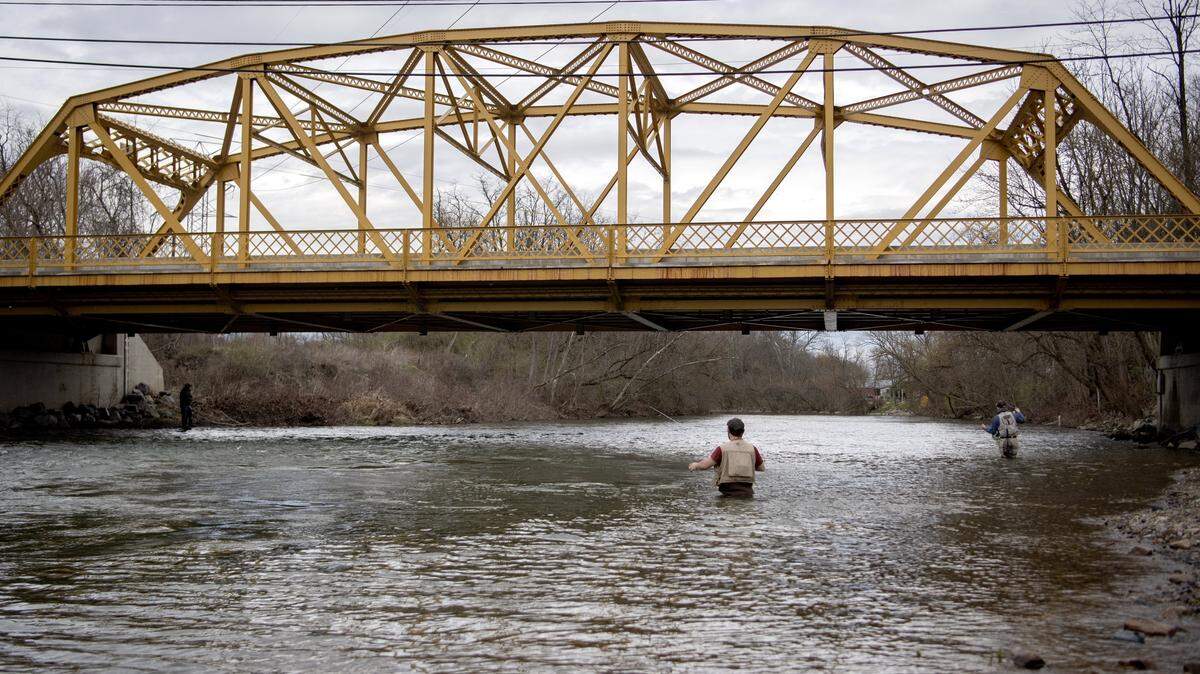
With Saturday marking the opening day of trout season in Pennsylvania, anglers have the opportunity to assist researchers in a new study on wild brook and brown trout.
Both studying wildlife and fisheries science at Penn State, doctoral candidate Sara Mueller and undergraduate junior Eamonn Powers are leading the project that aims to analyze the various colors and patterns present in such fish across the commonwealth. Powers, president of Penn State’s Fly Fishing Club, reached out to Mueller about conducting research and the pair decided on this study.
“We just hear so many stories about how colorful and pretty fish are, particularly brook trout, so we wanted a way to look at that,” Mueller said.
Anglers age 18 and up are asked to request and take a photo of their fish with a special gray card that can show researchers the approximate size of the fish, and therefore its age. The card, which will be mailed directly to participants, includes three boxes that show the other characteristics like color and patterns.
Following the instructions that will be mailed along with the card, participants should download the Survey123 app for the project to submit their photos and other information relevant to the study, such as the fishing location and habitat features. The fishing spots shared will remain confidential and won’t be pinpointed as exact locations.
According to the Pennsylvania Fish and Boat Commission website, the commonwealth includes nearly 16,000 miles of wild trout streams.
“We knew that we couldn’t fish the whole state ourselves and that we would need help, so that’s where we decided to turn it into an angler science project,” Mueller said.
Using computer software, researchers will study the variation in color and patterns of the trout, along with features including parr marks, halos around spots, breeding colors and kype.
The project began Feb. 16 and will continue for approximately one year, according to Mueller. Still, the results could lead to further questions and an extension of the study into the eastern range of brook trout, according to the project’s website.
“There’s just so much information that this is leading to a lifetime of inquiries,” Mueller said. “It’s just the beginning of something.”
So far, the team has received over 100 submissions and a total of 900 requests for the cards. The goal is to send 5,000 cards to anglers in Pennsylvania.
To find a fishing location, check the PFBC’s county by county map of waterway access points.
For additional information about the study, contact Mueller at sjm5467@psu.edu.