Penn State leaders renew calls for DACA program support; Barron urges pathway to citizenship
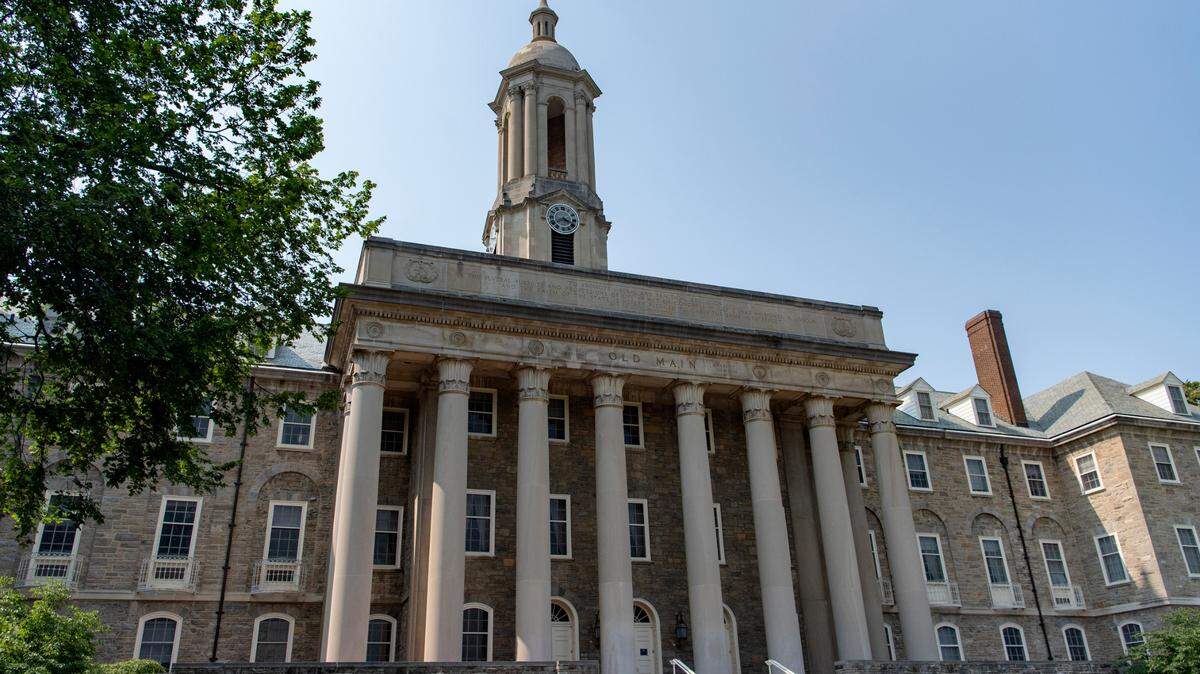
A large contingent of Penn Staters, including student leaders and the university president, have voiced their opposition to a recent federal judge’s ruling that seeks to end a government program designed to protect undocumented immigrants who arrived in the U.S. as children.
On July 16, a federal judge in Texas ruled in favor of nine conservative states that sued to stop the Deferred Action for Childhood Arrivals (DACA) program, which protects about 700,000 young people — known as Dreamers — from deportation. The program allows them to apply for a driver’s license, Social Security number and work permit, though it does not offer a direct pathway to citizenship.
In the short term, the judge’s ruling halts all new applications but does not impact current DACA recipients, who renew their status every two years. In the long term, the Department of Homeland Security will appeal — while Dreamers hold out hope the program will continue as before.
“The hundreds of thousands of individuals impacted by this decision deserve a solution,” Penn State President Eric Barron said in a written statement last week. “As an educational institution and a welcoming community that values diversity, equity and inclusion, we have continued to follow this issue and are committed to the education of all of our students. We understand the concerns both here at Penn State and across the country, and we continue to urge Congress to pass legislation that offers a pathway to citizenship.”
It’s not the first time Barron, nor the Penn State community, has publicly supported DACA. In 2016, shortly after the election of former President Donald Trump, Barron was among hundreds of university presidents who signed a letter calling for the program to be “upheld, continued and expanded.” He made similar overtures every year since.
At issue in the recent court case was whether former President Barack Obama had the authority to create a program like DACA in 2012 without the authorization of Congress. The states that sued — all of which boast Republican governors and/or state attorneys general — also said the program drains education and health care resources, something DACA supporters argue is false.
Bonj Szczygiel, president of the faculty senate, said Friday she is in “complete agreement” with Barron. Erin Boas, student president of the University Park Undergraduate Association, also echoed the university president’s words.
“This ruling poses an immediate threat to future Penn Staters and students across the nation,” Boas told the CDT. “Education is the foundation of this country, and it is imperative that our legal structures place equity at the center of the educational system and pathways to success.
“The aspiring Dreamers belong at our institutions and in our communities. The United States Congress must take legislative action to protect all those affected, and I implore university administrators, current students and alumni to unite and urge their government officials to do so.”
In February, President Joe Biden and congressional Democrats proposed an immigration overhaul that included an eight-year path to citizenship, but Republican lawmakers blocked the effort. Earlier this month, Biden called for bipartisan action on the pathway to citizenship but, on Sunday, said it “remains to be seen” if that pathway will be part of a $3.5 trillion budget measure.
It is not not known how many Penn State students are DACA recipients. But, according to the American Immigration Council, Pennsylvania is home to nearly 5,000 Dreamers — and nearly 85,000 residents of the commonwealth live with at least one family member who is undocumented.
Even those not directly impacted can empathize. Najee Rodriguez, vice president of the University Park student government, said her grandparents both fled from the Dominican Republic during the Rafael Trujillo dictatorship, a time known as one of the bloodiest ever in the Americas.
“There are thousands of young Dreamers who have been brought into the United States by their parents, like my grandparents, who yearn to escape devastating circumstances,” Rodriguez said. “While the judicial decision does not impact current Dreamers, it has caused enormous uncertainty to those who were aiming to be accepted by the program and to finally have stability within their lives. They have every right to continue to be here.”
Trump tried to phase out DACA during his presidency but was stopped by several courts on technical grounds. District court judge Andrew Hanen, of the Southern District of Texas, let the program remain in 2018 as litigation proceeded — but offered his ruling against the program earlier this month.
Again, current DACA recipients are not immediately impacted. But the fear for many is that such protections might no longer be guaranteed in the future.
“The amount of anxiety and uncertainty that this decision places on even people who currently have DACA is high,” said Shoba Wadhia, founder and director of Penn State’s Center for Immigrants’ Rights Clinic. “So, it’s more psychologically than wait-and-see, to the extent there’s more anxiety, there’s more risk, and there’s more uncertainty about what the future holds.”
In the meantime, Penn State is offering counseling services for such students. And the rights clinic also boasts several dozen resources on its website, to help current and future hopeful DACA recipients navigate the issue.
The states that opposed DACA and filed the lawsuit are Alabama, Arkansas, Kansas, Louisiana, Mississippi, Nebraska, South Carolina, Texas and West Virginia.
“While the court’s order does not now affect current DACA recipients, it nonetheless leaves hundreds of thousands of young people in limbo, uncertain of their futures,” Barron added. “My administration stands in support of efforts to find a legislative solution that will provide a more certain path forward, free of discrimination and one that restores certainty for the individuals impacted.”
The Associated Press contributed to this report