PA lawmakers hear from Penn State faculty about inclusion, diversity concerns
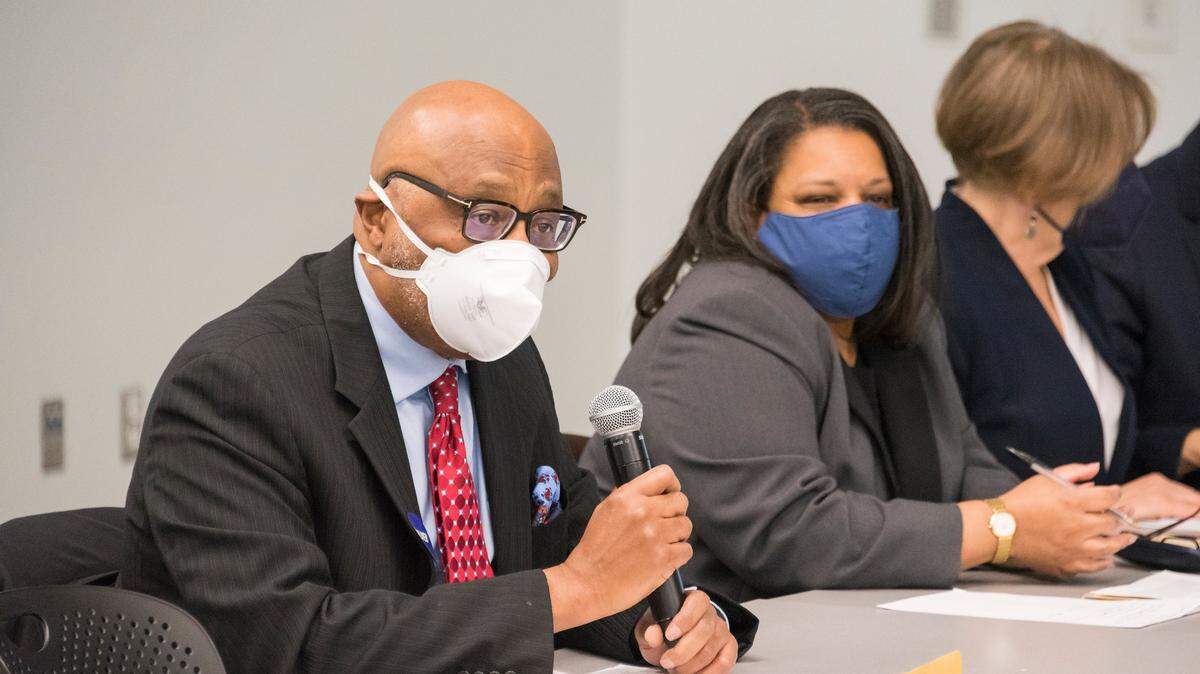
The PA House Democratic Policy Committee held a hearing on Wednesday titled, “Diverse by Example: Increasing Participation in Academia,” that navigated equity and inclusion in higher education and gave faculty of color the opportunity to share their experiences at Penn State.
The hearing, which was organized by Gary King, a professor of biobehavioral health, and the College Democrats, was hosted by Reps. Stephen Kinsey, D-Philadelphia, and Gina Curry, D-Delaware, in Penn State’s HUB-Robeson Center.
“We are hoping that the legislators are going to be more fully apprised of the situation and we hope to be able to begin working with them, as well as others in the university, to effectively adjust the problem,” King said prior to the event.
State legislators present at the hearing included Chairman Ryan Bizzarro, D-Erie, and Reps. Chris Sainato, D-Lawrence; Joe Ciresi, D-Montgomery; Mark Longietti, D-Mercer; Napoleon Nelson, D-Montgomery; and Steve Malagari, D-Montgomery.
Lawmakers heard testimony from four panels that included personal experiences of faculty of color at Penn State as well as the university’s efforts to increase diversity. As part of the first panel, King presented the findings of his two co-authored reports that provide detailed evidence of systemic racism at Penn State resulting from the lack of representation of Black faculty.
The first report, “More Rivers to Cross: The Status of African American Professors at Penn State University,” was published in January 2020 and revealed that during the 15-year period from 2004 to 2015, the number of Black professors decreased from 105 to 103. In terms of tenure and tenure-track professors, King said the number dwindled from 83% of Black faculty in 2004 to 68% in 2018.
In the second report, “More Rivers to Cross: Black Faculty and Academic Racism at Penn State University,” published in March 2021, King said that 80% of surveyed Black professors at Penn State revealed that they had experienced racism at the university.
Members of the university spoke to efforts underway in examining issues regarding racial diversity and advancing Penn State’s retention and support for underrepresented faculty. Marcus Whitehurst, the university’s vice provost for educational equity, said Penn State’s attempt to address these challenges is best illustrated by a university-wide plan that identifies four critical goals: to foster a culture of respect and inclusion that values diverse experiences; to develop and implement a curriculum that interrogates social issues and inspires social responsibility; to evaluate the structural policies and procedures that limit access to opportunities; and to continue to recruit, support and advance diverse staff, faculty and students.
Whitehurst also pointed to initiatives developed by the Office for Educational Equity including a faculty mentorship program, an equity leadership fellowship and a faculty advisory committee for equity.
“At Penn State, we recognize the challenges of recruiting and retaining a diverse workforce in higher education,” Whitehurst said.
Whitehead said there were 245 Black faculty members at Penn State in 2021, but King called the figure “misleading” as it included administrators and faculty at the medicine and law schools. According to the university’s database, in fall 2021 there were 107 full-time Black faculty members at Penn State’s University Park campus and nine Black part-time faculty members.
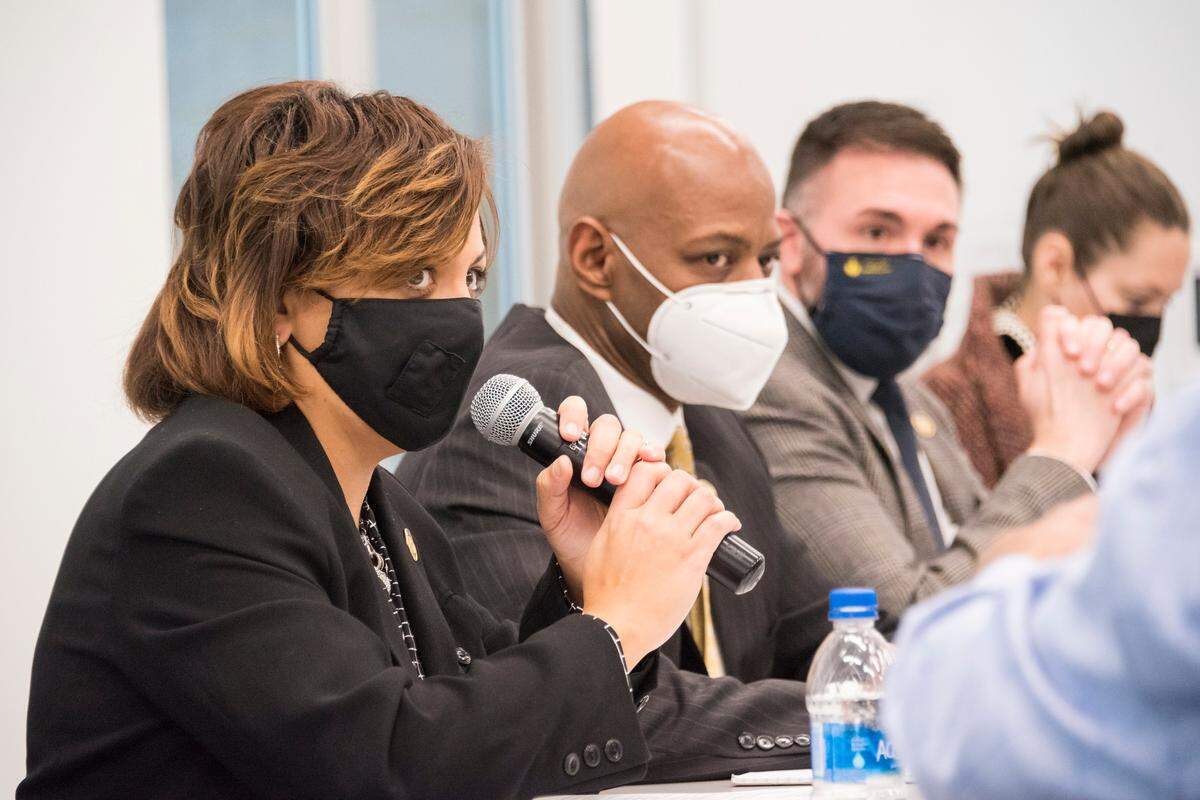
During the third panel, Julio Palma, assistant professor of chemistry, and Julie Reed, associate professor of Native American and American history, highlighted that these obstacles face faculty from a diverse range of backgrounds. Palma told legislators that the biggest challenge is accountability — adding that while making a strong statement is important, it’s not as significant as the university taking action.
Lawmakers also heard from representatives from the Educational Testing Service, who discussed efforts underway to recruit more diverse faculty to higher education in Pennsylvania.
After hearing all of the testimonies, Curry said she sensed exhaustion from faculty members of color due to the exorbitant amount of work they were putting into their own representation efforts.
“I want us all to leave today understanding that we need to continue to build these relationships from leadership all the way down to the student voice,” Curry said. “It is so important to encapsulate why we are here and keep our focus on who we are serving.”
A recording of the hearing can be found at http://www.pahouse.com/policycommittee.