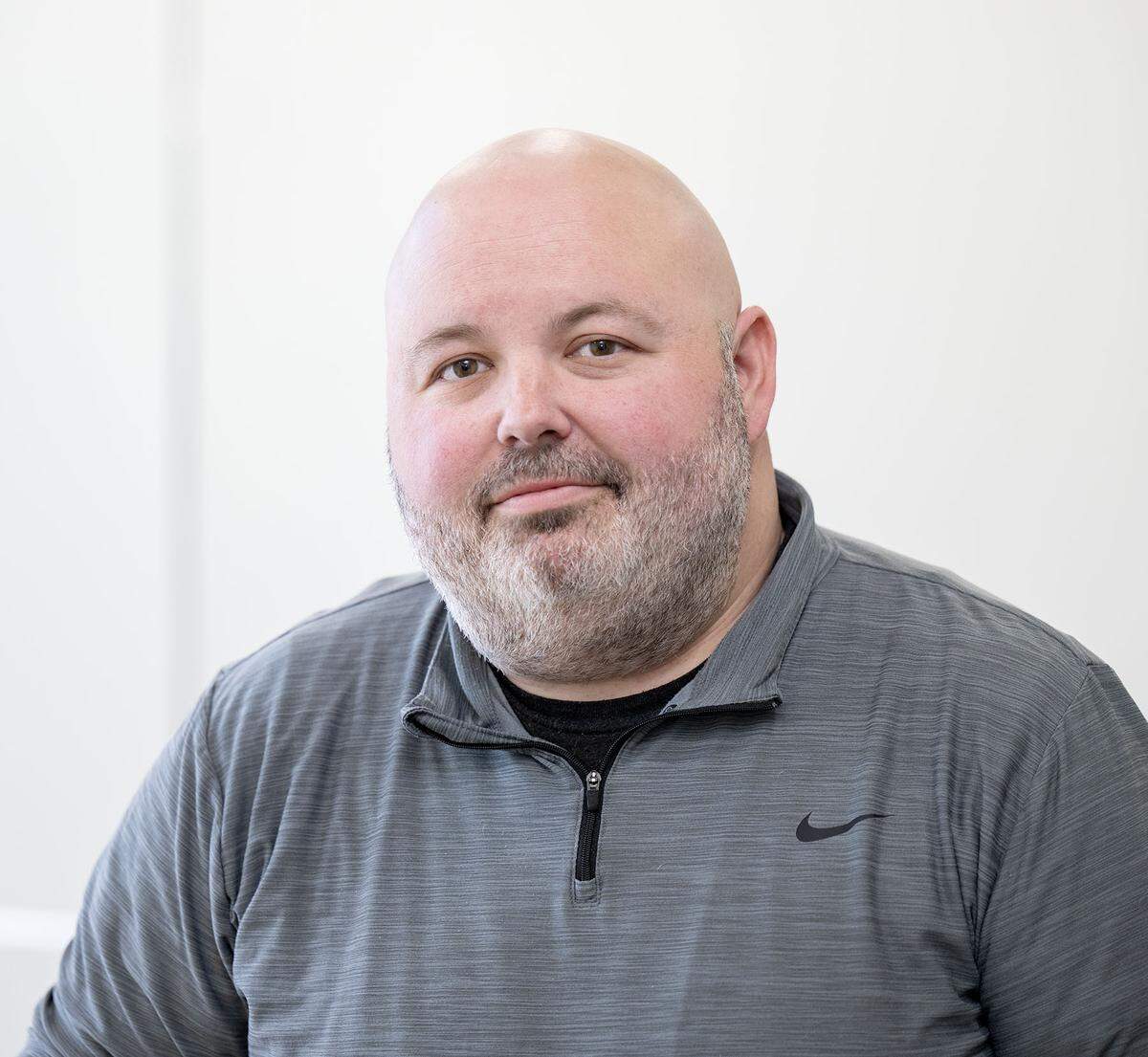
Meet the Penn State deans: Chuck Whiteman talks puzzles, starting a business — and Facebook

As part of a collaborative effort with Penn State, which is releasing a monthly video on school deans and their perspectives and passions, the Centre Daily Times is continuing a lighthearted Q&A series that highlights a different dean every month in the hopes the local community gets to know them outside of the classroom.
Up next: Chuck Whiteman, Dean of the Penn State Smeal College of Business
Whiteman, who earned a doctorate in economics from the University of Minnesota, joined Penn State in 2012 after serving as senior associate dean for Iowa’s business school. He’s written two books, published more than 70 academic papers and has worked as an associate editor at several economics journals.
As a Penn State dean, he oversees more than 5,000 students and supports faculty research over six departments. He also loves word puzzles and has an affinity for jumbles.
Centre Daily Times: You’ve expressed a love for puzzles like word jumbles, in part because of how they get you to think differently. When did that start, and what is that “different” thinking?
Chuck Whiteman: I can tell you exactly when it started — when I was growing up, at morning breakfast (with the Des Moines Register newspaper). ... But, when I was a young faculty member, I had a group of MBA students who kind of resurrected my interest in the jumble. I had done it forever when I was a kid but, when I went to college, no more Des Moines Register. So I sort of fell out of the habit of doing it.
But, coincidentally, my first academic job was back in Iowa. So Des Moines Register, for sure. And the MBA students had a gimmick about it — which was you couldn’t write anything down. You had to do it all by memory. ... And, well, puzzles kind of follow flawless logic. But, oftentimes, there’s a gimmick to the answer; they’re using a clue that can be interpreted in multiple different ways. And you’ve got to think outside the box to come up with what those things are. And so, the the linear part is part of the economic modeling, but the creative part is is often the most interesting because you’re covering new ground; you’re thinking about new things.
CDT: Let’s shift a little bit, so I can pick your brain more about your specialty here. Surveys have shown a majority of Americans want to start their own businesses and, in 2021, new business applications reached an all-time high. What advice would you give to Pennsylvanians who want to start their own business — other than visiting Penn State’s “innovation hubs” that aim to help entrepreneurs?
Whiteman: One thing the public ought to know is that in Smeal and at Penn State, we have lots of ways for people to get the information they would need to start a business. We have just created, in the last five years or so, an undergraduate business certificate, which is sort of a credential for non-business majors.
I’m an academic, so I’m going to stick to my guns — which is budding entrepreneurs need to learn about how to start a business. It’s not bullet points; it’s coursework. Now, it can be done without getting a degree. But, you know, the basics of accounting and the basics of HR will come up later. ... And so, whether it’s formal education like what I’m talking about, or Khan Academy or some other place, I would say get some help — and be prepared to pivot. One of the most common things that we hear from budding entrepreneurs is that there came a point at which they had to say, “This isn’t working, I got to do something else.”
One of the coolest examples we have ... (are) now making wristbands for Apple watches. But one of them said the first thing they tried to do was to create a portable charger for laptops. And it didn’t work because he hired a third party to prototype his charger, and the third party didn’t deliver. And so he says, “Well, I can’t make this. And I can’t make somebody else make it.” And he burned through the capital that he had. So he (pivoted).
CDT: Let’s dive into a hypothetical. Let’s say an alum or community member approached you and said, “Here’s all the capital you need. I want us to start a business in downtown State College.” What business would you open?
Whiteman: Let me give you the flippant answer first, OK? Because you’ve restricted me to downtown, market data would suggest a bar. Now let me give you the example of the business I’ve actually thought about — and this actually stems from my academic work. I would set up an artificial intelligence deep-learning firm to break existing implementations of human behavior predictors using artificial intelligence.
So, firms are applying artificial intelligence to predict human behavior, without thinking about it very deeply. And economists got into enormous trouble in the 1970s by doing essentially the same thing, and a lot of my academic work was about that issue. So I’m really familiar with how you can go wrong with using artificial intelligence deep-learning models to predict behavior under circumstances in which it is not reasonable to expect behavior to remain unchanged in the face of various environmental things. ... So what I would do is sell my services to the companies using these things to help them improve their artificial intelligence human behavior predictors.
CDT: OK, maybe we can move out of downtown for that business. But let’s switch gears and talk about recent Smeal news: Penn State will downsize its MBA resident program from two years to one by 2024. Granted, a number of other universities made similar moves — but why is this the right time and the right move for Smeal?
Whiteman: We should define the move as a transition from a two-year MBA to one year, and the reason for the transition is basically that professional learners now demand flexibility, stackability. They want to be able to get in and out quickly if that’s their desire. The market has changed dramatically.
In the past just few years, there have been big declines in students taking the GMAT, which is kind of the entrance exam for MBA programs. Their willingness to come and pay tuition has diminished quite substantially. Even the elite programs are beginning to discount tuition, in some cases dramatically, like more than $100,000 of tuition discounts for students to come to the program. So the market had changed away from what it was like 20-30 years ago.
It started before the pandemic, but it’s been accelerated in, let’s call it the last five years or so. ... There are a lot of reasons to do this. And so we are transitioning to a one-year MBA that we have something very similar in place. Now, that’s our master’s of organizational leadership; that’s been very successful in the marketplace.
CDT: We usually end with an off-the-wall question, but we’ll offer you a more straightforward hypothetical — something similar to our last dean. I’m going to give you a list of seven CEOS; I want you to tell me who would be your first and last choices to be guest lecturers at Penn State for a semester. Here are your choices: Warren Buffett (Berkshire Hathaway), Tim Cook (Apple), Andy Jassy (Amazon), Elon Musk (Tesla), Satya Nadella (Microsoft), Sundar Pichai (Alphabet/Google) and Mark Zuckerberg (Facebook/Meta).
Whiteman: I’m going to pick Warren Buffett. Why? He turned investing on its head. Like, what we teach in the finance classes is diversify, and what he’ll say is, no, the important thing is to know more about the company than anybody else. So you turn an investment program or an investment decision into an asymmetric information problem. And, throughout his career, he’s had a track record of knowing more about the company than anybody else — and I would like to learn more about that. I think it would be fascinating to happen here.
And the last I would choose would be Mark Zuckerberg. I don’t want to spend a semester listening to stuff about Facebook. Just on a personal note. But I’m also not that keen on some of the things Facebook has done — how they police things, how they don’t police things; what they’re censoring, what they’re not censoring. And the algorithms they use to do that. Just a whole host of issues with that.
You know, we’ve got an honor code on the wall down there. And we talked about that as part of our culture, and the honor code itself is just the beginning of that culture. We don’t want to say that we’ve got it all right — but we’ve been working pretty hard on it. And I think maybe, maybe, he could use some of that.
This story was originally published September 13, 2022 at 6:00 AM.