More than 250 ‘concerned faculty’ at Penn State sign letter on racial justice, equality
More than 250 Penn State faculty members have signed on to an open letter questioning university leaders’ response — or lack thereof — when it comes to racial justice, as concerns have continued to mount this fall.
The letter, shared through Google Forms, claimed Black faculty are leaving the university at four times the rate of any other group. It questioned Penn State’s recent decision to backtrack on its commitment for a Center for Racial Justice. And it voiced concern after the university laid partial blame on student protesters for increasing “visibility” of an event featuring the founder of the Proud Boys.
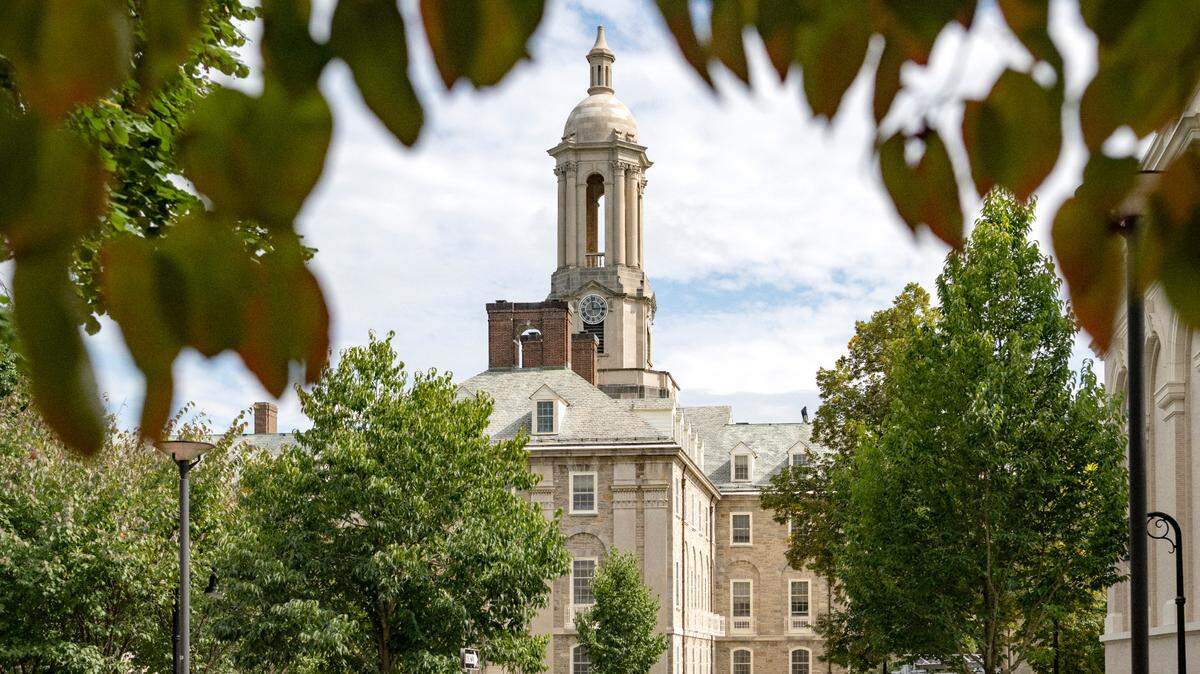
Faculty are also planning a “We Believe in Anti-Racism and Racial Justice at Penn State” Rally at 1 p.m. Thursday in front of Old Main.
“While we recognize that our new president is still fully settling into her role, and has many arduous tasks before her, we assert that the issues addressed in this document are pressing and urgent,” the nearly 1,100-word letter concludes. “These concerns matter too. President (Neeli) Bendapudi began her time with us with a listening tour. We hope she is listening now, including to her own previous statements and vows about racial justice.”
Faculty briefly outlined what they see as a problematic history at the university, “a long list of broken promises on issues of racial justice by Penn State, going back decades.” It mentioned the 2001 Village Protest, where hundreds of students took part in a 10-day sit-in at the HUB to demand change in the face of anti-Black threats and university inaction on previous promises. And it also referred to the findings of the extensive faculty-written “More Rivers to Cross” reports, which showed in 2021 that more than half (53.1%) of Black faculty respondents said they experienced racism from administrators or supervisors at least “sometimes.”
While other Big Ten universities — such as Maryland, Ohio State and Purdue — announced initiatives to increase staff diversity just last year, Penn State has largely not followed suit. It can point to other commitments, such as updates to its full-time faculty hiring policy and the launching of the Antiracist Development Institute, but many faculty believe the university hasn’t done nearly enough.
And Bendapudi’s decision to nix the Center for Racial Justice, which was announced in the wake of a hate group’s presence on campus, has not been well-received.
The center was recommended by an internal university committee that was formed more than a year ago. A search committee for the center’s first director had even already been formed — but, Bendapudi said last week, the university would no longer pursue that project. Instead, it planned to continue studying and reviewing, with the aim of sharing a university-wide plan early next year.
“Each time, Penn State promised to do better and to invest in its infrastructure. Each time, as has happened again with the events of last week, the university’s actions prove that there is no institutional commitment,” the open letter read. “One president giveth and another taketh away, as President Neeli Bendapudi has now done in the case of the Center for Racial Justice, an initiative announced by her predecessor, Eric Barron, in the heat of the Black Lives Matter protests of 2020-2021.”
A faculty-based group, Coalition for a Just University, issued a written statement Wednesday afternoon and threw its support behind the open letter. It called on other faculty to sign it and also questioned Bendapudi’s decision on the center.
“The abandonment of the Center for Racial Justice is one more sign of the university’s lack of commitment to equity, its indifference to racial justice and its misconception of systemic racism,” the coalition wrote. “This is unacceptable. President Bendapudi has a responsibility to fulfill the commitments made by her predecessor and an obligation to uphold all the Penn State values, beginning with integrity.”
For her part, Bendapudi — who took over in May — said she met with several university groups to discuss the Center for Racial Justice and said Penn State remains “deeply committed” to combating racism and racial bias. A spokesperson reaffirmed that Wednesday.
“President Bendapudi and the university administration are entirely committed to enhancing diversity, equity, inclusion and belonging (DEIB) at Penn State,” spokesperson Wyatt DuBois said in a written statement. “As stated in a recent news release, the president and the university’s newly appointed Special Adviser for Institutional Equity Jennifer Hamer are meeting with key constituents across the university, including faculty and others who have expressed their opinions in this area, to fully assess DEIB initiatives, programs and scholarly research across Penn State.”
Gary King, a professor and co-author of the “More Rivers to Cross” reports, said last week that Bendapudi needs to meet with more faculty and students. She needs to be transparent, and she needs more public discussions and fewer meetings with internal committees, he said.
Like King and concerned faculty in the letter, Coalition for a Just University also demanded more action.
“We call on the leaders of our university to make a tangible commitment to antiracism and appreciable progress toward achieving racial justice,” the group wrote.