Penn State president addresses Center for Racial Justice, priorities ahead of town hall
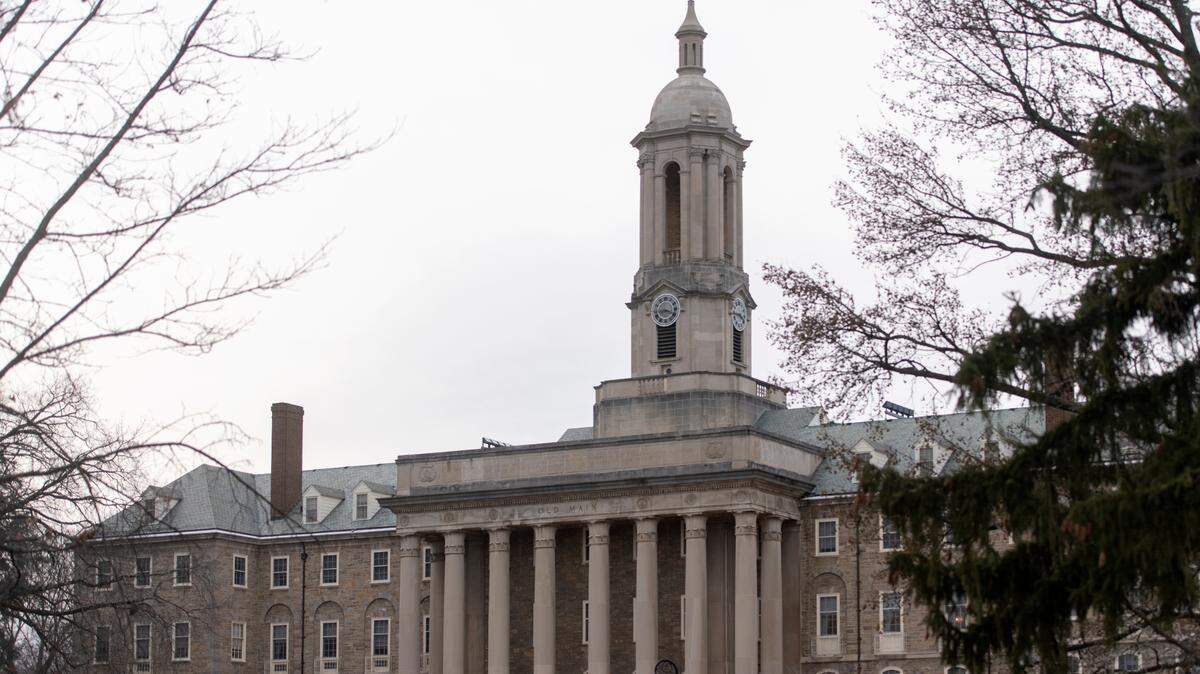
A day before a modified town hall led by the faculty senate, Penn State President Neeli Bendapudi released an open letter and briefly spoke to the Centre Daily Times to address concerns surrounding her commitment to racial justice.
After all, it’s been a tumultuous semester for the school’s 19th president, who assumed office in May. Her plan to scrap the proposed Center for Racial Justice, which was in the midst of seeking its first director, has drawn widespread ire from students, hundreds of faculty members and from the Pennsylvania Legislative Black Caucus, comprised of five state senators and 26 state representatives.
The fact the center’s cancellation came so close to a scheduled on-campus speech from the founder of the Proud Boys — which was eventually canceled Oct. 24 due to threats of escalating violence — only magnified matters.
“What I want Penn Staters to know and the world to know is that my commitment to diversity, equity, belonging and, certainly, racial justice is deep. It’s genuine, it’s strong, it’s abiding,” she said Thursday afternoon. “It’s been a personal passion and, professionally, a priority for me for decades now. And so I want to make sure people know that I am actually trying to hold ourselves accountable to the outcome.
“We all say this is a priority, but often we will default to look at all the things we are doing and not hold ourselves accountable to, is it really making a difference? ... I’m saying let’s tackle the tough, tough things in higher education.”
Bendapudi has emphasized, over the last several weeks, that she believes the university can better address issues of racial justice by reinvesting, or “enhancing,” support elsewhere. Faculty members have expressed doubts and disappointment over the decision, considering an internal committee recommended the center more than a year ago.
For her part, Bendapudi apologized Friday that her decision had hurt so many — but she did not apologize for the decision itself, which she labeled “tough” but “right” for Penn State. In Thursday’s open letter to the university community, Bendapudi also acknowledged she could have better handled communications leading up to the Oct. 26 announcement of the center’s cancellation.
“It is clear to me that I have to do better so that we are more likely to have shared understanding and a better ability to work collaboratively to address problems,” she wrote.
In the open letter, Bendapudi outlined several goals that the board of trustees approved:
- For students: Closing gaps in four- and six-year graduation rates for students across identity groups.
- For faculty: Prioritizing recruitment, retention and progression of underrepresented faculty members across ranks, tracks and disciplines.
- For staff: Prioritizing diversity in hiring and providing equitable, high-quality professional development that allows PSU to build its own talent and promote from within.
- Overall: Creating a sense of belonging for all members of the university community and closing gaps between identity groups.
Penn State’s issues regarding racial justice didn’t start under Bendapudi — the university’s percentage of Black faculty has hovered around 3% for decades — but many saw the new president as continuing the unwanted university trend of words without actions. When asked Thursday why she wouldn’t pursue the Center for Racial Justice, given the relatively minimal investment of less than $1 million annually and given its importance to so many, Bendapudi explained she was put in a difficult position because officials needed to cut $100 million between June and September — and that didn’t include numerous other financial commitments, such as the center, that didn’t even have funds attached in the budget.
She said conversations surrounding the center weren’t a matter of whether it was a good idea — but what Penn State’s most urgent need was when it came to diversity, equity, inclusion and belonging. And that most urgent need, according to three co-chairs of an internal committee?
“Investing in the people and the programs that we already have,” Bendapudi said.
Bendapudi is set to explain her priorities — and address the Center for Racial Justice — in greater detail during Friday’s town hall, which is set for 1:30 p.m. and will be streamed on WPSU.
Two faculty members will serve as panelists and will pose questions to Bendapudi and other university leaders, with questions that come from faculty senators and with input from those they represent. Julio Palma, an assistant professor of chemistry at Penn State Fayette, will act as the moderator and will pose follow-up question as needed.
If there is time, questions will also be chosen from faculty in the audience and can be sent to conversations@psu.edu during the town hall.
It will be Bendapudi’s second overall town hall as president but the first that will be led by the faculty senate.
“I know that diversity, equity and inclusion means so much to so many people,” Bendapudi added. “I want to make sure that our faculty and staff know, and our students know, how genuinely committed I am to this. And so that’s something that I’m hoping to convey that this is about — where do we invest and how do we invest so we actually can hold ourselves accountable.”