‘Failure of institutional care’: PSU professor wants change after issues following cancer
Esther Prins, a decorated professor or education, can still remember how she cried nearly every day in early August.
Her tears didn’t fall just because she had been diagnosed with lung cancer. Or because serious complications caused her doctors to look her in the eye and reiterate how “very, very lucky” she was to be alive. No, her emotions — confusion, fear, frustration and anger — were compounded by her treatment from the university she called home for nearly 20 years.
Coming off a yearlong sabbatical, the 50-year-old professor looked forward to resuming her research work, advising students and co-directing two institutes. She just worried, last August, that health complications might prevent her from teaching her single graduate-level class since a doctor appointment here or surprise hospital visit there had the potential to upend a semester’s worth of planning.
Prins assumed her request for a course release would be simple enough. Instead, she endured more than a week of endless back-and-forth from a hospital room — and then had to attend a Zoom meeting from that same room, having washed her hair twice in the preceding 13 days.
“A failure of institutional care,” Prins labeled it in a blog post. “Absolutely awful,” a faculty colleague lamented.
Although a solution was ultimately found, Prins didn’t smile from relief. She spoke with university administrators to ensure the process was uniform and simple moving forward. She didn’t want someone else to go through what she did.
The university seemed receptive, she said. But, six months later, she hasn’t received an update or heard of any changes.
‘Phone loop from hell’
Prins’ world turned upside down in June while wrapping up her sabbatical.
At a hospital outside Hamburg, Germany — where the trees loomed taller than the surrounding buildings — doctors informed her that her minor cough and shortness of breath were the result of adenocarcinoma, or lung cancer. Thankfully, because she responded to targeted therapy and didn’t require chemotherapy, she still felt she could resume all of her Penn State duties once the fall semester started. She looked forward to them.
But those plans changed in late July when her health took a sharp turn. On a flight to Washington, D.C. — on her way home to Happy Valley — concern washed over her face when she began gasping for air during a 20-foot walk to the restroom.
The lifelong runner and nonsmoker, who would often register up to 20,000 steps a day, knew something was seriously wrong. Paramedics rushed her to a Virginia hospital once she landed, and doctors soon confirmed she had a blood clot in her lungs — a pulmonary embolism — on top of COVID-19 pneumonia.
In a recent interview with the Centre Daily Times, Prins’ husband Leland Glenna took a long pause before reflecting on that time. “The doctors didn’t come out and say it,” he remembered. “But, afterward, they said some shocking things — like, ‘We weren’t sure you were going to make it.’”
Four days after that close call, while still in a hospital more than 200 miles from home, Prins emailed her department head. Serious setback or no, Prins figured she would be fine to continue her research and other duties, most of which could always be done from home. She just didn’t want the added responsibility of teaching a graduate-level class that couldn’t be rescheduled if she had an emergency.
What followed was Prins sending 16 emails over eight days from her hospital bed. “I am beyond frustrated,” she wrote three days after her first email. “I’m not (in) a position to be sending dozens of emails right now.”
Following that response, she would go on to send out a half-dozen more.
She reached out to her department head, who contacted the dean, who then referred her to Human Resources. HR then pinballed her back to the department head — and then yet to another department.
“It was like being in a phone loop from hell, where you can’t get through to anybody or get an answer,” Prins said recently, adding she places no blame on the department head whose hands were tied. “I just felt like I was caught in this loop. ... I felt like I was out there on my own, trying to figure this out.”
Policy dictated a course release could not be granted due to medical reasons. If Prins wanted to take the entire semester off and put all of her research and non-teaching duties on hold, that could have been arranged. But Penn State’s bureaucracy wasn’t prepared for a committed professor whose illness would likely only interfere with her single graduate-level class. She wanted to work; it was part of her identity.
Those who learned of Prins’ situation still don’t understand the university’s response.
“If we’re putting procedures ahead of people, we need to question what we’re doing,” added Michelle Rodino-Colocino, local chapter president for the American Association of University Professors.
Finding a solution — for herself & others
Armed with a hospital gown and laptop, Prins agreed to a Zoom meeting with university officials on Aug. 9 from her hospital room.
During that meeting, a day before she was discharged, a colleague in attendance proposed what seemed like a unique solution. She could take an “intermittent” FMLA leave.
The federal Family and Medical Leave Act, passed in 1993, allows eligible employees to take up to 12 weeks (480 hours) of unpaid leave. Usually, that time is taken all at once — but it doesn’t have to be. So, if Prins used those hours in place of her class, she could finally get what she first sought Aug. 1: the ability to research and advise doctoral students defending their dissertations, among other duties, with a colleague taking over her 15-student class.
“They were following the rules; they were following legal procedures,” Prins added. “But I needed someone to step up and be a champion for me and help me figure this out. And, instead, I felt like I was out there on my own.”
Prins’ situation would’ve played out differently at other universities. And it follows a history of medical missteps at Penn State.
In 2013, Penn State backtracked after initially implementing a $100 monthly “noncompliance fee” for faculty members who refused to fill out an invasive questionnaire that asked, among other things, if they planned to become pregnant in the next year. In 2022, Penn State updated its parental leave policy when faculty members alleged the previous policy was applied unevenly from department to department.
At other universities, such as Pitt, situations like Prins’ already seem accounted for. When asked how Pitt responds to faculty seeking to continue duties but not teaching due to a long-term illness, a Pitt spokesperson responded less than 24 hours later with the same solution Penn State arrived at after nine days, 16 emails and a Zoom meeting.
“When medically necessary, the University of Pittsburgh’s Faculty Medical and Family Leave policy allows for medical leave to be used on an intermittent basis,” Pitt spokesperson Jared Stonesifer said in a written statement. “This allows for a faculty member to have reduced duties such as teaching relief while still performing other duties.”
Prins relayed her experience to members on the university faculty senate and, once the fall semester started, she was told that administrators and the faculty senate hoped to combine forces in response. They wanted to take a closer look at how requests for leave are handled across the university and what disparities exist among departments. They even discussed the possibility of creating “health navigators,” employees who would guide faculty and staff through all the bureaucracy.
But it’s uncertain where any of those potential solutions stand or how close they might be to implementation.
Faculty senate chair Michele Stine did not respond to several messages seeking comment. And a Penn State spokesperson declined to address specifics on such progress, although he did say progress was being made.
“During a health emergency the university wants to make it as simple as possible to get the support needed,” spokesperson Wyatt DuBois said in a written statement. “With this in mind, Penn State, through the Office of the Vice Provost for Faculty Affairs is working with the University Faculty Senate to discuss best practices — and how best to implement them — in providing additional empathic support to faculty and staff members who encounter serious, life-changing health concerns and to help guide them through the processes in place to obtain medical leave.”
Prins, who told officials — after being asked — that she would serve on any relevant task forces or committees, said she hasn’t heard anything since September.
Looking ahead
Prins is back in the classroom this semester. And she recently had a paper accepted into one of the top education journals.
She hasn’t beaten cancer. Not yet. But she’s working on it.
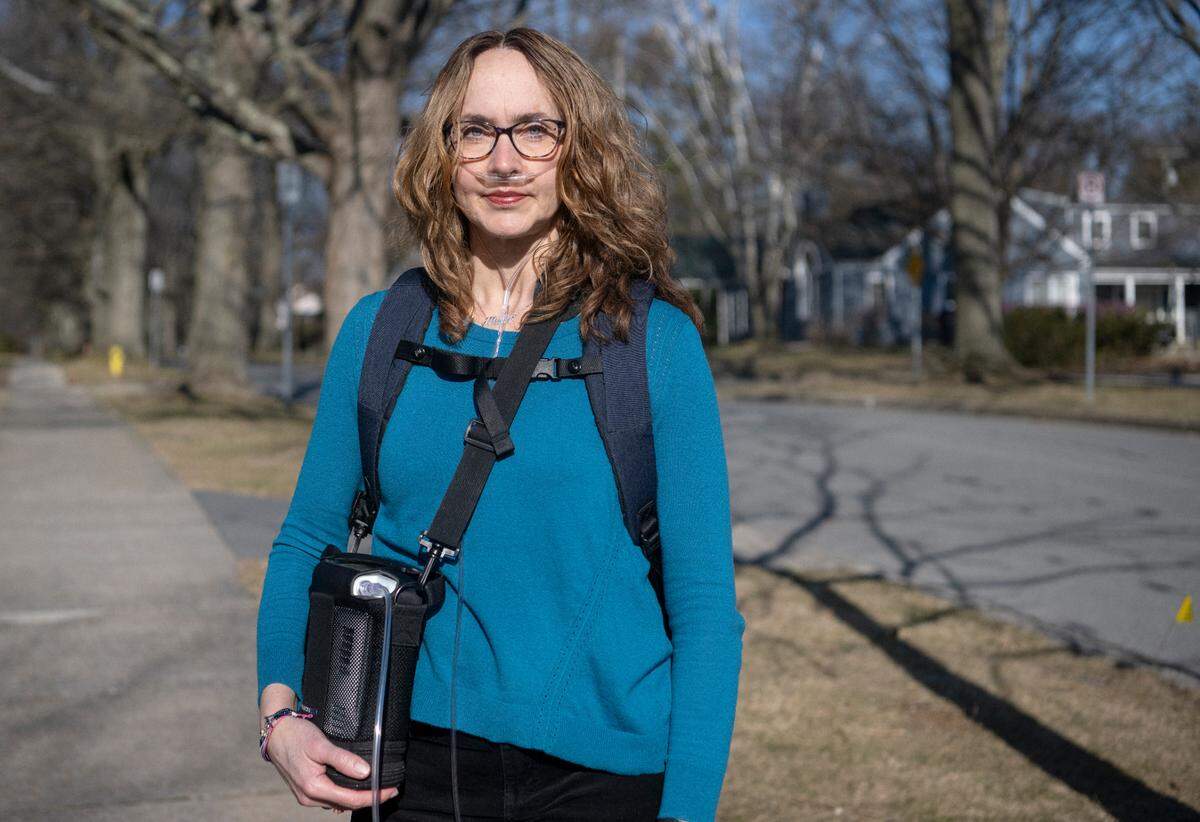
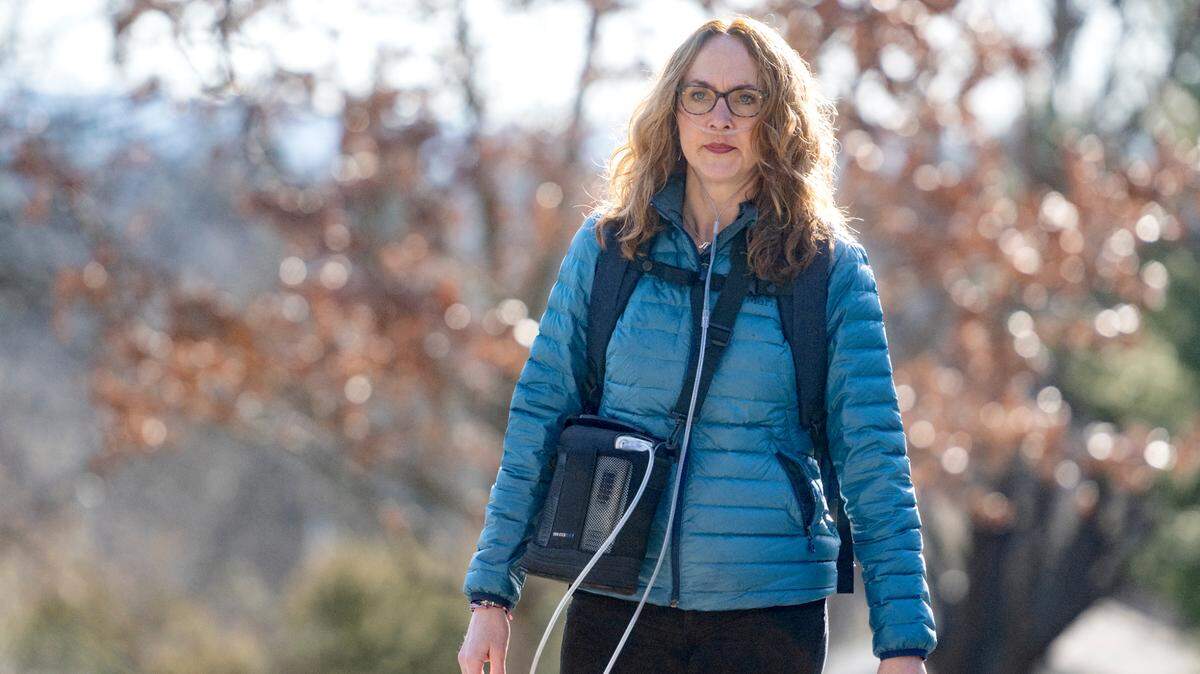
She still needs to carry a portable oxygen concentrator, about the size of a laptop bag, when walking to campus. But she can walk — and she continues to respond well to targeted therapy.
But, six months later, her ordeal with Penn State during such a vulnerable time — “the darkest hours of my life,” she said — still leaves a sour taste in her mouth. Colleagues and neighbors brought meals, sent gift cards and showered her family with support. But she didn’t sense that same support from the university, not while she was lying in a hospital bed after flirting with life and death.
She would like to see change. She would like to see the university take a proactive approach so situations similar to hers are handled differently. She doesn’t have all the answers herself — and she doesn’t pretend to.
She just knows one thing for certain.
“If somebody’s in the ICU, they’re not in a position to be sending a whole bunch of emails to figure out what all the various leave options are,” she said.
“Somebody needs to step up and take leadership of that.”