Why a new housing project at Penn State is causing a stir among union workers
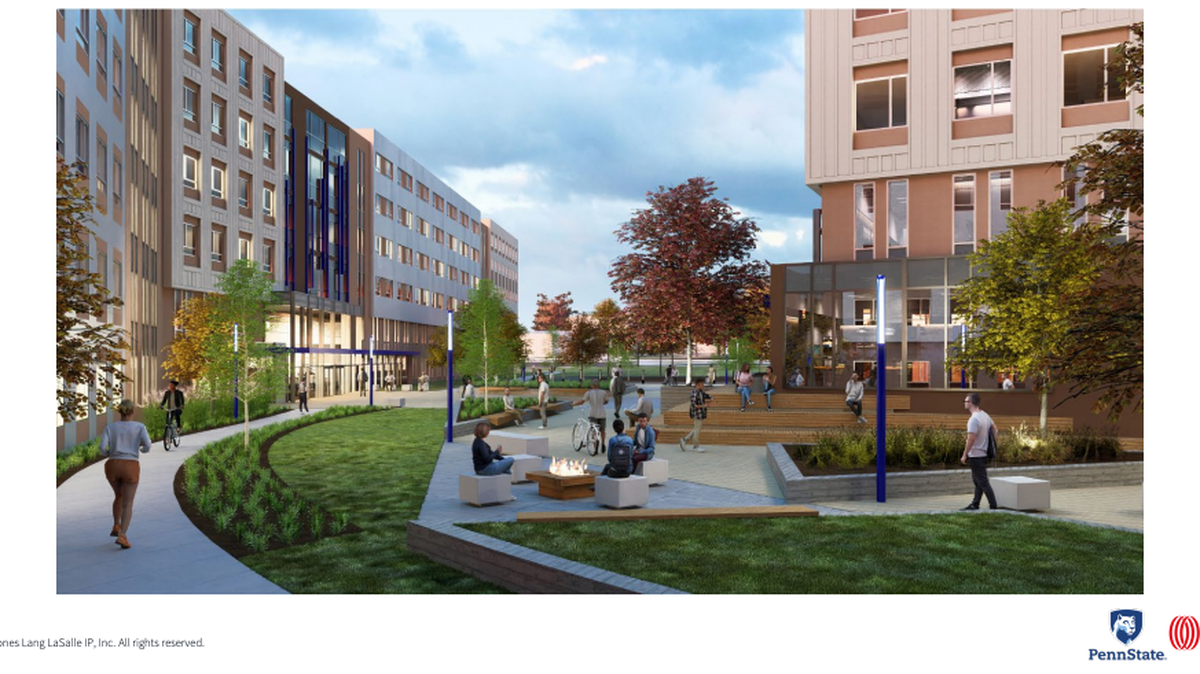
A union of technical service employees at Penn State asked the university to reconsider a recently approved student housing complex on the University Park campus that will be done through a public-private partnership.
The Penn State board of trustees approved a ground lease last month for a 1,500-bed housing project at University Drive and College Avenue. Any non-first year student will be eligible to live there.
But in a letter to the board of trustees, posted on the union’s Facebook page, Teamsters Local 8 President Jonathan Light said it is “very disturbing” that the university opted to move forward with this partnership and contract out the work that is typically done by union members.
“Our members have taken care of all housing dormitories at Penn State since 1968 and before this when employees were not organized. This has always been Penn State work, union work,” Light wrote. “We have done this generation after generation. Students come to school at Penn State and the majority move on from here after graduation and never live here again. But our members live in this community, raise their family in this community, and look forward to being able to do this with a great job at Penn State.”
In his letter, Light said no one from the university spoke with him about who would perform work at the new housing complex.
A Penn State spokesperson told the Centre Daily Times the ground lease does not impact the technical service employees, because, like the Nittany Lion Inn, the university will not outwardly own the building.
“This housing development, like countless others in our community, will not be owned or operated by Penn State. We value the contributions made by our technical service employees and this ground lease does not impact them,” Wyatt DuBois, director of University Public Relations at Penn State, said in an email.
The board selected Greystar Development East as the lead developer of the project and to lease the property.
Light wrote that the vote to “outsource housing” showed the university values “business first” more than its core values.
He’s been president of the union for 20 years and said during his tenure has fought many “unjust” actions by the management and leadership at the university, and would fight this as well. The post states they’ve filed a grievance about the issue, and the letter formally asks the board to reconsider the vote.
“Clearly this action was taken to denude the bargaining unit,” he wrote.
The union has garnered support from the Seven Mountains Central Labor Council, ALF-CIO. In its own social media post, it said, “Penn State is exploiting loopholes to do an end-run around NCAA recruitment rules, their collective bargaining agreement with Local 8, and the best interests of students and the community.”
At least one trustee previously questioned if this development — which will be a short walk from the Lasch Football Building — will primarily cater to football players and other student-athletes. During last month’s meetings, the university reiterated that any non-first year student is eligible to live there.
Sara Thorndike, senior vice president for finance and business/treasurer for the university, previously told a board committee that more student housing that is affordable is needed as the university looks to grow its enrollment numbers over the next few years.
Some terms were still being negotiated as of last month, including the rental rates. Thorndike previously said the proposed rental rates for a one bedroom is 25% below the average downtown State College rent, two bedrooms are 18% below the average (and 60% below the top of the market), and the four bedrooms are 7% below the average rent (and 18% below the top of the market).
With the ground lease, Penn State will maintain ownership and long-term control of the property. The terms of the ground lease, like how long it will last and how much it costs, were not disclosed. But typically in this kind of partnership, the university agrees to lease a piece of land for at least 60 years. During that time, the developer is charged with financing, constructing and operating the building — with the ownership reverting to the university once the ground lease ends.
Thorndike previously said they’re anticipating 775 beds by fall 2027 with the remainder coming in fall 2028.