
How the Penn State Food Science Club helps shape the food scientists of tomorrow
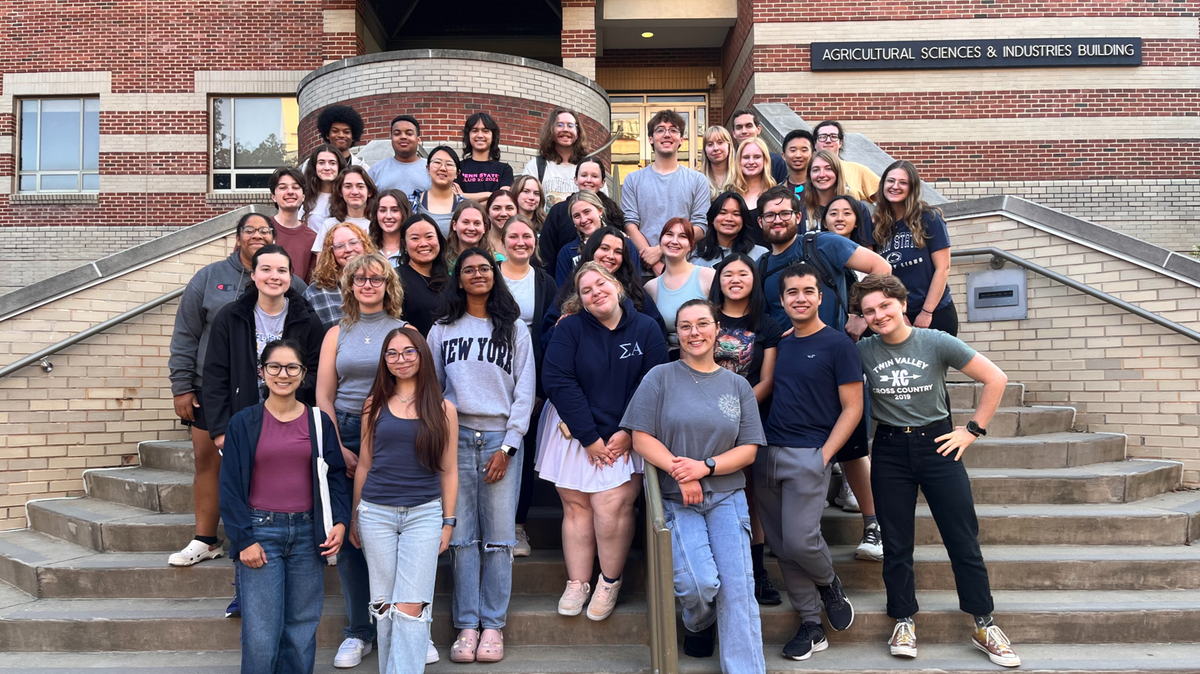
This year marks the 51st anniversary of the Penn State Food Science Club, an organization that, in affiliation with the Institute of Food Technologists Student Association (IFTSA), promotes community within the university’s Department of Food Science while also providing networking and career opportunities to students. The approximately 50 members of the Food Science Club are the food scientists of tomorrow — and their research and work within the department could just influence your current or future favorite foods.
So what exactly is “food science”? It’s much more than product research and development.
As is the case with many programs at Penn State, IFT Student Association Penn State Chapter and Food Science Club President Kacie Czyszczon says that the food science major is an interdisciplinary one, combining various scientific fields.
Josephine Wee, assistant professor of food science and advisor for the Penn State Food Science Club, further describes the calling to be in food science as a combination of a love for food and the “nerdiness” of science. Food science, she said, is based on four pillars: food engineering and processing, food safety and microbiology, food chemistry and sensory and consumer science. From growing ingredients to exploring how humans interact with food once it lands in consumers’ laps, food science touches it all.
One of the Department of Food Science’s more obvious impacts — at least in the lives of the average consumer — can be seen at your local Fine Wine & Good Spirits store, or at your nearest Happy Valley brewery or winery. The university receives funding from the Pennsylvania Department of Agriculture to promote the marketing and research of Pennsylvania brewed beverages like wine and beer.
“One of the ways food science can help [in this instance],” said Wee, “is [looking at], how can we increase, for example, the quality and safety of these beverages, from the taste to nutritional benefits?”
“We’re strong in cocoa research, too,” she added. “The Hershey Company has a really close relationship with Penn State. They hire a lot of our students. ... Cocoa is highly priced now, due to shortages and sourcing from regions of the globe with climate, social or economic issues. As food scientists, we’re looking at alternative solutions to a global problem. If we want to continue producing chocolate that people love, we must be creative with our ingredient sourcing, formulation and processing.”
Czyszczon, a fourth-year undergraduate pursuing a degree in food science, is working on a research project examining sugar reduction strategies in iced coffee, to ultimately reduce the sugar content in mainstream beverages. It’s a topic she came across after completing an internship at Wawa.
Gaining industry experience like this ahead of graduation is an opportunity made easier by the Food Science Club’s strong ties with the department’s alumni base. Regular meetings often bring in alumni from various food companies to speak about their careers and companies, with Wee estimating that, in a given year, club members are able to network with 20-30 different alumni from a range of backgrounds.
About 60-70% of these food science students go on to work in product development, she said, with lesser numbers finding work in quality assurance. Impressively, the program boasts a 100% placement rate, with all graduates securing relevant roles within the food industry within six months of graduation. Repeat employers that frequently recruit from Penn State include household brand names such as Campbell’s, Smucker’s and Hershey.
However, for both Czyszczon and Wee, the thing they love most about working and studying within the university’s food science program isn’t the research that impacts moments in consumers’ everyday lives, or the vital industry connections — it’s the community built by initiatives such as the Food Science Club. It’s what first drew Czyszczon to Penn State as an undergraduate and it’s what convinced Wee to take her position at the university in 2018.
“From my very first day interviewing at Penn State, I felt an immediate sense of belonging,” Wee said. “There’s incredible energy within this Happy Valley community. We’re exceptionally skilled in many areas of teaching, research and extension, but what truly distinguishes us is that we are community and people-driven first. We value our students, staff and faculty. We all genuinely care about one another, creating a rare and wonderful environment.”