Penn State faculty senate urges university to join Big Ten defense compact against Trump
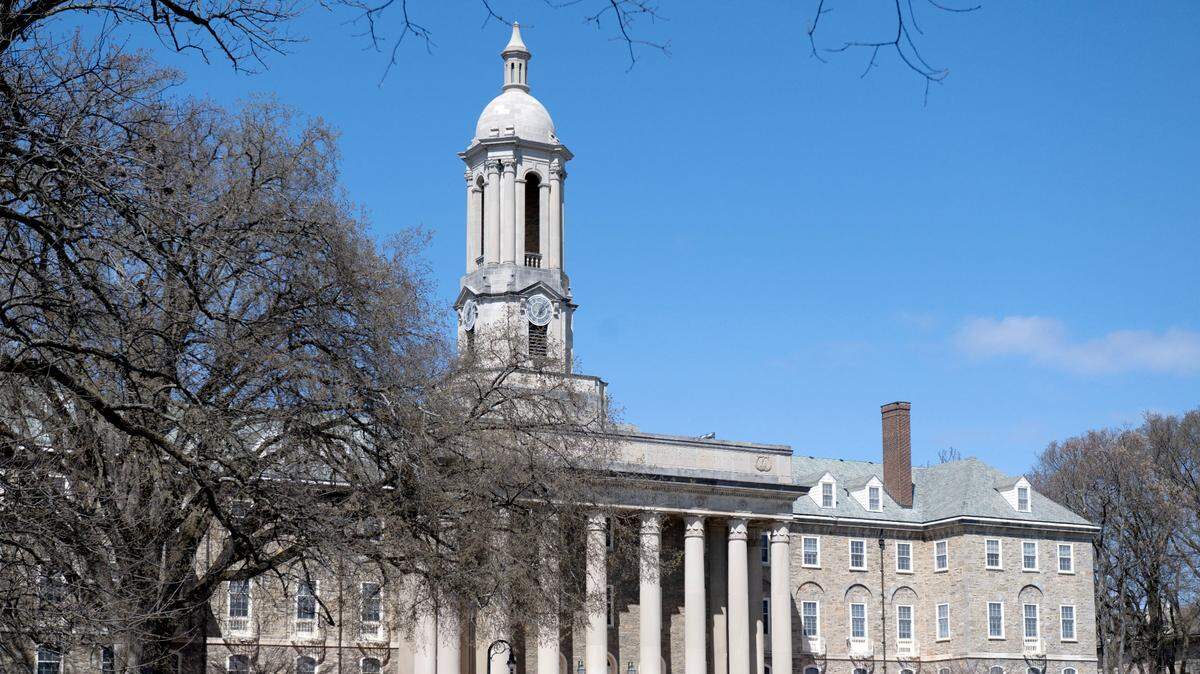
Joining at least 10 other faculty senates at Big Ten schools across the country, the Penn State faculty senate Tuesday voted in favor of establishing a “mutual defense compact” against political attacks, and urged the university president to help establish the compact among Big Ten universities.
The mutual defense compact purports to defend academic freedom, institutional integrity and research enterprise by agreeing to share legal and financial resources if a member institution comes under political or legal attack.
The resolution, first brought forward earlier this month by the Rutgers University Senate, states an infringement against one member university of the Big Ten should be considered an infringement against all of them. One of the co-authors of the resolution compared the idea to the North Atlantic Treaty Organization, or NATO, The Daily Targum reported.
“Recent and escalating politically motivated actions by governmental bodies pose a significant threat to foundational principles of academic higher education, including the autonomy of university governance, the integrity of scientific research and the protection of free speech,” the resolution reads, in part.
It continues: “The Trump administration and aligned political actors have signaled a willingness to target individual institutions with legal, financial and political incursion designed to undermine their public mission, silence dissenting voices and/or exert improper control over academic inquiry.”
At Penn State, the faculty senate’s resolution carries no direct legislative power and cannot force university leadership to act. But the resolution, which passed 139-21, shows that faculty are largely united on the pact — and formally encourages the university to join the NATO-inspired group.
Since taking office, the Donald Trump administration has issued executive orders related to higher education, cut research funding to institutions and revoked — and then reinstated — visas of international students.
If one of the participating institutions were under direct political infringement, the resolution states the other institutions should make available legal counsel services, governance experts and public affairs offices to coordinate a response. That would include a number of things, including legal representation and countersuit actions, amicus briefs and expert testimony, and more.
Cynthia Simmons, an associate teaching professor in Penn State’s Donald P. Bellisario College of Communications, said she has received more constituent input on this than on any other matter during her years on the faculty senate. She said all of those who have contacted her want them to sign onto this resolution.
Some faculty senators acknowledged that the resolution wasn’t perfect and there are some lingering questions. But, they added, this is the faculty senate’s way of making clear what they believe, and the implementation of it would fall on the administration.
“The administration will have a need to interpret this and make sure that any actions that are taken are legal and appropriate and all the rest of it. But what falls to us is to make a statement of what we believe, who we are and what we think Penn State University stands for,” said John Nousek, a professor in the Eberly College of Science.
Penn State did not immediately respond to a request for comment.
The measure was also supported by Penn State’s student government, UPUA, in a vote during its meeting last week.
Keith Shapiro, an associate professor in the college of arts and architecture, spoke in support of the resolution and said it is an “opportunity for Penn State to lead by example.”
Other university faculty senates that have signed on include Indiana University, University of Nebraska, Ohio State, Michigan State, University of Michigan, University of Maryland, University of Washington, University of Minnesota and University of Illinois.