Penn State faculty alliance delivers petition to Bendapudi’s office to stop campus closures
AI-generated summary reviewed by our newsroom.
- The PSFA delivered petition a day before a trustees meeting on campus closures.
- The petition criticized rushed process, urged transparency and stakeholder input.
- Faculty seek unionization to gain bargaining power in decisions like campus closures.
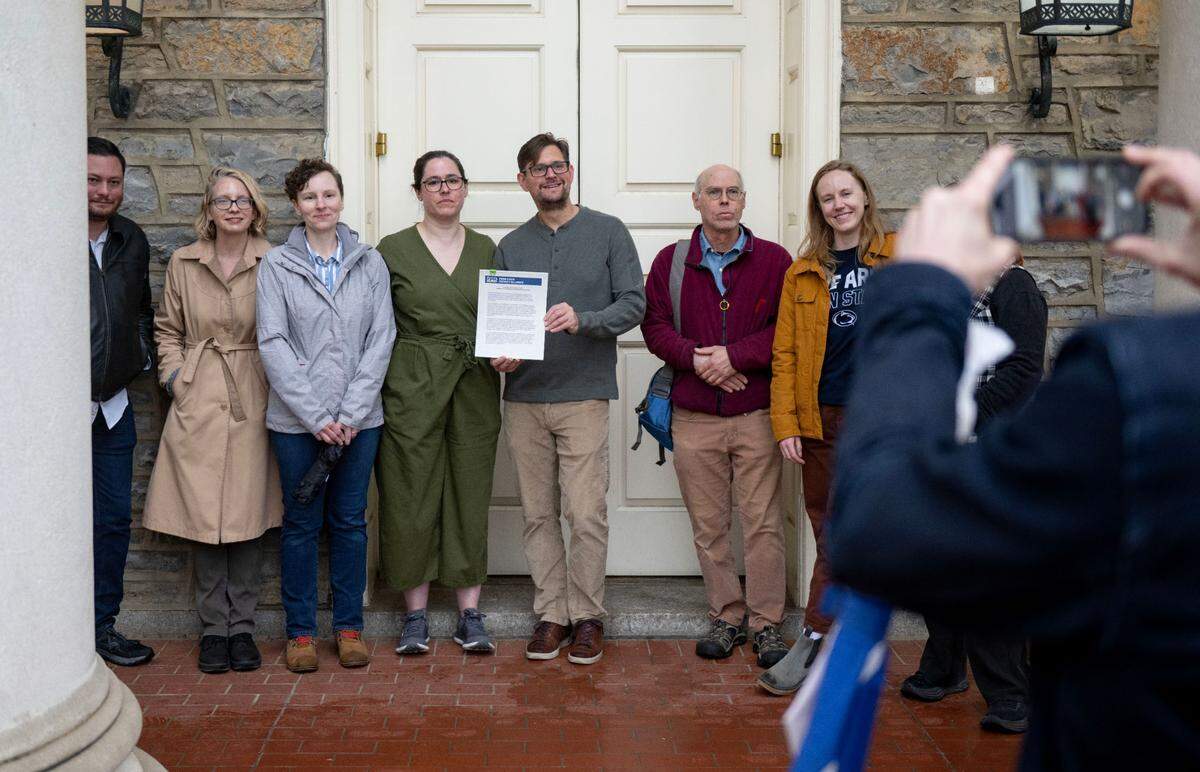
A group of Penn State Faculty Alliance members delivered a petition to the university president Wednesday in protest of the plan to close seven commonwealth campuses, a day before the board of trustees is set to vote on the proposal.
The PSFA — a faculty union organizing campaign for full-time, part-time, tenured, tenure-line, and non-tenure-line faculty across the university system — gathered more than 500 signatures from the Penn State community. The petition states the “fast-tracked plan” to close campuses will impact hundreds of faculty and staff members who will face job losses and future displacement.
“These campuses are not just buildings under threat; they are workplaces, classrooms, and communities that deliver a high-quality Penn State education across the Commonwealth,” the petition states.
The petition has four requests from the Penn State administration: stop the campus closure process, conduct a full analysis and consultation to find opportunities for investments in the campuses, commit to transparency and involve employees and communities in the decision-making process, and treat all employees with dignity and respect.
The petition states the plan lacks analysis of how the closures will impact finances, education and the communities, input from faculty, staff and other stakeholders, and has been done at a “reckless pace.”
“What was initially framed as a response to budget concerns is now, by President Bendapudi’s admission in a recent faculty senate plenary session, a decision not driven by cost savings. If that’s the case, then why close these campuses at all? Why not invest in them and strengthen their essential role in fulfilling Penn State’s land grant mission?” the petition states. “These campuses are vital public institutions that provide access and opportunity for students of diverse backgrounds across the state. The dedicated employees who build supportive learning communities across our Commonwealth deserve dignity, transparency, and fair treatment in return for their labor, not abandonment.”
Sasha Coles, an assistant teaching professor of history at University Park, said the campuses are important to Pennsylvania and the petition is meant to show the administration that they have felt left out of the decision-making process.
“We believe that because of the vital role that these campuses play in their communities that the people who are affected need to be more involved in the process,” Coles said.
The board of trustees has a virtual public meeting scheduled for 5 p.m. Thursday to take action on the administration’s proposal to close seven commonwealth campuses (DuBois, Fayette, Mont Alto, New Kensington, Shenango, Wilkes-Barre and York). Penn State President Neeli Bendapudi will host a livestream address approximtely an hour after the meeting ends.
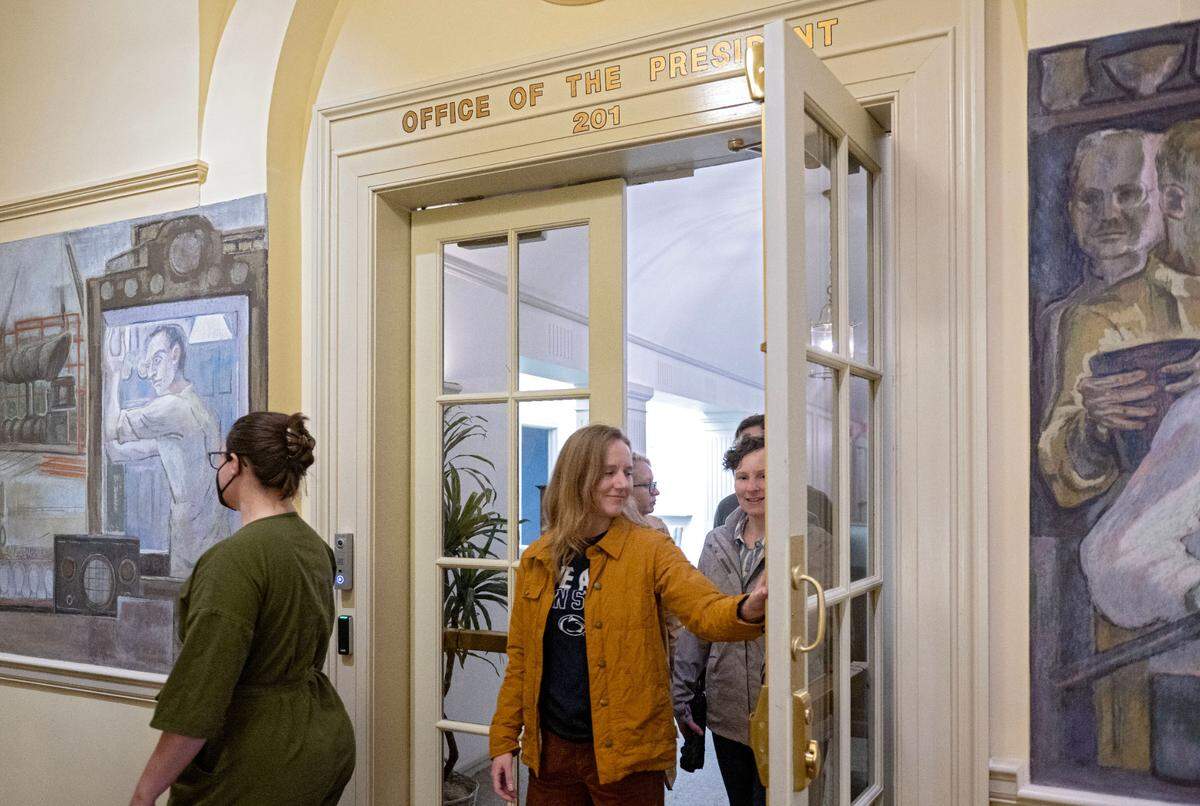
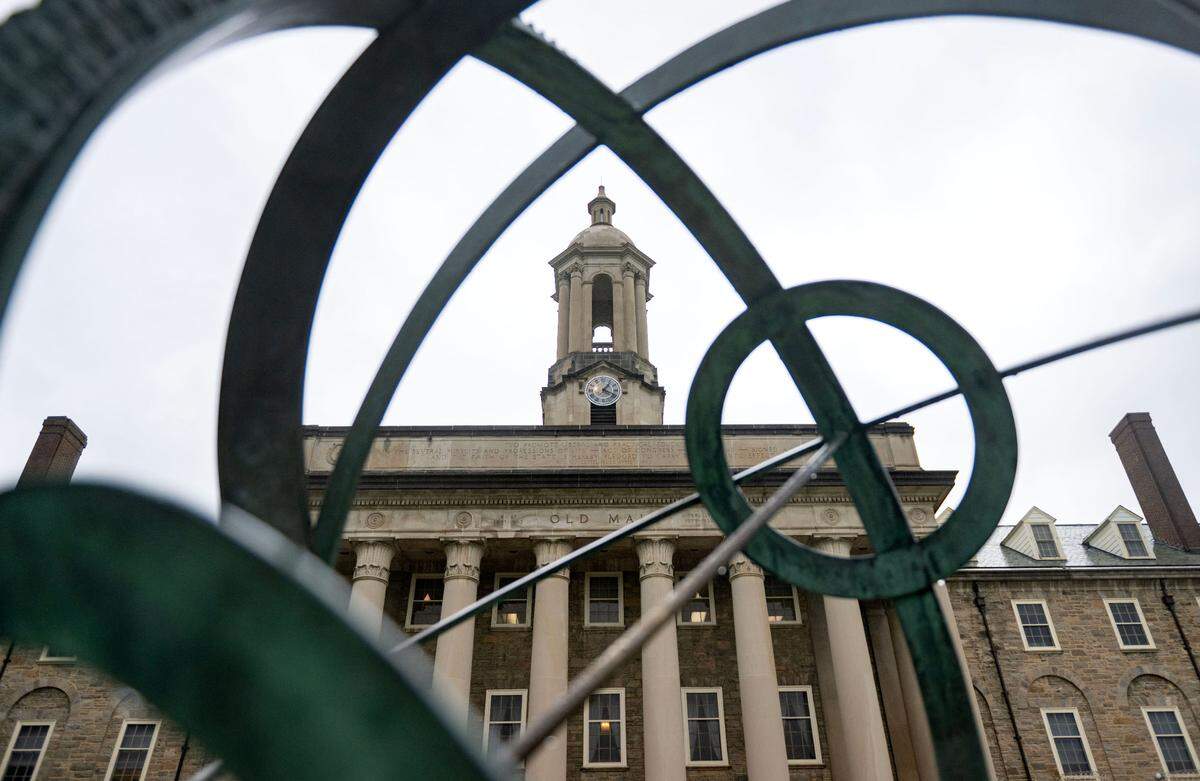
Bendapudi wasn’t in her office at Old Main when the group delivered the petition and her secretary took their materials for her.
“We think it’s still important to show a physical presence, and also so that we can show solidarity as (University Park) faculty with our commonwealth colleagues who also couldn’t be here in person,” Coles said.
The timing of the announcement — after the end of the semester when students are gone and a lot of faculty aren’t teaching — is “very convenient” for the administration, she said. That increases the importance of them being at Old Main Wednesday and hand delivering the petition.
Would a union give faculty more say in the process?
In general, faculty have little say in these processes, Coles said, and the only thing that would allow them to have more say is if they had union representation.
The PSFA formally announced in February that they’re organizing a faculty union with SEIU Local 668, saying it was “long overdue.” At the time, they pointed to many issues and changes faculty have experienced over the course of multiple administrations — including buyouts at campuses, new budget models and processes, and “othering” of the campuses.
With union representation, the university would be legally obligated to bargain with the faculty over things impacting their working conditions, Coles said.
“Faculty at other institutions that have experienced these challenging financial circumstances and even layoffs and closures, have had a seat at the table with the administration to guarantee that that process happens in a way that respects the work that these people do for the institution,” she said. “Right now, we don’t have that seat at the table. The faculty senate is able to provide an advisory set of positions, but a union with a collective bargaining agreement is the only way we have a legally supported seat at the table.”
There are some already established unions at Penn State, like the Teamsters Local Union 8, which represents technical service employees, including some at the commonwealth campuses. Those members will be able to do impact bargaining, Kate Ragon, assistant clinical professor of labor and employment relations, said.
“If we had a union, we would get to avail ourselves of that process too. So we can actually see immediately the effects of having versus not having a union on this process,” Ragon said.