Penn State faculty senate raises concerns about staff, enrollment at commonwealth campuses
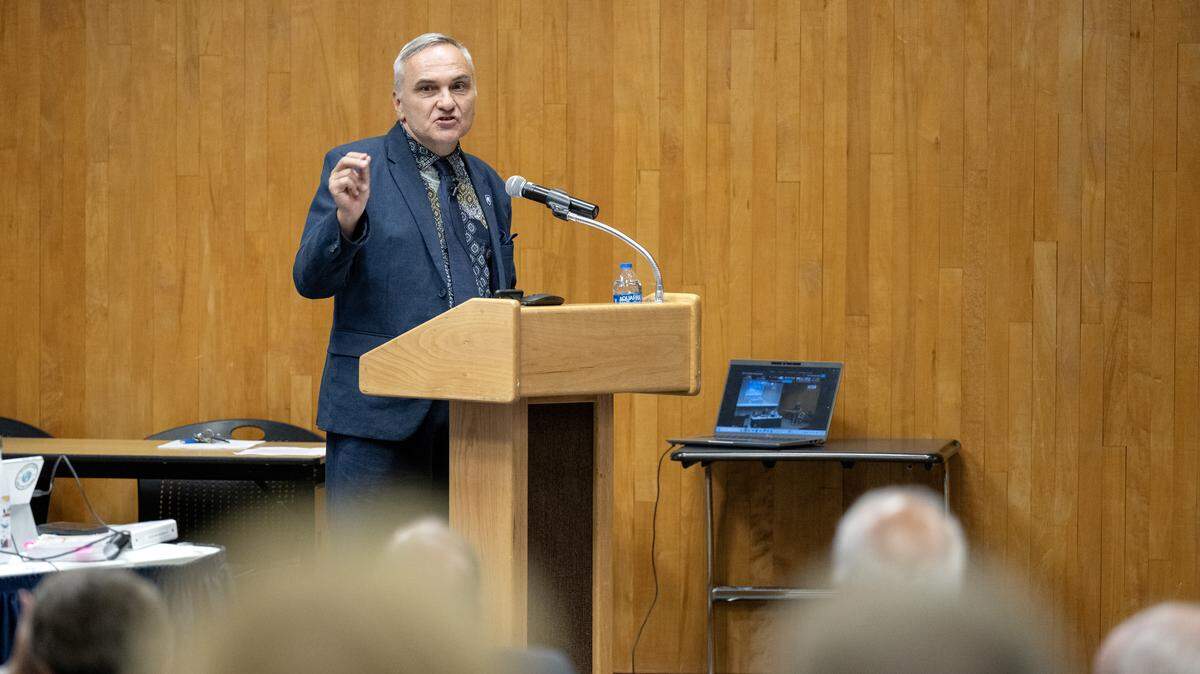
As a new semester starts, upcoming closures of seven Penn State commonwealth campuses remain a focus for the faculty senate, which discussed staffing and enrollment concerns, and a new feedback initiative this week.
Frantisek Marko, professor of mathematics at Penn State Hazleton and chair of the faculty senate, said some faculty and staff have already started leaving their roles at closing campuses, which led to a concern that it would create a higher workload and stress for those at the closing campuses and even at the campuses that are remaining open.
The priority hiring consideration process that was announced in June has led to 11 staff members and one faculty member finding a new job.
“The processes were developed, and already we see, in two months since that implementation, there are already positive results,” Marko said during Tuesday’s meeting. “It’s not ideal because many more people are leaving than are using this process, but it’s definitely a positive development. A lot more work is needed to be done, but it’s a promising start.”
There has also been some confusion about which campuses are closing, multiple people said during the meeting. President Neeli Bendapudi responded to a question about how “too many people” don’t know that campuses like Brandywine, Greater Allegheny, Lehigh Valley and Scranton are staying open.
Twelve of the 20 commonwealth campuses were initially studied for possible closure before the list was narrowed down to seven to close — Fayette, DuBois, Wilkes-Barre, Shenango, New Kensington, Mont Alto and York.
“Our enrollment offices saw an immediate and dramatic drop,” the question stated, and another echoed that and said the confusion about which campuses are staying open negatively impacted the applications and enrollment to campuses.
Bendapudi said the significant changes at Penn State created a challenging environment. When a campus did try to get information and advertisements out that said, “We are here to stay,” Bendapudi said it was met with people, including some faculty senate leaders, who said it was insensitive to campuses that are closing and inappropriate to do so.
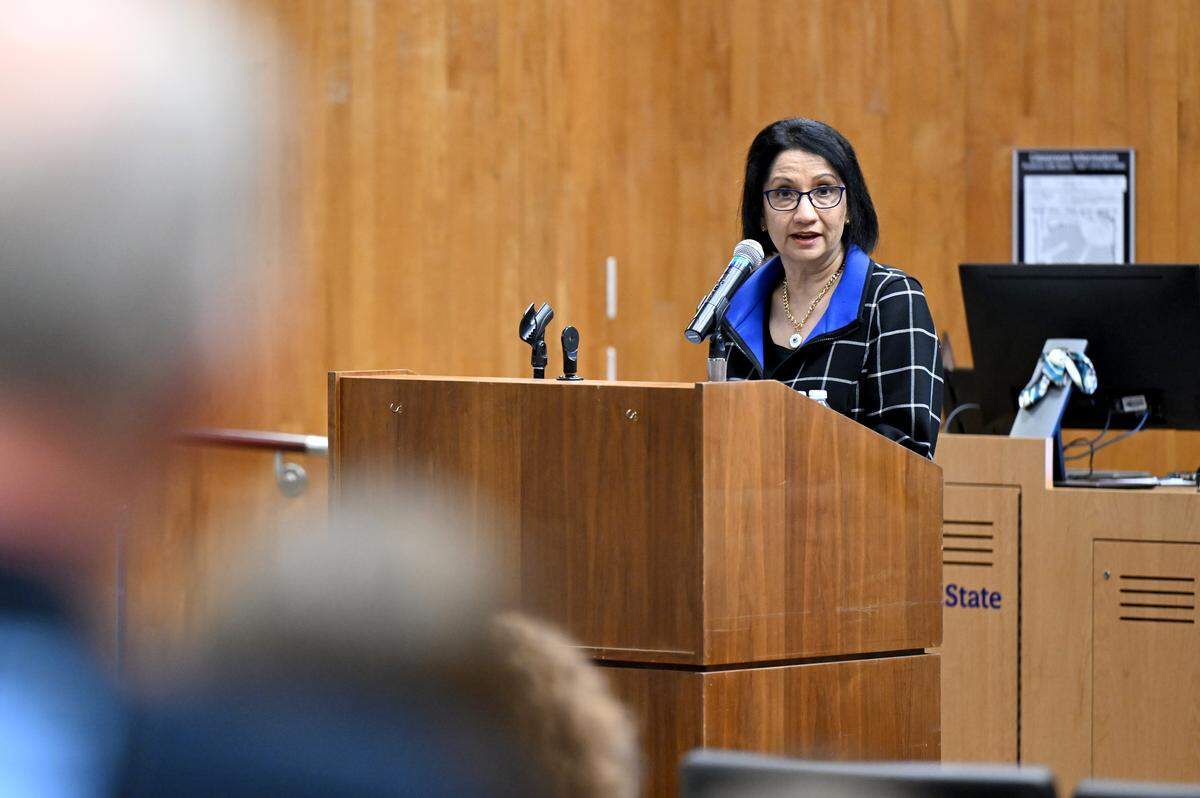
“We are committed to all of our campuses. I understand this was a difficult message and that there was an enrollment drop. But I do urge you to look at — this is not a one to one because some campuses are closing that there was declines. This is the demographic cliff we’ve been talking about. I don’t debate at all that it was exacerbated by confusion about, ‘will this be open?’” Bendapudi said.
Official university enrollment numbers won’t be publicly available until later in the fall.
When the university first announced it would close some campuses, it said the remaining campuses would continue to be invested in long term. A faculty senator questioned what that investment will look like, and if there’s any plan for the investment to take the form of replacing or moving faculty tenure line to campuses that will remain open. Sotiropoulos said those investments are continuing.
“This investment, by the way, I want to make it clear, is not only financial ... it is also in significant time and effort and other resources to help position these campuses for success in a complex environment,” he said, and listed examples like enrollment management strategies and an initiative on student success.
In May the board approved closing the seven commonwealth campuses following the spring 2027 semester. The university is facing challenges including long-term demographic shifts, declining enrollment, flat public funding and increasing operational costs, which all put pressure on the campus ecosystem, the resolution to close campuses stated.
In a 143-page campus-by-campus recommendation report, the university outlined the reasons to close the seven campuses. Although the reasons vary from campus to campus, recurring issues included declining enrollment, poor financials and minimal room for growth. The latter could be a result of competition from other schools, redundancy (e.g. close to another PSU campus), lack of on-campus housing and aging home county populations.
The university leadership has said it will do all it can to support employees at impacted campuses who want to continue their careers at Penn State. Closing campuses will not accept student applicants or transfers after this fall semester.
Penn State faculty senate, administration launch new feedback initiative
The university’s “road map” website, which contains information about the campuses and future of Penn State, has a new feedback page for faculty, staff and students to submit their questions and comments about the campuses. The page is a partnership between the faculty senate and the office of the new executive vice president and provost, Fotis Sotiropoulos.
Those submitting to the page can either provide their contact information and have their submission be posted publicly on a message board, or they can submit anonymously. Submissions will be reviewed and added to the frequently asked questions page and will help inform future community updates, a release from the university states.
Marko, the chair of the faculty senate, announced the new page during Tuesday’s faculty senate meeting.
He said from the faculty senate perspective, it will be vital for the chair and some committee chairs to have access to the submissions so they can use them to inform committee discussions and report it out to other committees.
“This joint effort is a crucial step in ensuring that faculty, staff and students at the commonwealth are heard and seen and their input is considered. By gathering feedback in a transparent manner, we can incorporate a wide range of perspectives into the process and work together on solutions to the complex challenges ahead,” Marko said during the meeting. “I’m excited that the senate and university are collaborating in this way as it strengthens our ability to approach these transitions thoughtfully and inclusively.”