Penn State remains largely exempt from PA’s open records law. Should that change?
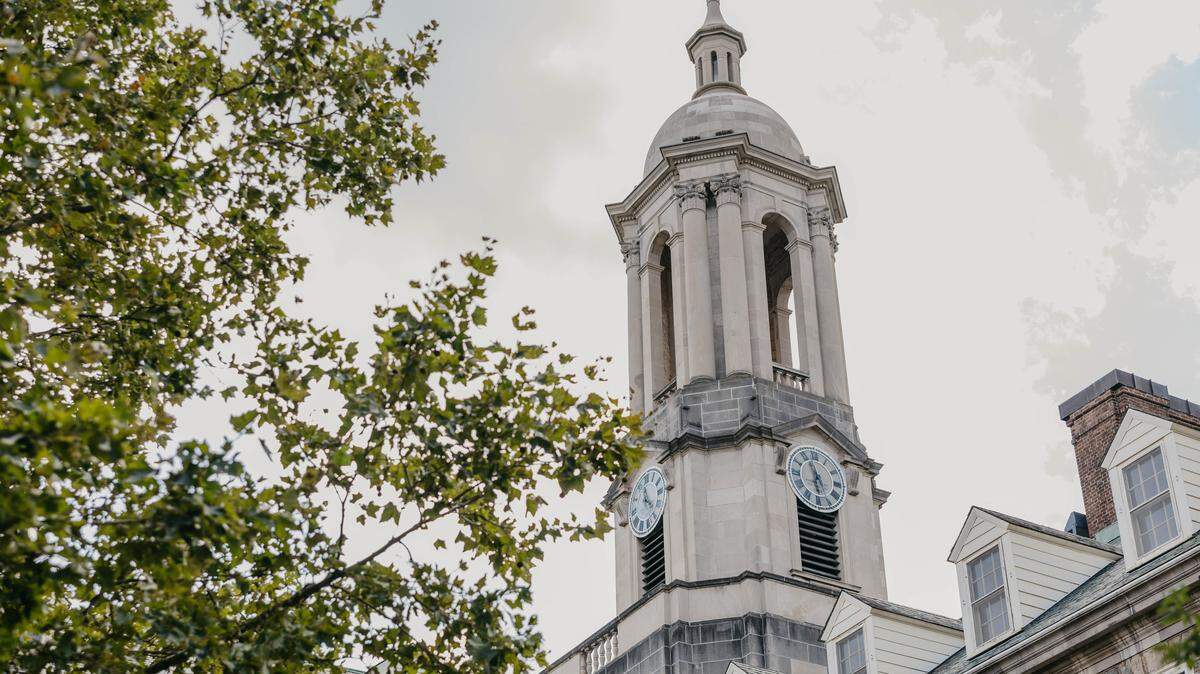
Pennsylvania’s open records law, the Right to Know Law, guarantees the public’s ability to access information from the government. But despite getting tens of millions of dollars from the state, Penn State is largely exempt from the law.
Penn State is considered a “state-related institution,” alongside Pitt, Temple and Lincoln, and the RTKL treats them differently than other universities in Pennsylvania. For example, schools within the Pennsylvania State System of Higher Education, like Slippery Rock, Kutztown or Shippensburg universities, are all fully subject to the RTKL.
But the state-related universities lobbied hard in 2007 to be excluded from the law, said Melissa Melewsky, media law counsel for the Pennsylvania NewsMedia Association, of which the Centre Daily Times is a member. Because of the exclusion, information that is publicly accessible at most universities, like contracts, bids, financial reports and other documents, is largely inaccessible at Penn State.
“They struck a balance with this kind of concept of partial coverage. The original version of the current Right to Know Law had access to certain information on a yearly basis. That carve out has been since expanded, and … Penn State and the other state-relateds are required to provide additional financial disclosures on a yearly basis, but they’re not fully covered by the Right to Know Law the same way that a PASSHE school is,” Melewsky said. (Penn State’s annual RTK report can be found online at budgetandfinance.psu.edu/public-reports.)
Transparency advocates have pushed for Penn State to be more open and fully covered by the RTKL but there has only been one amendment to the law, which came in 2023 that made some minor changes and expanded accesses to financial records. Some state legislators have continued to express interest in the issue, Melewsky said.
For any change to be made to the RTKL, it would need to come from the General Assembly and be signed by the governor, who is a non-voting, ex-officio member of the Penn State board of trustees.
The CDT reached out to every state house representative and state senator who represents Centre County to see if they would support making Penn State, and other state-related universities, subject to the RTKL. Only Representatives Scott Conklin, D-Rush Township, and Paul Takac, D-College Township, responded.
Conklin said he supports making state-related universities subject to the state’s RTKL. In a written statement, Takac did not directly answer if he would support a change in the legislation but emphasized an importance of transparency and oversight when taxpayer funds are at stake.
“While Penn State’s charter does allow for significant independence and autonomy, the university’s status and importance as our commonwealth’s land grant university puts it in a special category,” Takac said. “I believe Penn State should be held to the highest standards, including compliance with all legally required and reasonable RTK requests related to its public role.”
How did Penn State become exempt from the RTLK?
In 2007, then-Penn State President Graham Spanier said opening state-related universities to the RTKL would have a “profound negative impact” on the universities, according to written testimony.
He listed a number of examples, including that they could lose competitive leverage in negotiating vendor contracts, compromise donor confidentiality, decrease revenues from the lease and sale of intellectual property, threaten its competitive advantage for industry grants and contracts, hinder Penn State’s incentive and merit pay programs for faculty, and more.
“Subjecting Penn State to Right-to-Know does far more than feed the prurient interests of newspaper editors who are looking for a headline about how much Coach Paterno makes. I would point out that no tax dollars and no tuition dollars support his salary. As you know, our Board of Trustees has a long-standing policy regarding the privacy of individual salaries,” Spanier said in 2007. “What we are concerned about is the impact that opening up university salaries would have on Penn State’s ability to compete in a global marketplace for the best faculty and research scholars who we ask to come to Penn State to teach and do critical research that supports the state’s economy and quality of life.
“That’s what’s at stake — Penn State’s ability to teach, do research and serve the Commonwealth and its citizens — and that’s why I wanted to personally attest to the impact of these proposals before you.”
But the state-related universities in Pennsylvania are outliers among other states. Amy Kristin Sanders, the John and Ann Curley chair in First Amendment studies at Penn State, said nearly every other state university system, except Delaware, requires their state universities to comply with the public records law.
Penn State has long resisted calls for transparency, Melewsky said, so even though the university vigorously advocated to not be included in the RTKL, it was not a new position for the school to take.
In a written statement, Penn State said it believes the RTKL is “appropriately tailored to require accountability within the unique structure of Pennsylvania’s state-related institutions.”
“It strikes an appropriate balance between the needs of these universities to keep some of their proprietary information confidential and the public’s right to understand how their tax dollars are being used,” a Penn State spokesperson said.
The university supported the 2023 law that expanded Penn State’s coverage in the RTKL, and also pointed to its Public Accountability website.
“In addition, to enhance our accountability to Pennsylvania residents, a few years ago the University launched its Public Accountability website, which consolidates information and data about the University that is most often sought by legislators and taxpayers. It includes campus safety reports, financial reports, and data on demographics, enrollment, graduation and retention rates, and more,” Penn State said.
Because Penn State is not fully covered by the RTKL, there is a general lack of information about how it functions or spends taxpayer money. For example, when Penn State announced it would close some of its commonwealth campuses, there were calls from the public for more information and transparency surrounding the decision.
But there is no legal obligation for Penn State under the RTKL to release that, Melewsky said.
For journalists, it makes reporting harder because access to many records is limited. But it’s also a detriment to not only Centre County, where Penn State is the largest employer, but to many other places in Pennsylvania, said Paula Knudsen Burke, attorney for the Reporters Committee for Freedom of the Press, which is currently representing the CDT in an appeal for Penn State police overtime records.
“We can think particularly of DuBois and York, and the campuses that are closing, and if this were Shippensburg or Kutztown or Bloomsburg, members of the community could file Right to Know requests and get much more information about why these decisions were made,” Knudsen Burke said. “But with Penn State because of the very, very narrow and limited application of the Right to Know Law there’s gaping holes in the public’s understanding of what the university does, what it spends its money on.”
In November, the new Susan Welch Liberal Arts Building closed due to a “structural issue.” Although it has impacted employee work spaces and classrooms, the university has released very limited information about it. Knudsen Burke said she’d like to file a RTK request to see how much money has been spent on it and what the bids look like. The same could be said for the $700 million Beaver Stadium renovation project: Who is being approached about the work, and why?
“If you take the (State College) borough for an example, they have a public meeting. They talk about projects they bid out, and we can see all the information they looked at in their board packet,” Knudsen Burke said. “We don’t get to see that with Penn State because of this weird kind of lack of a linkage between the Sunshine Act and the Right to Know Law.”
At Penn State, the secrecy is compounded by the Board of Trustees not following the state’s Sunshine Act in good faith, Sanders said. But the RTKL just sets the minimum disclosure requirements. Penn State could choose to publicly release more information to help improve the public’s trust, Sanders said.
Sanders, like Knudsen Burke, thinks the state-related universities should be fully subject to the RTKL. She said transparency improves the functioning of a public entity, and to look to other Big 10 schools who are subject to a state’s RTKL for examples.
“I came to Penn State with a personal mandate to do everything I could to advocate for Penn State to be fully brought under the Right to Know Law, and I believe that we are at a critical point where lawmakers around the Commonwealth, the public, Penn State faculty and staff, are interested in knowing what is happening in Happy Valley,” she said. “I don’t think justifications from 2007 hold up.”