Penn State graduate workers rally, present petition for RAs to be included in union
AI-generated summary reviewed by our newsroom.
- Nearly 150 students rallied at Old Main to deliver a petition to the president’s office.
- More than 2,200 graduate workers signed petition for university to drop appeal
- Penn State appealed arguing research assistants conduct degree-related work
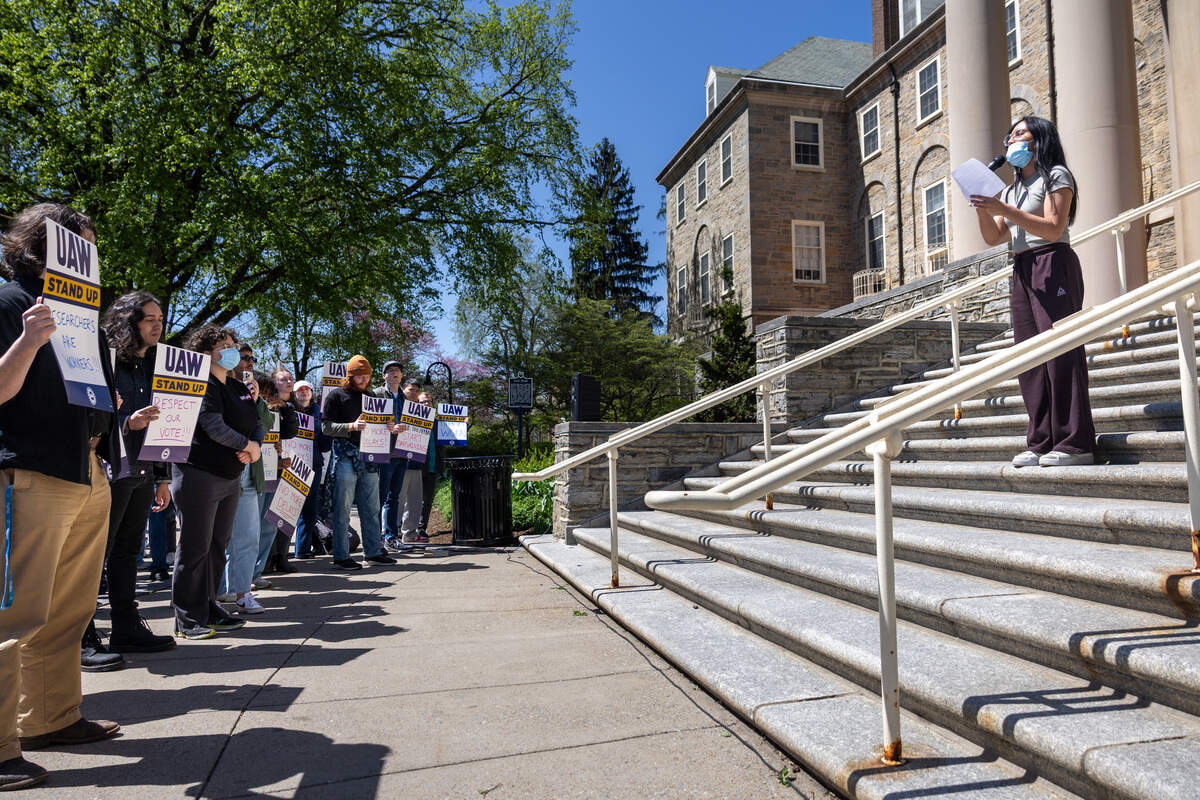
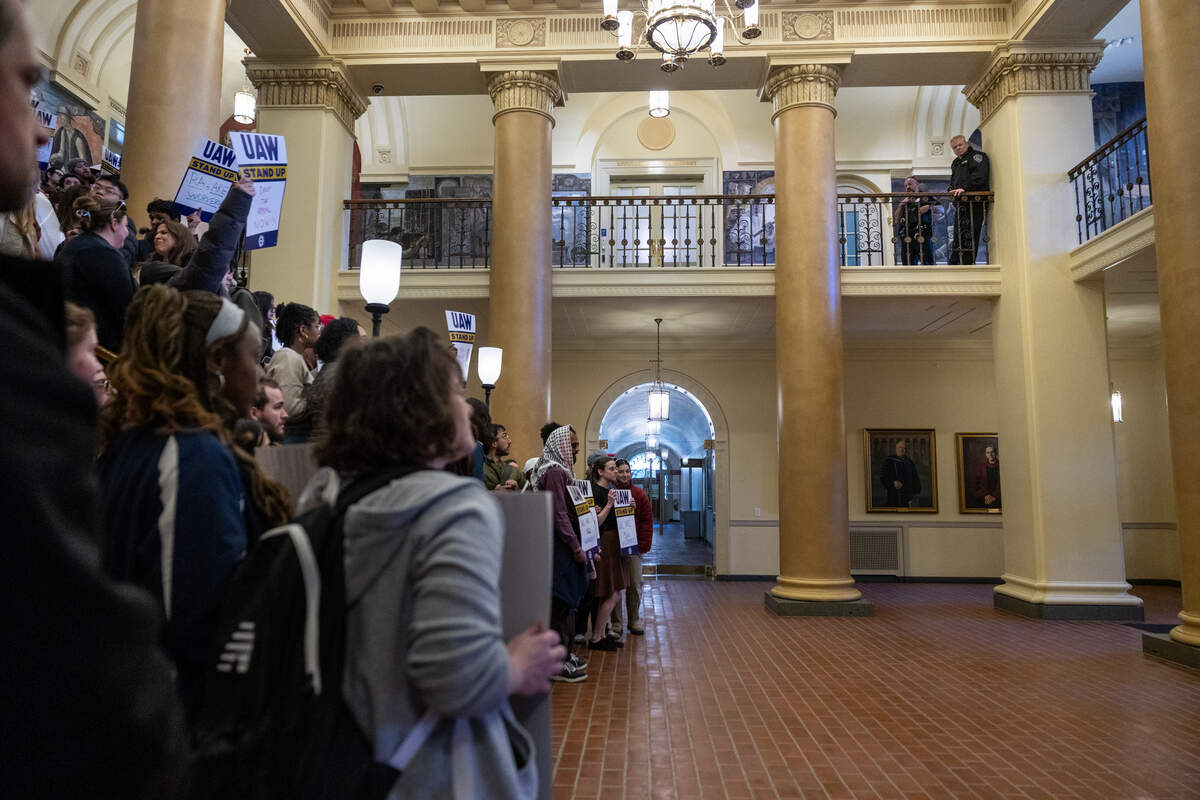
Penn State graduate workers gathered at Old Main to rally Tuesday and deliver a petition to the president’s office against the university’s appeal to include research assistants in the union.
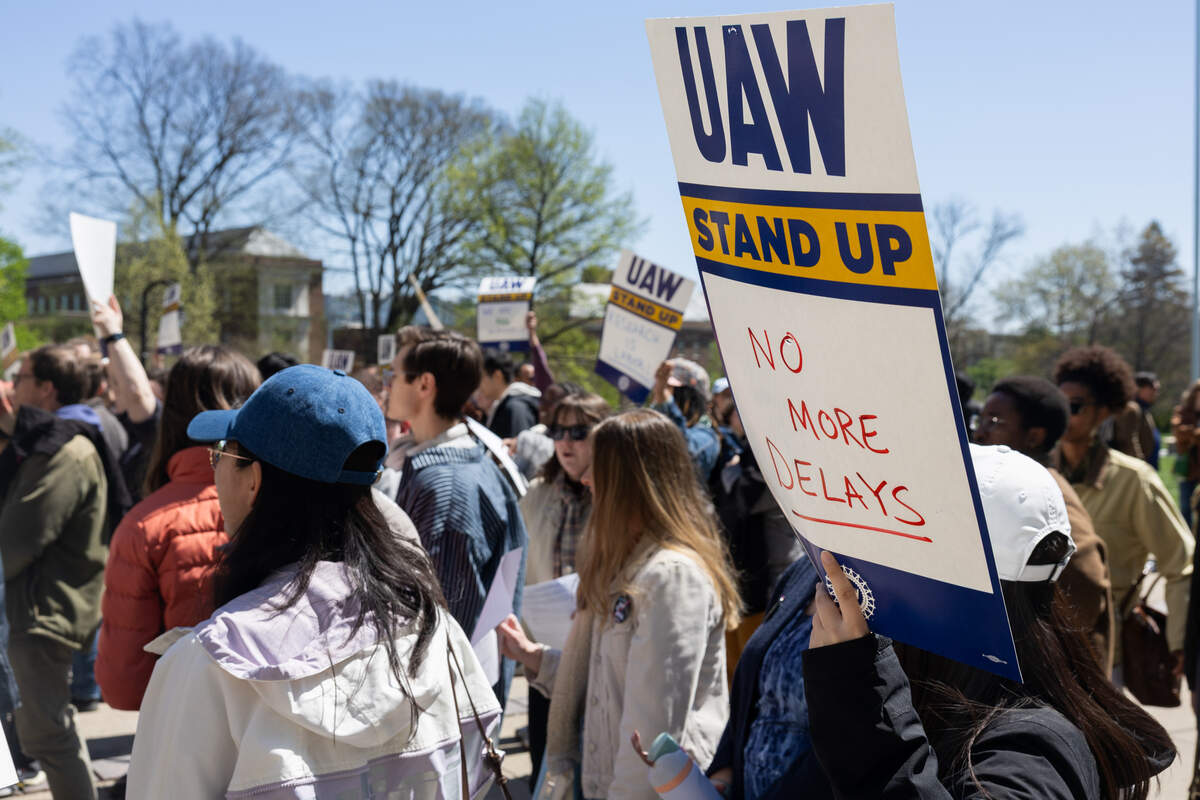
A crowd of nearly 150 students were led by the Coalition of Graduate Employees at Penn State (CGE-UAW), a graduate student union that is represented by the United Auto Workers.
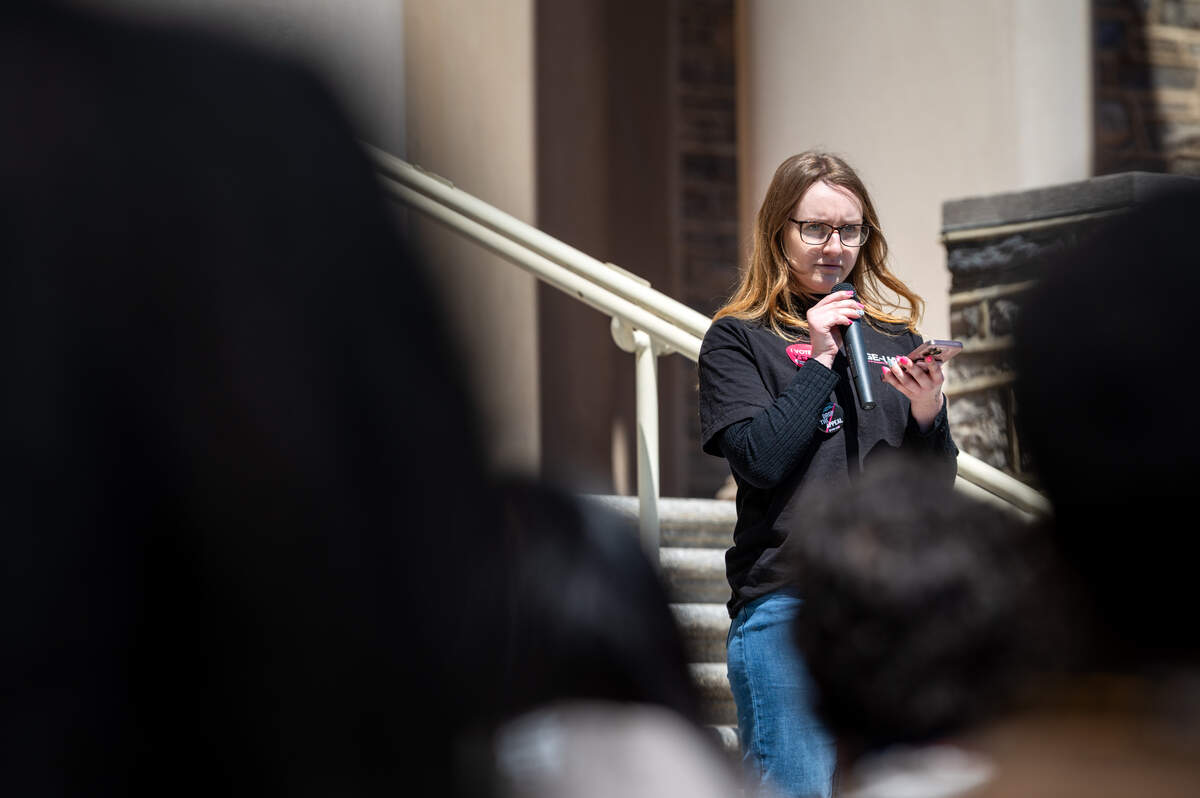
They held up signs and chanted slogans that demanded equal benefits for research assistants. A series of speakers, many of them research assistants, were presented on the steps leading up to Old Main, where they expressed their plight to the audience.
“It is time that we fight for ourselves, and we ask the school to respect our decision, drop this appeal and refrain from pursuing further legal actions against our union,” Aflah Hanafiah, a Ph.D. student in biomedical sciences said. “Stop wasting taxpayers’ money on union busting, and come together to bargain in good faith so we can continue to do the impactful work that we have always done without having to face preventable life challenges that disrupt our lives and impede our work.”
In an election that took place last fall, a vast majority of graduate students who voted — more than 2,000 — were in favor of unionization for all graduate employees, including teaching, research and administrative support.
But Penn State submitted an appeal to the Pennsylvania Labor Relations Board to exclude research assistants in the bargaining unit, arguing they are required to conduct research as part of earning their advanced degrees and are not considered workers, as outlined on its “grad facts” website.
All of the speakers at Tuesday’s rally expressed their personal struggles with financial instability and demanded higher pay and equal protection for international students.
“Since I’ve started my Ph.D., I’ve accumulated over $10,000 in credit card debt,” Kierstyn Higgins, a Ph.D. student in ecology, said.“The only reason I can make this work is because of my eligibility for food stamps and my family who has helped me throughout several financial emergencies. I realize that this is not the case for everyone here.
“Many of us are international workers who are not eligible for food stamps or do not have families that can help them financially when times get tough. That’s why we need this union for everyone.”
More than 2,200 graduate workers from Penn State signed a letter demanding the university drop its appeal and begin collective bargaining.
Jess Rafalko, a Penn State research assistant in the English department and member of the union’s bargaining committee, said the university’s appeal would cut more than half of the bargaining unit, which includes between 4,000-5,000 graduate workers across the Penn State system.
“We just disagree with that entirely, not only on the principle that we are workers, but the principle that we voted together, and we want to be able to negotiate for a contract together that includes all of us,” Rafalko said.
She emphasized that research assistants perform work in the same way as graduate employees, and that the research they produce often does not align with the requirements of their degree programs.
“I’m in the English department, sometimes we have appointments as teaching assistants and research assistants at the exact same time, and we’re doing some kind of work, oftentimes in tandem for the university, which is why it doesn’t really seem that there’s a distinction there we’re doing work. It’s just the nature of the work differs,” she said.
She added how her work as a research assistantship has no relationship to the doctoral research that she is required to do for her Ph.D. “That’s true of research assistants across the university,” Rafalko said.
When asked for comment, a Penn State spokesperson responded with the same message on the university’s website:
“The University does not object to teaching assistants and administrative support assistants being in the bargaining unit and has sought to move ahead in good faith and begin negotiations with the UAW on a collective bargaining agreement covering teaching assistants and administrative support assistants, even though it is not obligated to do so during the appeal.”