How a Penn State-born program is expanding, enhancing sexual assault care in PA
AI-generated summary reviewed by our newsroom.
- Penn State’s SAFE-T telehealth pairs on-site SANEs with expert teleSANEs for exams.
- SAFE-T provides free, private, and secure telehealth consultations with dedicated devices.
- SAFE-T expanded to 25 sites by 2025: six in Idaho and 19 in Pennsylvania.
A telehealth program founded at Penn State is reshaping sexual assault care in Pennsylvania, providing free access to expert nurses for patients in underserved and rural areas, and offering more choices for patients in areas like Centre County.
Founded in 2017 at Penn State’s Rose E. and Carol Nese College of Nursing, the Sexual Assault Forensic Examination Telehealth (SAFE-T) System is designed to enhance care for patients undergoing sexual assault examinations by connecting an on-site sexual assault nurse examiner (SANE) with a virtual forensic nursing expert — known as a “teleSANE” — through real-time telehealth consultations, Sheridan Miyamoto, the SAFE-T Center’s director and principal investigator, said.
The program’s technologically focused approach is meant to expand accessibility and advance this kind of care in rural and resource-limited hospitals, she added.
Over the last year, the SAFE-T program has expanded to eight more hospital sites with 25 total locations: six are in Idaho, and the remaining 19 are across Pennsylvania. Ten of those sites are located in rural areas across the state, Miyamoto noted.
While the program is growing in reach, its local impact has remained relatively low, she noted. Since launching at Penn Highlands State College, the program has only received 11 calls to the SAFE-T center since January 2025. Five were advice calls and six resulted in full telehealth consultations.
The program’s low visibility may be partly due to the newness of the hospital that opened just two years ago, Miyamoto said.
“I think overall that the community doesn’t necessarily know yet what Penn Highlands does,” Miyamoto said. “It’s new, and I think people just haven’t had a lot of exposure.”
It’s also given patients another option for sexual assault care. Mount Nittany Medical Center has provided sexual assault examinations since the 1990s and conducts an average of 40 to 60 exams each year, according to Nicki Olson, SANE-A (Adult and Adolescent) leader at Mount Nittany Health.
Miyamoto said the SAFE-T System complements existing services by increasing options and access for specialized care and ensuring survivors can receive timely, high-quality treatment.
“A lot of what we’re doing is modeling the best practices and increasing their ability to manage these things,” she said. “When people experience an acute sexual assault or intimate partner violence, only a quarter of people come and get healthcare right away. I really want to change that metric,” she said.
Providing more options for care empowers survivors to have more agency in seeking the support that feels right for them, said Jennifer Pencek, the executive director of Centre Safe.
“Any time that we can empower patients and clients to make decisions that are right for them, that’s always going to be a good thing,” she said. “Now, they can decide where they may want to go, whether they have a preference or not.”
Sexual assault care in Centre County
The programs at Mount Nittany and Penn Highlands both provide sexual assault care at no cost to patients and follow a similar protocol in treatment that includes treating them as soon as they walk in or within the hour.
Miyamoto said Penn Highlands patients are placed in a private room upon arrival, where they can wait comfortably and privately until they are seen by an on-site nurse and a teleSANE expert.
“These people are really well-trained in how to collect forensic evidence, take photo documentation, and look for and identify injury, whether it’s from intimate partner violence, other sorts of crime, or sexual abuse. They are ideally suited to care for all patients who have experienced violence,” she said.
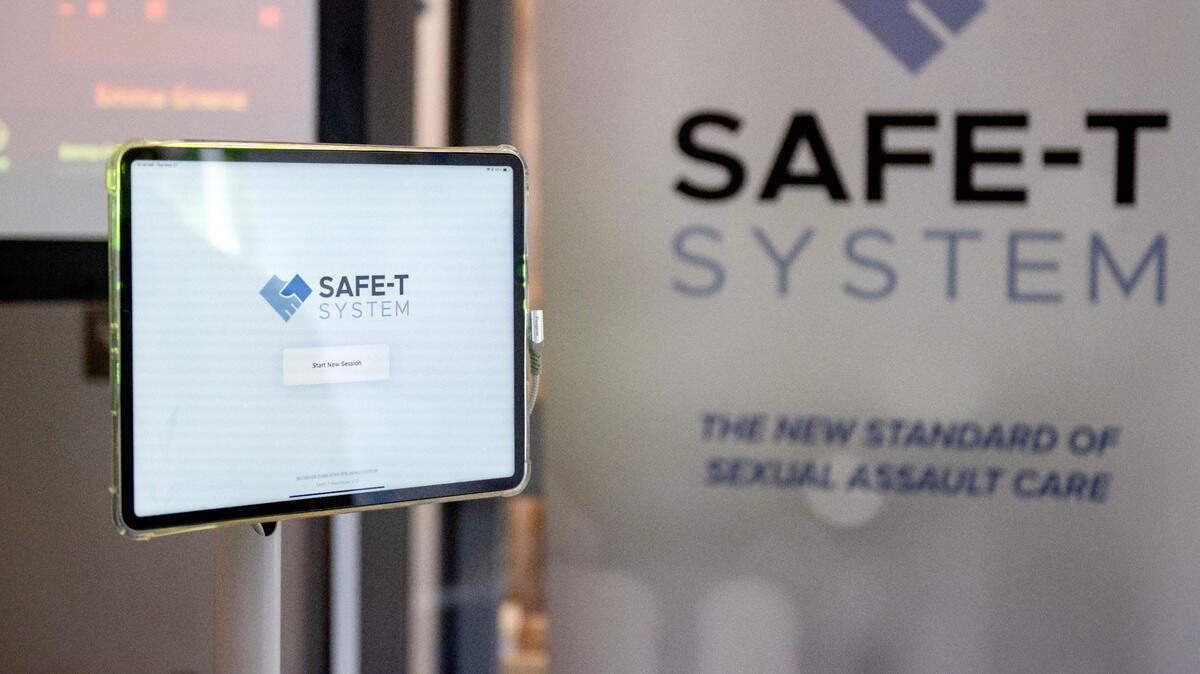
These consultations take place through a secure, fully locked-down iPhone or iPad that is dedicated solely to the SAFE-T program and cannot be used for any other purpose, Miyamoto added.

Patient privacy is a central part of both programs, allowing survivors to decide whether they want to speak to a law enforcement officer or report the assault, but an officer is required to collect the forensic evidence kit after the examination so it can be preserved should the survivor choose to pursue criminal charges at any point.
During every sexual assault examination, each hospital notifies Centre Safe, which sends an advocate to be present with each patient and support them through the process.
Mount Nittany’s Sexual Assault Response Team (SART) is made up of about 100 nurses trained in sexual assault examinations who are capable of meeting patient demand, Olson said. She added that every emergency department nurse has completed 40 hours of specialized SANE training, allowing the hospital to provide consistent care to patients across the age spectrum.
“When a patient presents to Mount Nittany, we’ll always have a nurse available that can do the exam right away,” she said.
Their program is covered via the Victims Compensation Fund and state reimbursements, Olson added.
Olson said the SAFE-T System has been especially valuable for rural hospitals with limited staff and resources, but at Mount Nittany, sexual assault nurse examiners have long been an essential part of patient care.
“I think Tele-SANEs are excellent for other rural hospitals, where the nurses don’t have any training, but because we were the only hospital in this facility, and with the college, we see a lot of sexual assaults,” she said. “We average about 60 to 70 a year, it was important for us to always have a nurse on duty that was able to complete the exam.”
SAFE-T recently added a pediatric program, allowing partner hospitals like Penn Highlands to care for people of all ages — from children experiencing sexual abuse to older patients facing sexual assault and intimate partner violence, Miyamoto said.
SAFE-T System is supported by hospital payments and grants, including $200,000 in grant funding from the Rita and Alex Hillman Foundation in 2025. Grants are meant to cover the start-up costs for equipment, initial training and early telehealth support when merging with a hospital, Miyamoto said. After the grant period, hospitals are expected to keep paying to sustain the already implemented service.
Centre Safe provides free, confidential services to survivors of sexual assault, domestic violence, dating violence and stalking. Centre Safe has a 24/7 hotline at 77-234-5050, and their website is www.centresafe.org.