Penn State student nearing end of 61-day, 3,545-mile triathlon in fiancée’s memory
AI-generated summary reviewed by our newsroom.
- Matthew Hollingham is three quarters through a 61-day, 3,545-mile triathlon.
- Hollingham aims to raise $250,000 for three children’s charities.
- The triathlon honors his late fiancée Lovisa Arnesson‑Cronhamre, killed while jogging.
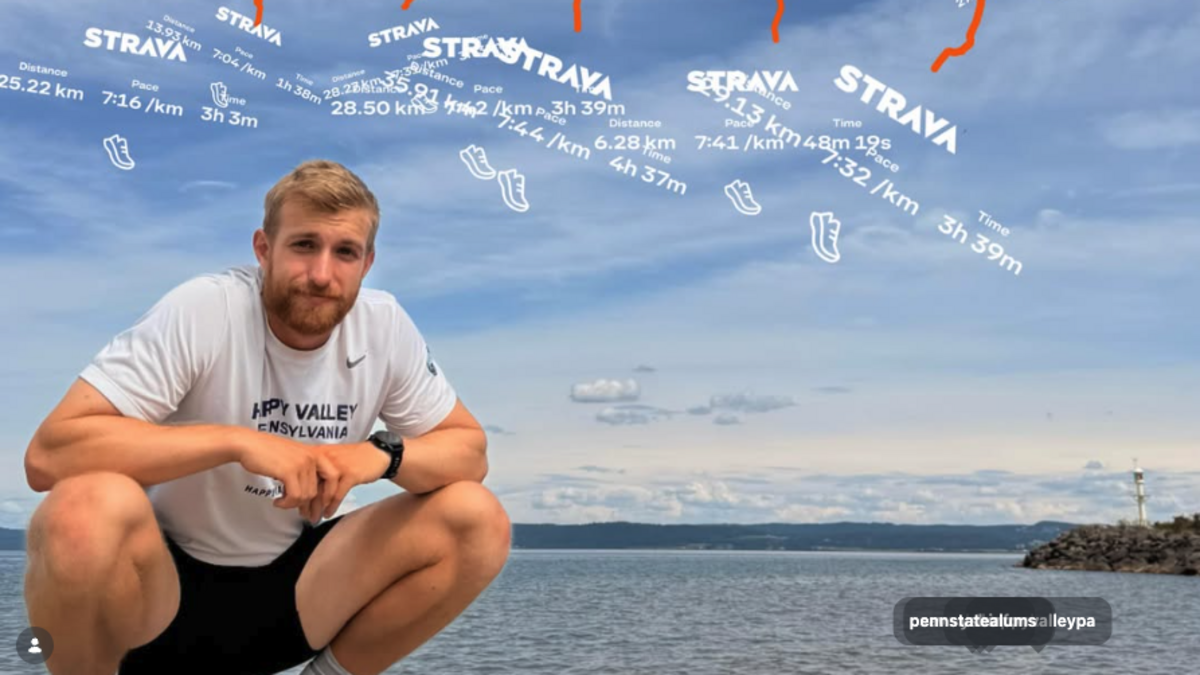
Penn State Ph.D. candidate and international student Matthew Hollingham is officially three-quarters of the way through his 61-day triathlon — a behemoth 3,545 mile swim-run-bike trek from the Arctic Circle to Africa to raise funds for children’s charities.
“I wanted to do something that sounds sufficiently crazy,” Hollingham said about why he chose such a strenuous task to fill his summer. “I knew that if I wanted people to support this, I had to force their attention.”
Hollingham’s triathlon is believed to be the longest of its kind, beginning on the icy shores of Sweden and ending in the sunny beaches of Morocco. But, for Hollingham, this endeavor is about far more than just endurance — it’s about memory.
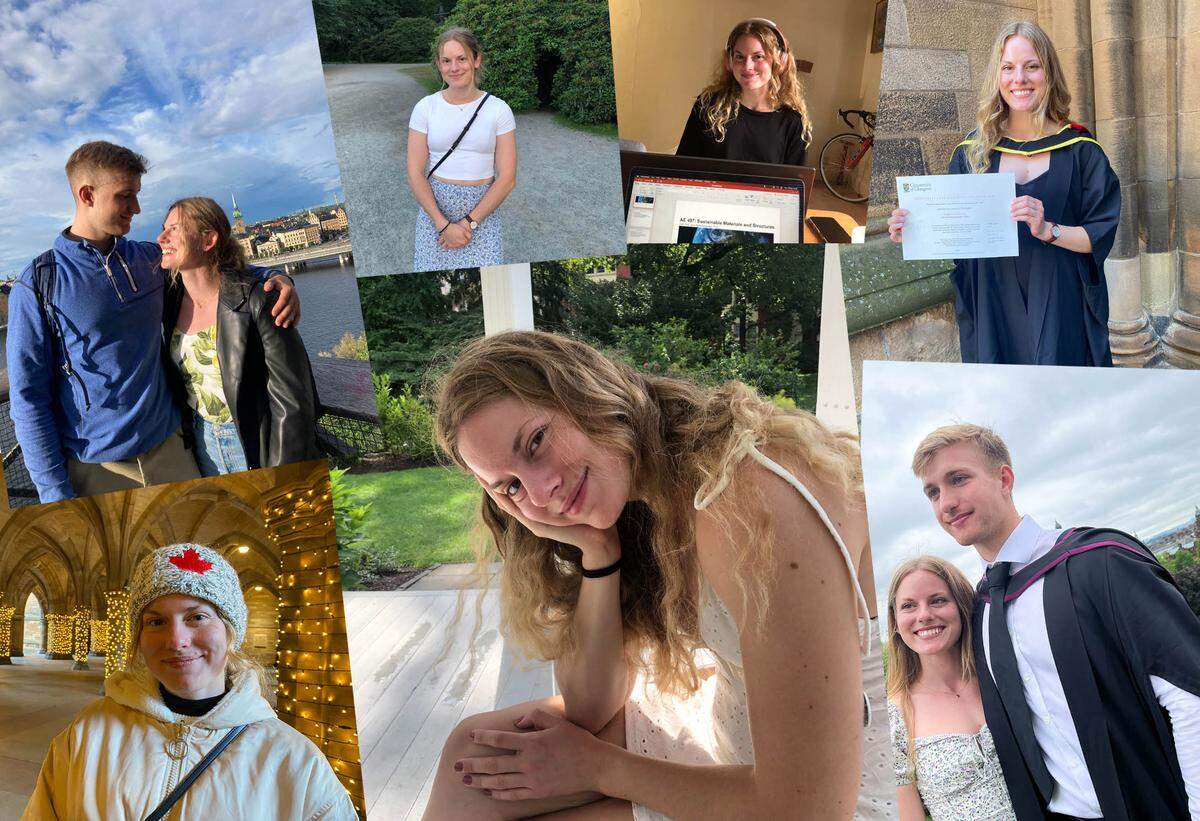
Lovisa Arnesson-Cronhamre, a 25-year-old international doctoral student, was struck and killed by a driver while jogging in downtown State College in September 2023, leaving behind family, friends and a fiance, Hollingham.
“In some points, it’s quite painful,” Hollingham told the CDT on Wednesday. “In other ways, it is quite beautiful that so many people now are aware of her. … She gets to sort of live on in the subconscious of other people, which I really enjoy.”
The triathlon in Lovisa’s memory began on May 31 in the northern reaches of Sweden, her home country, with the 2.4-mile swimming portion. Hollingham suited up for a plunge in waters scarcely above freezing.
Prior to the triathlon, Hollingham trained to recognize the effects of freezing on the body, from the initial shock, to the gradual numbness to the slow descent into hypothermia. Hollingham swam 4 kilometers in two 45-minute bursts, leaving the water only when his body and equipment could no longer withstand the temperature.
“The water was as cold as it could be,” Hollingham said, as the lake in Sweden was still frozen just two weeks prior to his arrival. “The wetsuit was rated for, I think a half an hour [at that temperature], so 45 minutes, for me, felt like a safe enough way to push it. … If you’re cold, you just swim faster.”
Following the swimming portion, Hollingham spent the next 37 days on the road, running the equivalent of about 37 marathons.
“The first seven to 10 marathons were just absolutely miserable, absolutely excruciating pain,” Hollingham said. “The day is purely revolving around running.”
Hollingham would rest for 10–11 hours a night before traveling to each race point. From there, it was just him and the open road.
“For the marathons, everything is very much in my control,” Hollingham said. “Even the pain was entirely self-inflicted.”
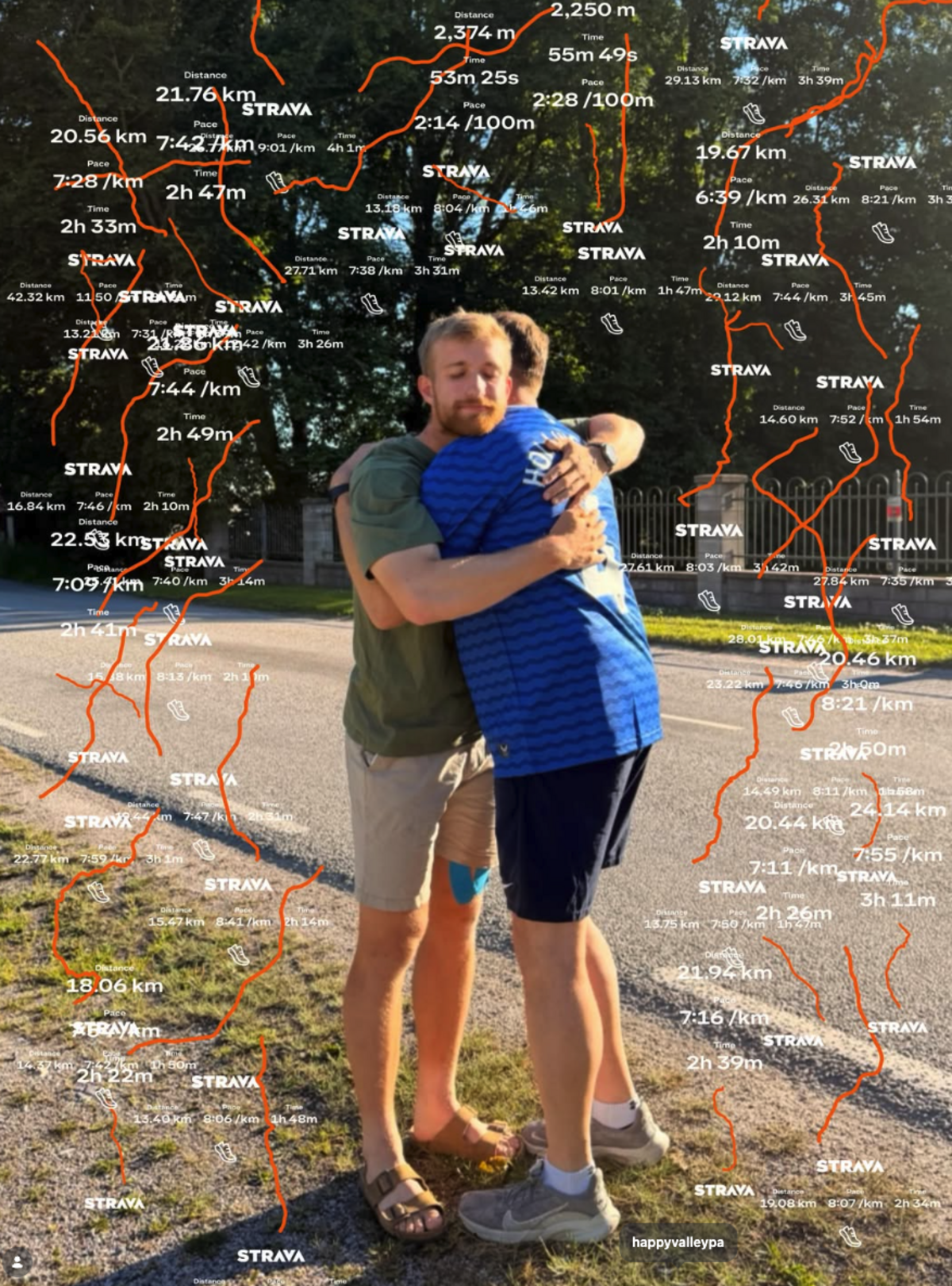
Still, Hollingham persevered, even walking three marathons after he sustained an injury to his left quad muscle, the first of many minor injuries he sustained along his journey.
“I can call my support crew at any time if I’m in peril,” Hollingham said. “I try to control what I can control, but outside of that, it really is just accepting that yes, this is hazardous. And I accept that.”
For as many injuries as he’s sustained, Hollingham has also cultivated a substantial support base. Since the beginning of his triathlon, Hollingham has been visited by a combination of friends and family — his and Lovisa’s — cheering him on and even offering up space in their homes along his route.
“It gives me a mental break, every single time they’re here,” Hollingham said. “It’s not easy to come visit me. … Everyone has been absolutely incredible.”
Now in the cycling portion of the triathlon, Hollingham has been forced to adjust his routine to accommodate factors outside this control — the record-breaking UK heatwave and wildfires in the Pyrenees mountains.
Hollingham now wakes before the sunrise each morning and cycles as much as possible before the heat reaches its apex.
“You just can’t really be out during certain hours of the day,” Hollingham said. “Losing that control is really challenging.”
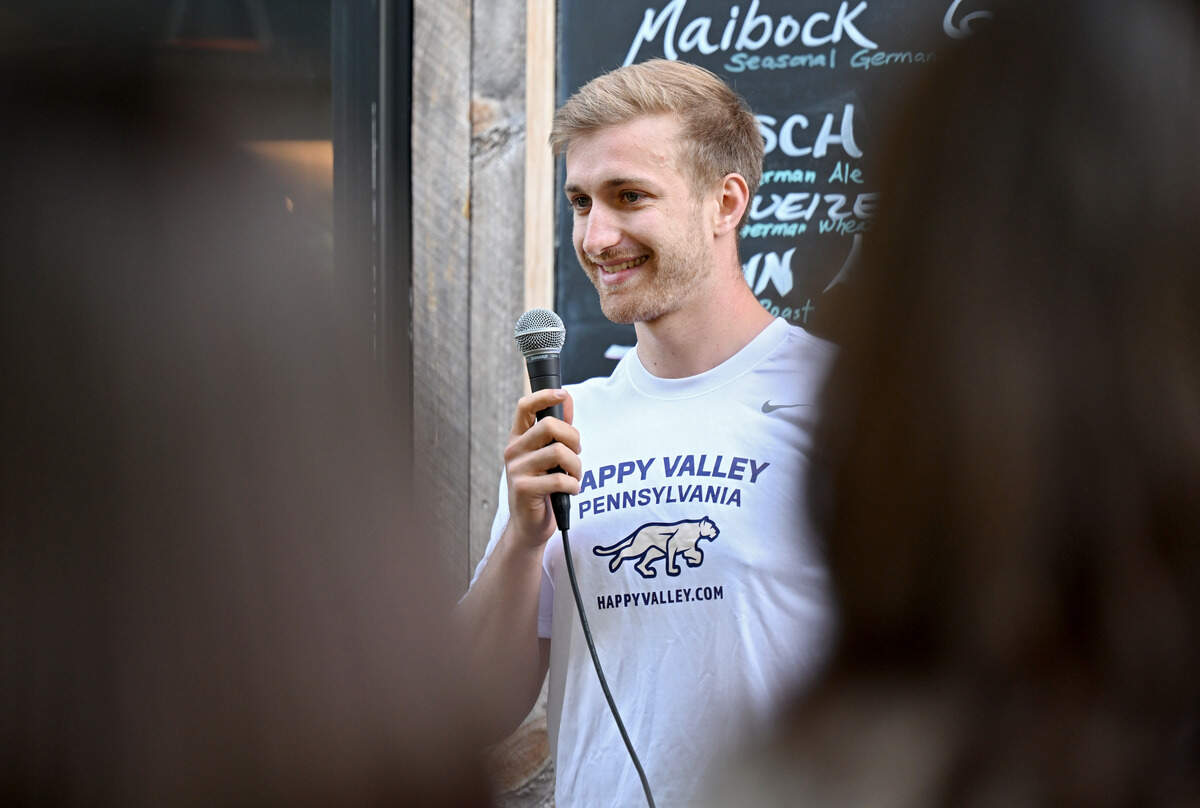
The heat has stalled Hollingham’s progress somewhat, due to his reduced ability to travel, but he still plans to reach his finish line in Morocco on July 30.
“So even though I can’t cycle physically as much during the day because of the heatwave, I still have to make it there,” Hollingham said. “So, it’s looking like the last two days are going to be a 100-mile cycle in the morning, heat during the day, and then that night, cycle another 100 miles.”
Hollingham’s journey has raised only around $35,000 of its $250,000 goal for the Centre County Youth Services Bureau, Save the Children and the Be More Lovisa Scholarship, a charitable fund established by Lovisa’s family in conjunction with Penn State to help women pursue a college education in physics.
“Lovisa really wanted to be a mother. And it only seemed fitting that if she can’t give that to the world, I can at least give a part of it through fundraising for her,” Hollingham said. “I don’t think anything like this ever again will be done. I want this to be a lasting testament to Lovisa.”
To track Hollingham’s progress and donate to these causes, visit https://happyvalley.com/arctic-to-africa