Penn State’s board of trustees approves $210K bonus for President Neeli Bendapudi
AI-generated summary reviewed by our newsroom.
- The attending trustees unanimously approved a 15% annual performance bonus for Bendapudi.
- The bonus brought Bendapudi’s base salary to about $1.6 million
- The board cited Bendapudi’s stability and approved her 2026–27 performance goals.
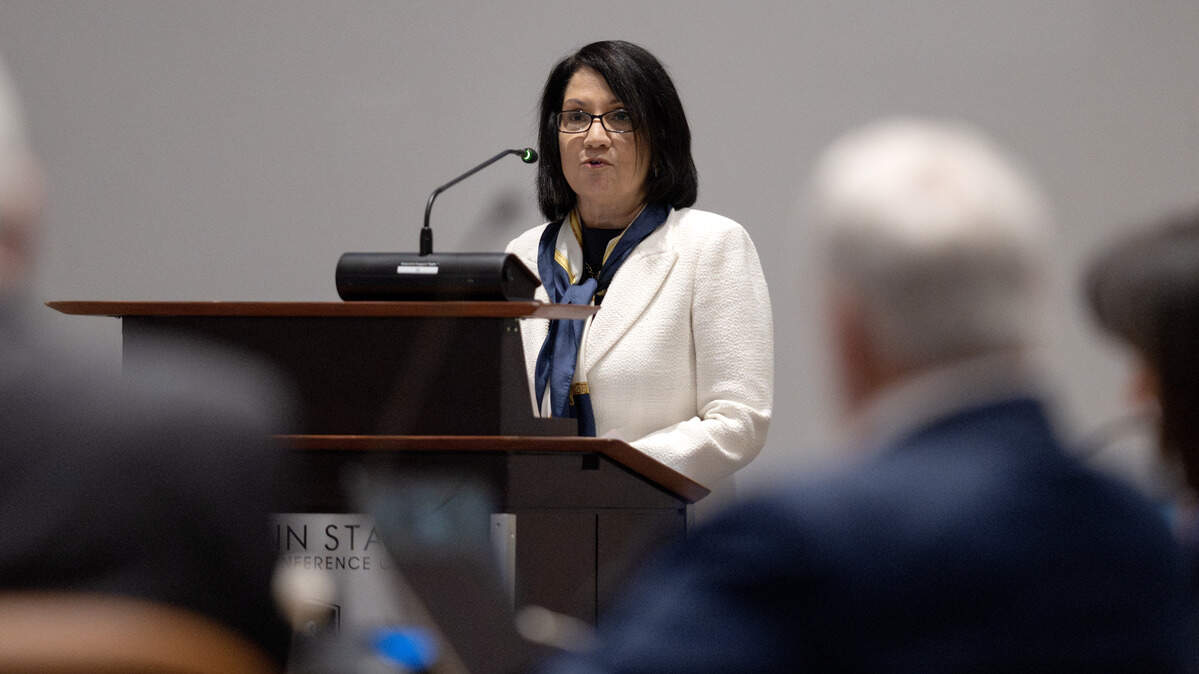
Penn State University President Neeli Bendapudi was awarded a roughly $210,000 annual performance bonus — equivalent to 15% of her $1.4 million base salary — during Friday’s board of trustees meeting at Williamsport’s Pennsylvania College of Technology.
The bonus was approved unanimously by all attending trustees, citing Bendapudi’s “stability and leadership” and satisfactory 2026-27 performance goals, which were also approved by all attending trustees. Based on Bendapudi’s most recent term sheet, she is eligible for a performance bonus every year.
The bonus was recommended Thursday by the Committee for Equity and Human Resources, which felt that Bendapudi’s performance during the 2025-26 school year qualifies under her previously established performance incentive.
This bonus comes after Bendapudi received a roughly $1 million compensation increase in 2025, bringing her total compensation last year to about $2.8 million.
The terms of her previous wage increase stipulate that Bendapudi’s base salary grows by 3.5% each year, with an annual performance-based bonus that could equal up to 15% of her base salary, pending board review.
Bendapudi receives a base salary of $1.4 million annually, alongside a $525,000 pension and at least $555,000 in deferred compensation, making her one of the highest-paid public university presidents in the nation. She also receives other perks such as travel expenses, employee benefits, a place of residence, etc.
Now four years into her tenure at Penn State, Bendapudi is the third-most senior university president in the Big Ten behind Daryll Pines at the University of Maryland and Timothy Killeen at the University of Illinois System. Two-thirds of Big Ten universities had a presidential turnover since 2025.
“In the Big Ten right now, retention of presidents is vital,” trustee Jay Paterno said. “I think it’s important that we understand the marketplace that we’re in and why these [bonuses] are meaningful and important to do.”
Bendapudi’s previous compensation increase was met with a slew of controversy, especially in the wake of her decision to close seven Penn State commonwealth campuses, citing financial deficits in their operation.
The specifics of Bendapudi’s criteria for the performance bonus, as well as her goals for the 2026-27 school year, were discussed in executive session prior to the meeting and not disclosed to the public.
“Stability and leadership is very important in the higher education space, which is changing rapidly,” board chairperson David Kleppinger said. “We’re very fortunate to have a president that’s committed to being with us for the long-term.”