
Penn State trustees debate alumni seats during board reform talks
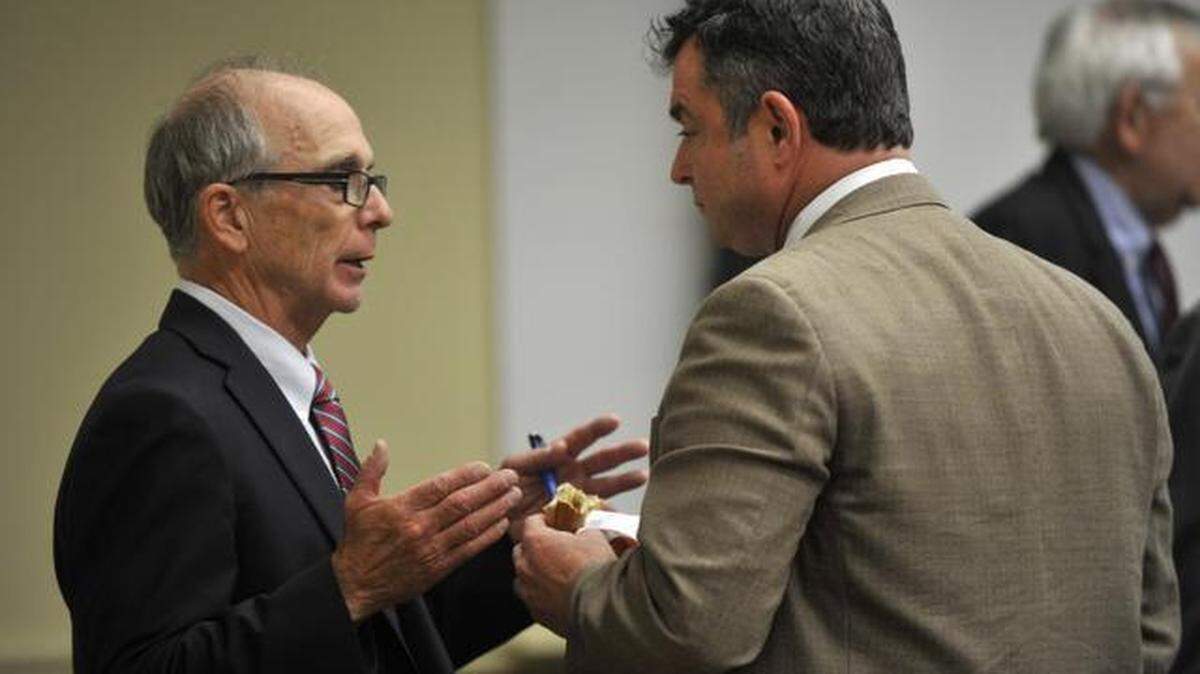
There was an elephant in the room when Penn State trustees met Friday to hash out board reform.
And that, trustee Anthony Lubrano said, is a fear he claims some of his colleagues share: that nine alumni-elected seats have been taken over by the grass-roots Penn Staters for Responsible Stewardship to try to control the board.
Lubrano, who earned his seat through the alumni election, questioned whether that was the context behind a proposal put forth Friday to eliminate three of those spots on the board.
“... There are some here who think that the process has been co-opted by a grass-roots organization and that there is a concern, I think, that if somehow the alumni-elected trustees get ‘control of the board,’ that they will harm the institution,” Lubrano said.
The idea of tinkering with those alumni-elected seats led to the most contentious exchanges Friday at a 41/2-hour meeting that saw the board’s governance committee tackle a host of possible changes.
Proposal A, one of three on the table, recommended dropping three alumni-elected members and essentially replacing them with a faculty member, a student and a representative of the university’s alumni association.
Trustee Richard Dandrea, who voiced support for the proposal, called it a “data-driven decision that makes sense in terms of the fair and effective composition of the board.”
Dandrea cited a recent benchmarking study, undertaken by Penn State to help with the reform talks, that showed 33 of 36 peer universities included have no alumni-elected trustees. At the rest, the average percentage of alumni-elected members on boards is less than 2 percent. At Penn State, it’s 30 percent.
On top of that, he said, is the fact that less than 5 percent of alumni voted in the election last year, and the number has been even lower in recent years.
“This is a reasonable — a well-reasoned, because of this data — and moderate proposal,” Dandrea said.
Still, not everyone at the meeting agreed.
“I am just extremely skeptical of the motivation behind this,” said Barbara Doran, another alumni-elected trustee.
The proposal, which was first floated last month at a board meeting, also has resulted in criticism from alumni.
Dandrea said accusations that the move is an attack on the election process or the alumni-elected trustees are a mischaracterization of the proposal.
“It is not draconian,” he said. “It is not radical. It is a moderate change to the composition of the board. I don’t think the reaction should be shrill or hyperbolic.”
Lubrano rejected the argument, saying that having a higher percentage of alumni-elected seats is still proportional because there are 600,000 alumni and 90,000 students.
“Fair does not mean equal,” Lubrano said.
He said that the alumni election process is the most open one on the board, alluding to a recent controversy over how agricultural societies elected their members on the board.
Dandrea also praised the process, and said it’s out of respect for the election that he doesn’t push for the reduction of more of the seats. He said dropping the number to one or two would be more consistent with peer institutions.
Lubrano said he sees the move as an attempt to exert control over the panel.
“What it looks to me like, and to others in the community, is this is about power,” he said. “This is about control. This is about the concern that if we don’t do this, there might be a change in the governor’s mansion and we might ‘lose control.’ ”
This story was originally published August 15, 2014 at 5:12 PM with the headline "Penn State trustees debate alumni seats during board reform talks."