
Freeh document access case sees court debate
Penn State and several of its alumni trustees have a fundamental disagreement about what is necessary to get the job of running the university done, especially when it comes to the issue of the Freeh report.
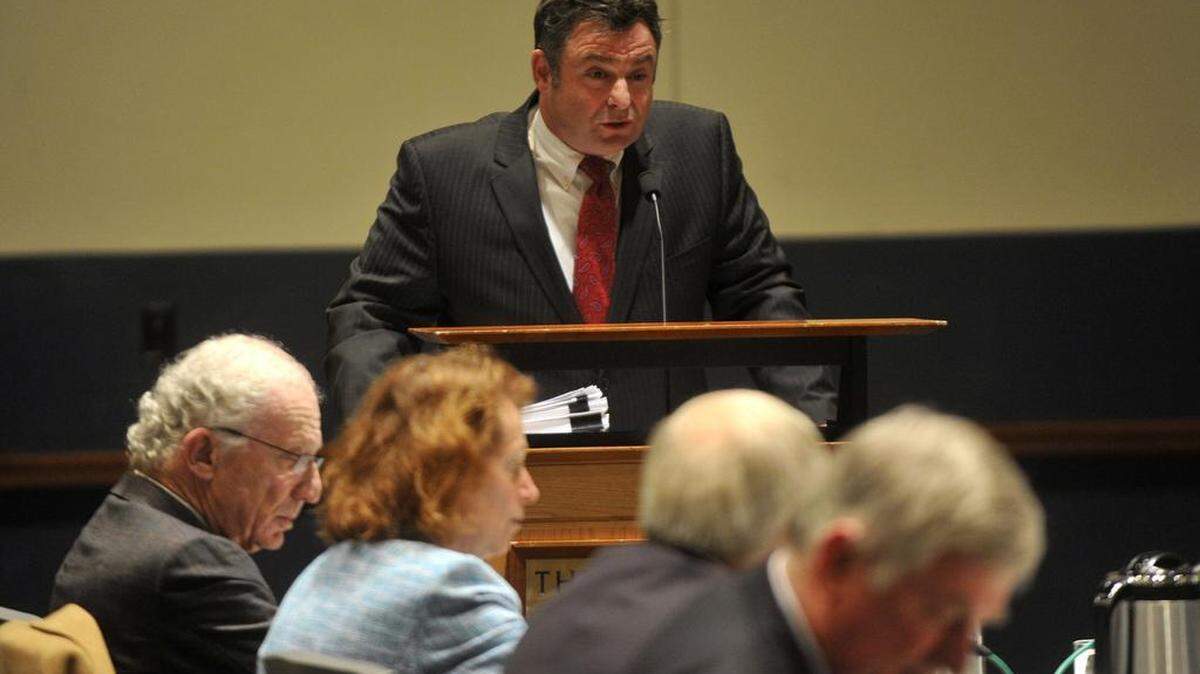
On Tuesday, attorneys for the two sides brought their arguments to Centre County Court, where they presented them in front of Bedford County Senior Judge Daniel Howsare.
The alumni trustees are suing for access, saying they need to review the documents that back up former FBI director Louis Freeh’s investigation of the Jerry Sandusky child sex abuse scandal. The university maintains that the confidentiality of the more than 400 interviews remains paramount.
The trustees have made this argument for months. They started their campaign for a review of the often-controversial Freeh report in 2014. The full board voted it down, but they have vigorously pursued their own assessment of the documents behind Freeh’s conclusion that the university, and specifically former president Graham Spanier, former athletic director Tim Curley and former vice president Gary Schultz, along with late former football coach Joe Paterno, were culpable.
“No one has more authority to manage the affairs of the university than the trustees,” said attorney Daniel Brier. “And it’s not a duty subject to groupthink, not a duty subject to the will of the majority. It is an individual duty.”
Penn State attorney Joseph O’Dea, from Saul Ewing, the firm where the documents are being held in Philadelphia, took a different position.
“The issue is not personal to these trustees. It’s not political,” he said, claiming the trustees were looking at the issue subjectively rather than objectively.
As an example, he used the theoretical hiring of a new president. If all trustees were privy to the information, but some deeply believed the choice was wrong and leaked it, he said, that would be denying the full board the ability to do the hiring they were all jointly responsible to accomplish.
“It doesn’t work, Judge. A university can’t operate that way,” O’Dea said. “The board acts collectively.”
That was not the only time O’Dea raised the possibility that the trustees Ted Brown, Barbara Doran, Bob Jubelirer, Anthony Lubrano, Ryan McCombie, Bill Oldsey and Alice Pope might release information if it was available to them, even though Brier repeatedly stressed that they would agree to confidentiality and could be bound by a court order. O’Dea cited information that appeared in print about negotiation with Sandusky victims before the information about any of the terms were released by the university.
“I don’t for a moment suggest bad faith,” he said but followed that with “We have a divided board on (the Freeh Report) issue.”
There is also division in the courts.
Brier cited several different cases, near and far, in local and federal courts, where the Freeh report is a sticking point. In Centre County, that includes the Paterno estate’s case against the NCAA and the university and Spanier’s suit against Freeh, but there are also victim lawsuits, the employment case of former assistant coaches Jay Paterno and Bill Kenney, and the legal battle between Penn State and its insurer, Pennsylvania Manufacturers Association, all of which either start from the idea that the Freeh report is right or that it is wrong.
Then there is the consent decree between the university and the NCAA, which was based on the report’s conclusions.
“The Freeh report is a summary. It’s an interpretation,” said Brier. His clients want to see the basis of that conclusion.
The university, on the other hand, says that it has a responsibility to protect its people. O’Dea countered with the “heinous, vile threats and attacks” that have arisen from the case, particularly online and via social media.
“From the university’s perspective, this is all about good governance practices,” he said. “This is not Enron.”
After the hearing, Lubrano said that the trustees were totally willing to work within the structure of the board to address any action they might want to take as a result of an investigation of the documents, discounting the allegations of leaks as unproven.
“The university has made its position on this request clear, and nothing has changed,” said Penn State spokeswoman Lisa Powers. She referred to the university’s May statement on the legal action, when her office issued a release saying “Penn State is legitimately concerned that interviewees may become public targets, and its work to encourage the reporting of wrongdoing would be jeopardized.”
Brier said he anticipated a ruling from Howsare in October.
This story was originally published September 8, 2015 at 6:05 PM with the headline "Freeh document access case sees court debate."