Your primate ancestors may be the reason humans love alcohol, study says
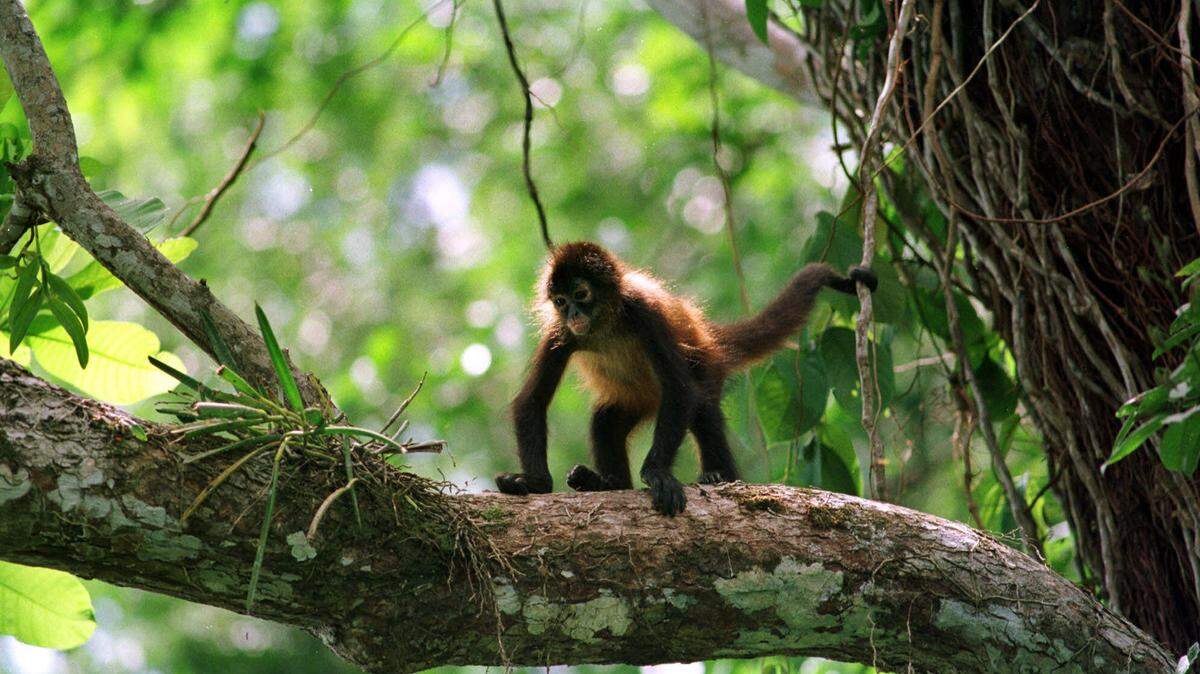
A new study shows that humans’ tendency to drink alcohol might come from our primates ancestors.
The study published last month revealed findings that support the “drunken monkey hypothesis.” It was led by professor Christina Campbell of California State University, Northridge and her graduate student Victoria Weaver.
“For the first time, we have been able to show, without a shadow of a doubt, that wild primates, with no human interference, consume fruit containing ethanol,” Campbell said in a March 28 news release from the university.
“This is just one study and more need to be done, but it looks like there may be some truth to that ‘drunken monkey’ hypothesis — that the proclivity of humans to consume alcohol stems from a deep-rooted affinity of frugivorous (fruit-eating) primates for naturally occurring ethanol within ripe fruit,” she added.
Between June to September 2013, researchers observed the eating tendencies of black-handed spider monkeys for 12 hours each day on Barro Colorado Island in Panama.
The study looked at the ethanol concentrations in Spondias mombin fruits, also known as hog plums, eaten by the monkeys.
Ethanol found in ripe fruits is produced naturally through the fermentation of yeasts, the study explained.
Study results showed that the hog plums eaten by the spider monkeys contained amounts of alcohol ranging between 1 and 2%. “They found that five of six samples would test positive,” the release said.
Researchers collected both non-eaten fruits that monkeys observed, but rejected, and partially eaten fruits that fell on the ground for testing, according to the study.
The monkeys are probably not getting drunk, University of California, Berkeley biologist Robert Dudley, who co-authored the study, said in a news release.
Instead, researchers explained that primates most likely turned to fruits with ethanol because of its “nutritional reward.”
“The monkeys were likely eating the fruit with ethanol for the calories,” Campbell said in the release. “They would get more calories from fermented fruit than they would from unfermented fruit. The higher calories mean more energy.”
“Excessive consumption of alcohol, as with diabetes and obesity, can then be viewed conceptually as a disease of nutritional excess,” she added.
Researchers mentioned other alcohol-aficionado animals in the wild: Slow lorises and pen-tailed tree shrews — a small, ratlike animal — chronically consume ethanol in the form of fermented nectar sometimes at “rates that would intoxicate humans.”
This idea isn’t new — for 25 years, Dudley had, too, researched the connection between human’s love of alcohol and our primates ancestors.
In a 2014 book, “The Drunken Monkey: Why We Drink and Abuse Alcohol,” Dudley explained some fruits eaten by primates have a “naturally high alcohol content of up to 7%.” But he did not have data illustrating apes or monkeys sought out and preferred fermented fruits.
“It (the study) is a direct test of the drunken monkey hypothesis,” Dudley said in a news release. “Part one, there is ethanol in the food they’re eating, and they’re eating a lot of fruit. Then, part two, they’re actually metabolizing alcohol — secondary metabolites, ethyl glucuronide and ethyl sulfate are coming out in the urine. What we don’t know is how much of it they’re eating and what the effects are behaviorally and physiologically. But it’s confirmatory.”
The new study was published in the journal Royal Society Open Science.
This story was originally published April 4, 2022 at 6:27 PM with the headline "Your primate ancestors may be the reason humans love alcohol, study says."