
Remains, sacred objects of Native Americans found in boxes on ND campus, college says
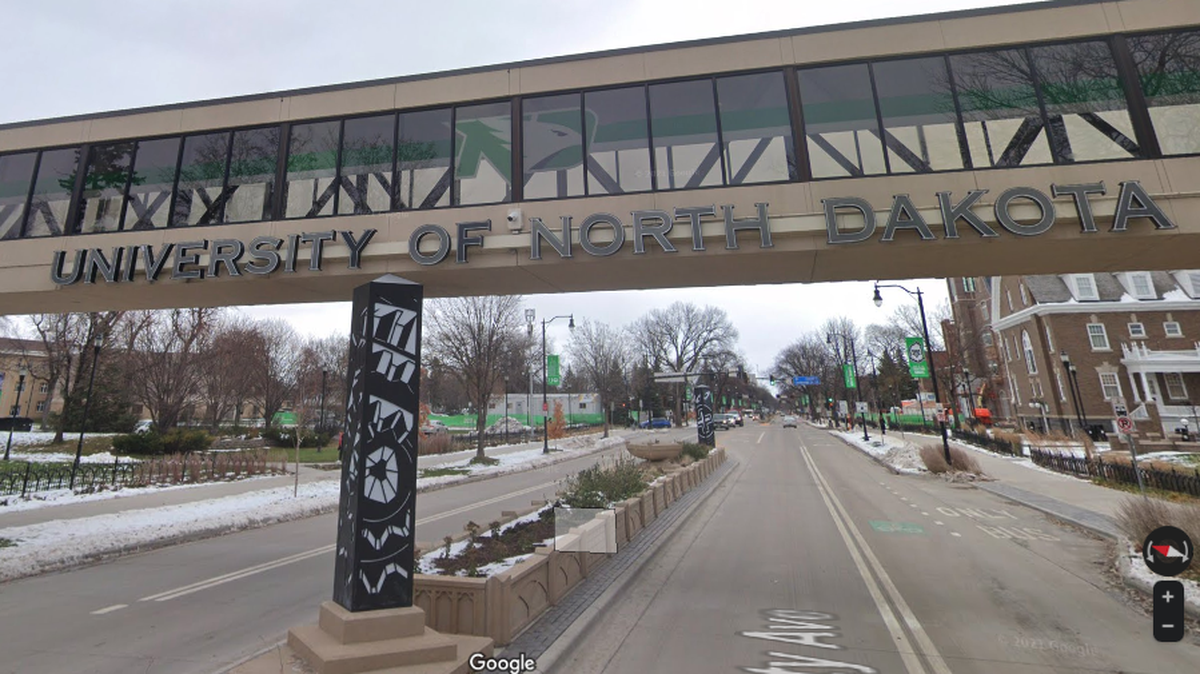
Chippewa tribe member Laine Lyons remembers vividly her reaction to a haunting discovery earlier this year on the campus of the University of North Dakota.
Lyons, an alumna at the university who is the director of development at the College of Arts & Sciences, said she was called to assist with protocols in March when campus officials found what they believed to be ancient Native American artifacts.
Along with some of these artifacts, as Lyons and the university soon realized, were skeletal remains of Native American ancestors that may date back 80 years.
“Dr. (Don) Warren identified the box that contained the ancestor,” Lyons said in a news briefing on Wednesday, Aug. 31. “I will never forget the look on his face, as it was the face of disappointment, and that moment my heart sunk into my stomach. It was at that moment that I knew we were another institution that didn’t do the right thing.”
Dozens of remains belonging to Native Americans have since been found throughout the Grand Forks campus, UND President Andrew Armacost said. In addition to the discovery of ancestors, the campus is currently in possession of more than 250 boxes containing sacred remains and items.
It’s unknown how and why the remains and artifacts arrived on the University of North Dakota campus, but campus officials believe they were “taken directly from sacred burial mounds” from the 1940s to the 1980s.
Armacost apologized to the Native American community, saying it was an “extraordinarily traumatic time” for American Indian campus members.
“I sincerely express my apologies and heartfelt regrets that UND has not already repatriated these ancestors and sacred objects as they should have been years ago,” Armacost said in a campus news release. “Second, I pledge my administration’s full support and commitment to the tribal nations impacted by this mistake. Our primary goal now is to work diligently until all ancestors and sacred objects are returned home, regardless of how long it takes.”
Reaction from Native American community
Joining Lyons and Armacost during a news briefing Wednesday were other members of the Native American community — Nathan Davis, executive director of the North Dakota Indian Affairs Commission, and Doug McDonald, a professor of psychology at the university.
McDonald, a member of the Oglala Lakota tribe who has taught at the university for 31 years, described the continual finding of remains as a “slow moving disaster for many of us.”
“You suddenly begin to realize, knowing where your own family and tribes came from, that it’s highly likely those are your ancestors,” he said.
Davis, who like Lyons is a member of the Turtle Mountain Band of Chippewa tribe, said Wednesday his initial reaction to learning about the discoveries was “shock and disbelief.”
“It was the first time in my life that I was speechless. That’s not something that really ever happens to me,” he said. “That feeling of shock and disbelief soon gave way to confusion and to anger.”
As more and more ancestors were found throughout the campus, Lyons said “each new one that was found felt like a deeper and deeper cut.”
What’s next?
Under the federal law called the Native American Graves Protection and Repatriation Act, the university must return the remains and sacred objects to the tribal lands.
Soon after learning of the findings on campus, Armacost began working with local tribes on the work of repatriation, a process defined by the National Museum of the American Indian “whereby human remains and certain types of cultural items are returned to lineal descendants.”
The university president said tribal leaders expressed anger and sadness, but noted their appreciation that the university was involving them in the repatriation efforts.
With guidance from the tribes, the university has moved the ancestors and sacred items to a single location on the campus, Armacost said.
Repatriation could take up to several years, the university said in a news release. A committee has been formed to work with tribal leaders in the efforts.
“We can now feel a sense of relief and hope because our ancestors will be returned to their rightful place, and that’s home. We’ll make sure of that,” Lyons said.
But that process will be a difficult one, said Davis. He commented on the “insensitive and inexcusable” treatment of his ancestors, who will now have to be reburied.
“Once we put them in the ground and become one with our mother, that is where they are to stay. There’s nothing that I’ve ever been taught as a Native American man to put my relatives back in the ground,” Davis said. “That violates who we are, that violates our culture. So when we say this hurts, it’s because it touches our soul. It touches our spirits because in our ways, this was not supposed to happen. Our loved ones are supposed to rest.”
This story was originally published September 1, 2022 at 2:19 PM with the headline "Remains, sacred objects of Native Americans found in boxes on ND campus, college says."