
Dad died emaciated in California jail cell littered with feces and trash, lawsuit says

Lonnie Rupard died after three months in San Diego Central Jail, where his cell was littered with feces, trash and old food containing insect larvae, according to a federal wrongful death lawsuit filed by his sons.
While under the care of jail staff, Rupard’s basic and mental health needs were “severely” neglected — resulting in his death at 47 on March 17, 2022, a complaint filed July 26 says.
Before his death, Rupard was clearly in medical distress, according to the complaint, which says he lost 60 pounds in custody and weighed 105 pounds when he died.
The San Diego County Medical Examiner listed Rupard’s cause of death as “pneumonia, malnutrition, and dehydration in the setting of neglected schizophrenia” with COVID-19, pulmonary emphysema and a duodenal ulcer listed as contributing factors, according to an autopsy report.
His manner of death was ruled a homicide, the report shows.
One of Rupard’s sons, Justino Rupard, 26, of San Diego, told McClatchy News in an interview he was in shock when he learned his father died in custody.
“It felt so surreal,” Justino Rupard said. “I couldn’t believe what I was hearing.”
Justino and his brother, Ronnie Rupard, 21, are suing San Diego County, former Sheriff Bill Gore, Sheriff Kelly Martinez and several other defendants over his death.
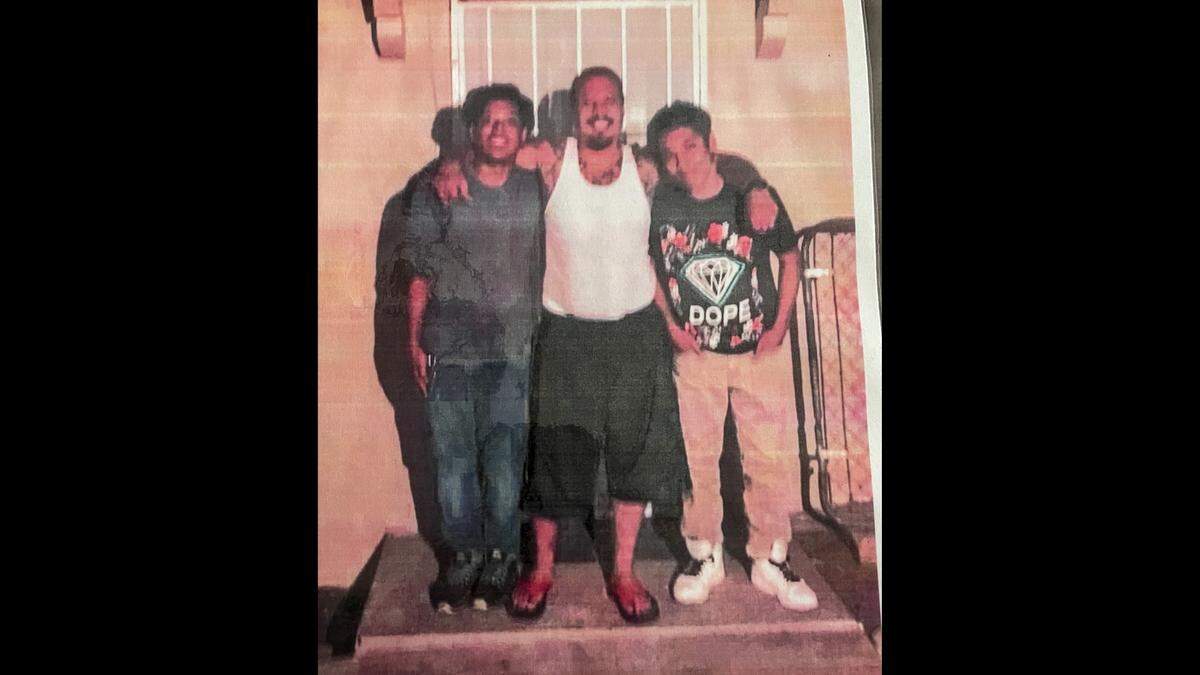
The San Diego Sheriff’s Department declined to comment on the lawsuit, as it doesn’t comment on pending litigation, Lt. David LaDieu confirmed in a statement to McClatchy News on Aug. 1.
“We continue to prioritize the health and well-being of all individuals in our custody and our sympathies are with the family and all those affected by Mr. Rupard’s passing,” LaDieu said.
He said an investigation into Rupard’s death is ongoing.
County officials didn’t immediately respond to an Aug. 1 request for comment from McClatchy News.
Attorney Jeremiah Lowe, who represents Justino, told McClatchy News in an interview on Aug. 1 that Rupard’s death is a “complete system failure” and “a deliberate indifference to life.”
“Lonnie deserved a chance at life, and he was not given that,” Lowe said.
Lowe said Lonnie’s death isn’t one person’s mistake, but “it starts with the county and the sheriff’s department.
“There’s no excuse for somebody to die the way he died under their care,” Lowe said.
Rupard’s experience in jail
On Dec. 19, 2021, following his arrest over a parole violation, Rupard was detained in San Diego Central Jail, according to the complaint.
Because he had schizophrenia, “he was dependent on others for his wellbeing,” the complaint says.
After the officer who arrested Rupard reported he had a history of psychotic disorders, a jail psychiatrist planned to give him “previously used psychiatric medications” daily, according to the complaint.
However, Rupard “reportedly refused” to take the medications from Dec. 20, 2021, through Jan. 20, 2022 — when they were discontinued, the complaint says.
From Feb. 1, 2022, to Feb. 23, 2022, jail staff members twice requested Rupard be seen by a qualified mental health profession, the complaint says.
On Feb. 20, three days before staff’s second request, a psychiatrist visited Rupard and determined he “did not require immediate psychiatric intervention,” according to the complaint.
Afterward — from Feb. 23 until Rupard died — “no additional sick calls, progress notes, or wellness checks were documented” by jail staff, the complaint says.
A court-ordered psychiatrist visited Rupard on March 14 and determined, due to “severe mental illness,” he wasn’t “competent to stand trial” for his initial court appearance, the complaint says.
The psychiatrist noted the filthy state of Rupard’s cell after observing trash and feces strewn around, according to the complaint.
The psychiatrist advised Rupard be transferred to a state hospital to receive “antipsychotic medication involuntarily as allowed by law,” the complaint says.
However, he was never transferred and was found dead, weighing 105 pounds, in his bunk three days later, according to the complaint.
Hoping for ‘major change’
“It took three months for my dad to receive medical treatment. Three whole months,” Justino Rupard told McClatchy News. “And within that three months, he lost a lot of weight.”
Before seeing the medical examiner’s report, Justino Rupard said “I didn’t understand why my dad was dead or how it happened.”
“But I had suspicions of him being starved, and then I ended up being correct.”
After Lowe read the medical examiner’s report, he was shocked.
“I thought how is it that somebody in the jail system could die of malnutrition and dehydration and not have their mental illness taken care of?” he said.
Justino Rupard and his brother are suing on several causes of action, including wrongful death, dependent adult neglect, Fourteenth Amendment violations, failure to summon medical care and negligence, the complaint shows.
Also named as defendants are medical providers working under the county’s sheriff’s department and third-party contractors to the sheriff’s department — Coastal Hospitalist Medical Associates Inc., Coast Correctional Medical Group, Correctional Health Partners and NaphCare.
McClatchy News contacted CHP and Mark O’Brien, the president of CHMA and CCMG, who is also named as a defendant, on Aug. 1 for comment and didn’t immediately receive responses.
In a statement to McClatchy News on Aug. 1, NaphCare said it was wrongly named in the lawsuit and seeks to dismiss the claims against the company. When Rupard died, NaphCare wasn’t contracted by the sheriff’s department and wasn’t providing medical or mental health services, according to the statement.
The company said it “took over a portion of the health services contract for the San Diego County Jails” on June 1, 2022, after his death.
The lawsuit demands a jury trial and seeks to recover damages and relief.
Ultimately, Justino Rupard believes Rupard’s death was preventable.
“I think he would be out (of jail) right now, healthy and well, if they would’ve utilized his medication more effectively and put him in proper treatment at a mental hospital,” he said.
With the lawsuit, he said he hopes “major change will happen to the jail systems so that we could ensure that another death does not happen because someone is mentally ill.”
This story was originally published August 2, 2023 at 10:59 AM with the headline "Dad died emaciated in California jail cell littered with feces and trash, lawsuit says."
.jpg)