Million-year-old skull could hold key to understanding evolution, Chinese experts say
More than one million years ago, the earliest humans — upright beings with long legs, short arms and large brains — first roamed the earth.
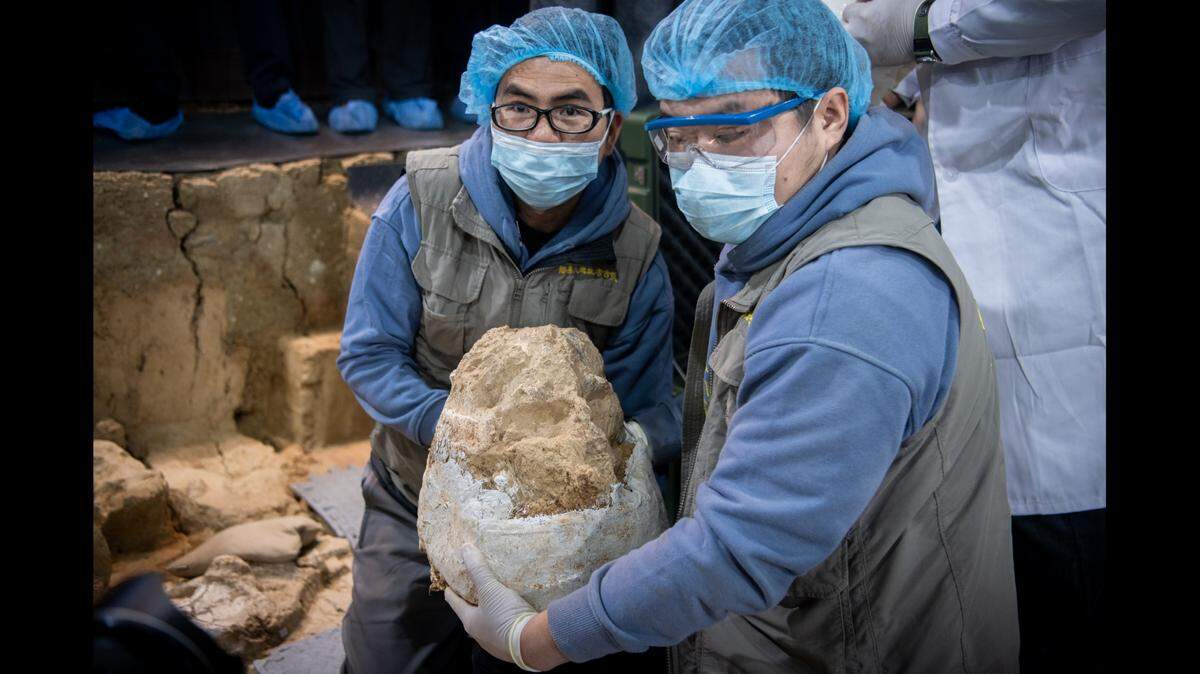
Now, Chinese experts say they have unearthed the most complete skull fossil left from one of these humans, known as homo erectus, from about a million years ago. And it could hold key details about human evolution.
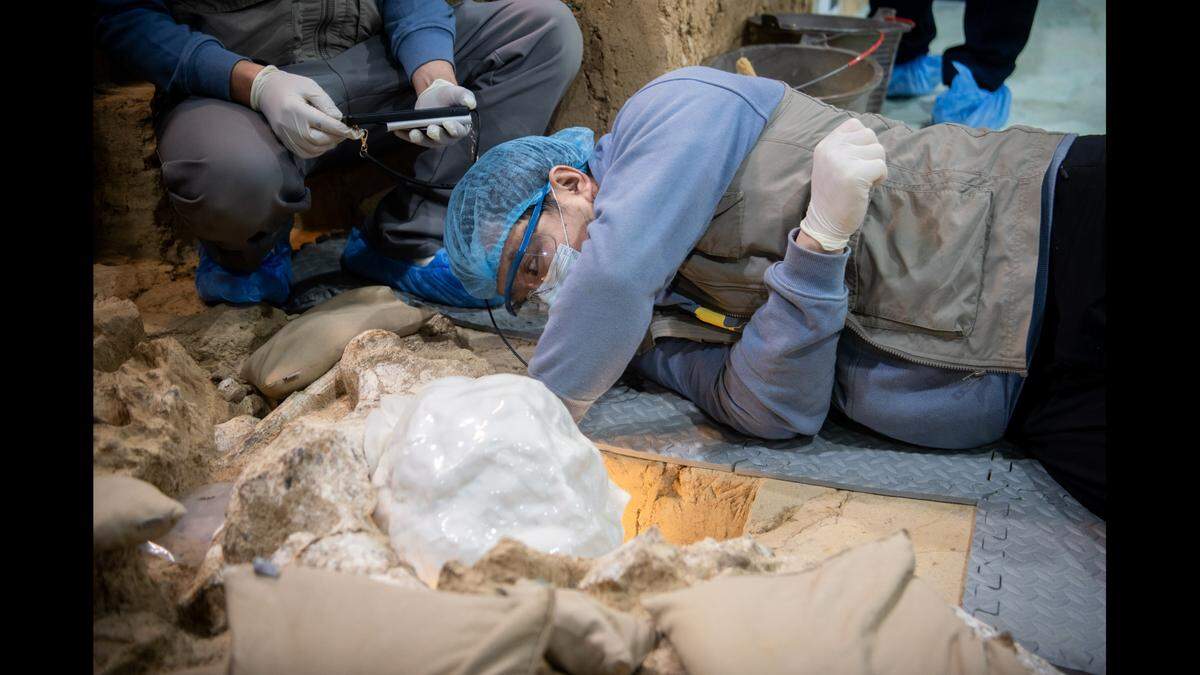
The fossil was discovered in the northern region of China’s Hubei province at the Xuetang Liangzi site, which dates to the Paleolithic era, according to the National Cultural Heritage Administration. The skull was found in May, but it took experts until Dec. 3 to safely and completely excavate it.
Previously, two damaged ancient homo erectus skulls were found at the site in 1989 and 1990, the administration said. These fossils were named “Yunxian Man.”
Starting in 2021, the Hubei Provincial Institute of Cultural Relics and Archaeology began conducting extensive searches of the site for more relics. Archaeologists found the third skull about 115 feet from where the first two were discovered, according to the administration.
The discovery fills in an existing gap in evolutionary understanding, Gao Xing, head of the archaeological team at the site and a researcher at the Institute of Vertebrate Paleontology and Paleoanthropology, told Xinhua News.
When the skull was excavated, experts said they left a few inches of sediment for further samples and studying. The bone will now undergo further testing as researchers work to understand early humans and evolution.
Google Translate was used to translate news releases from the National Cultural Heritage Administration and the Institute of Archaeology.
This story was originally published January 4, 2023 at 4:13 PM with the headline "Million-year-old skull could hold key to understanding evolution, Chinese experts say."