Vibrant chambers of 3,400-year-old Egyptian sanctuary to sun god now open. See inside
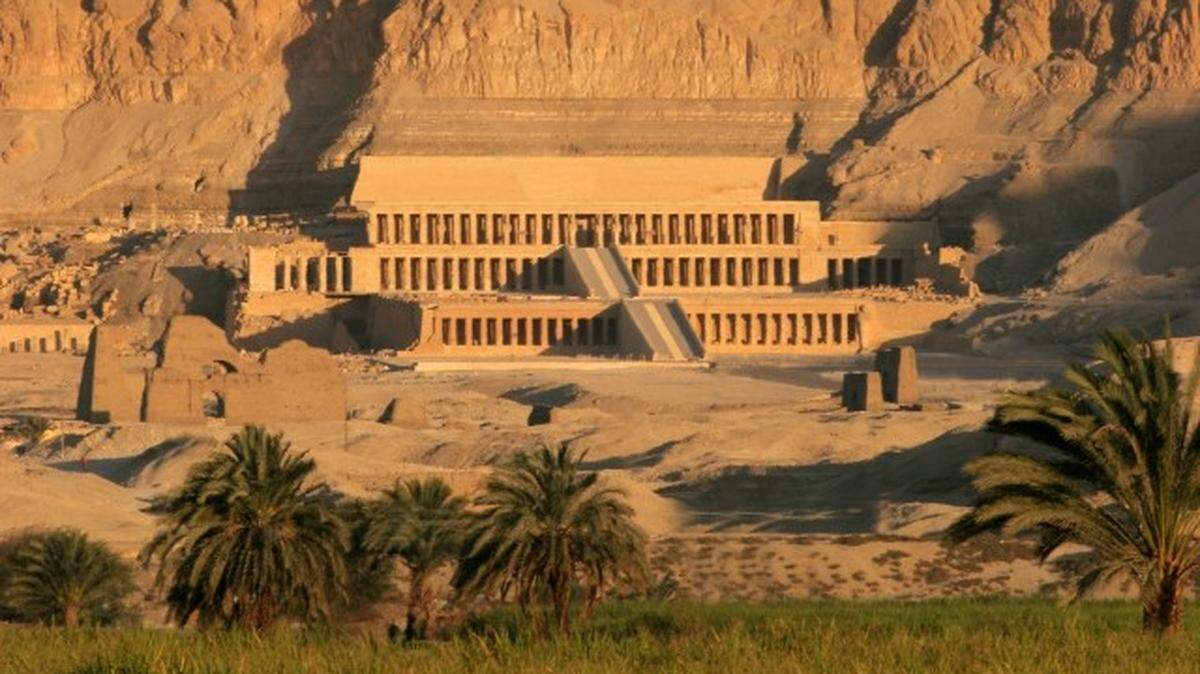
Nestled at the base of a rocky cliff along the Nile sits a monumental temple. Although distinctively human-made, the temple seems like an extension of the surrounding cliffs, impressive and imposing in its own right.
Climb the steps to venture inside the 3,400-year-old monument, and a vibrant interior will greet you. Welcome to the Temple of Hatshepsut.
The temple is the burial site of Queen Hatshepsut who ruled Egypt from 1473 to 1458 B.C., Science in Poland said in a Feb. 10 news release. A joint team of Polish and Egyptian archaeologists have been restoring the expansive three-story structure for the past 62 years.
Collaborative restoration efforts culminated in the public opening of two new chambers in a ceremony Feb. 9, Egypt’s Ministry of Tourism and Antiquities said in a news release.
The chambers — the Southern Room of Amun and the Northern Room of Amun — are located on the uppermost level and flank the Main Sanctuary of Amun-Ra, Science in Poland said. Amun-Ra, also referred to as Amun or Amun-Re, is an ancient Egyptian sun god and one of the main mythological deities.
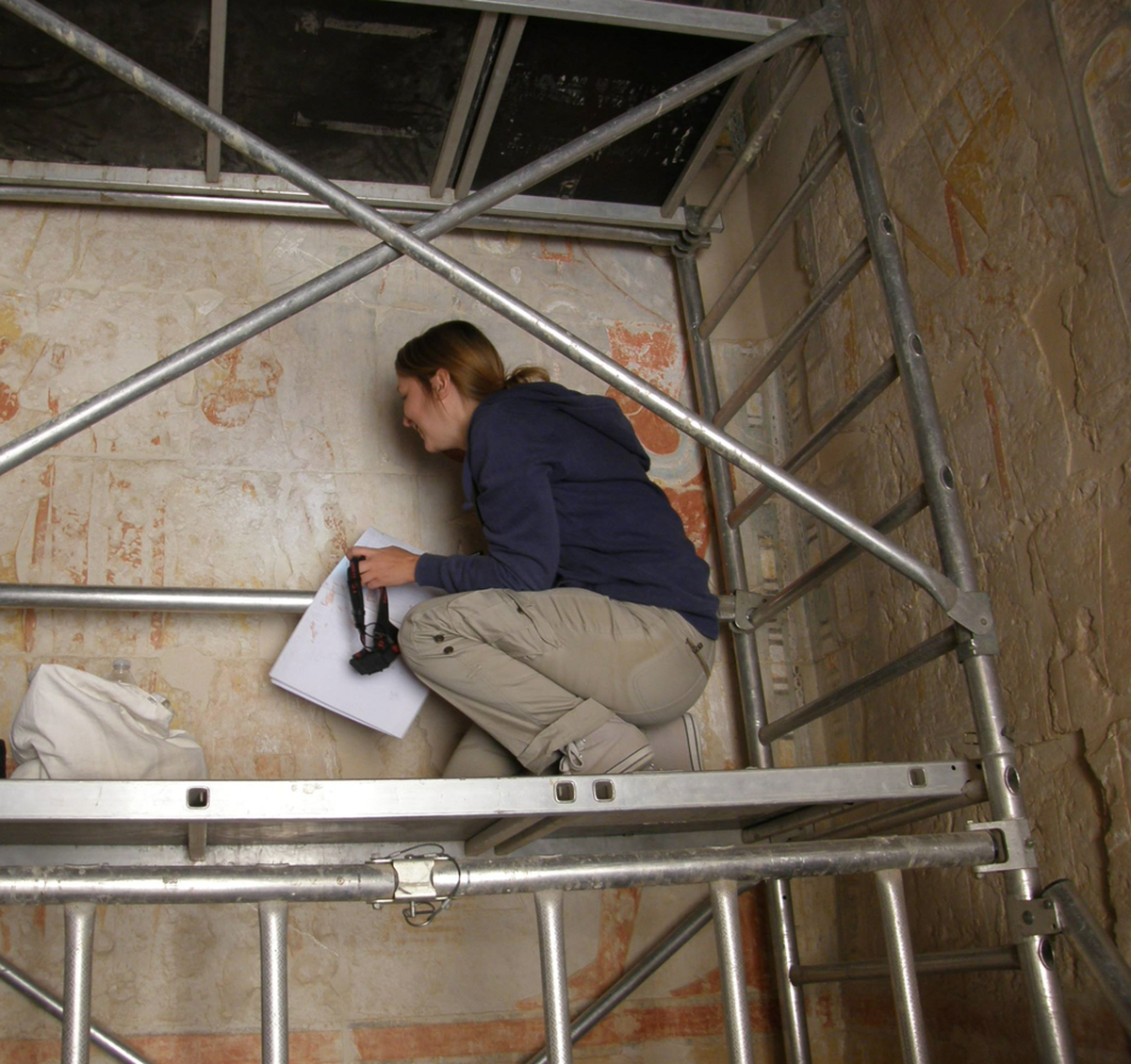
The Southern Room of Amun was used as a storage room for “aromatic substances and linen robes used during rituals,” the Polish Centre of Mediterranean Archaeology at the University of Warsaw said in a release.
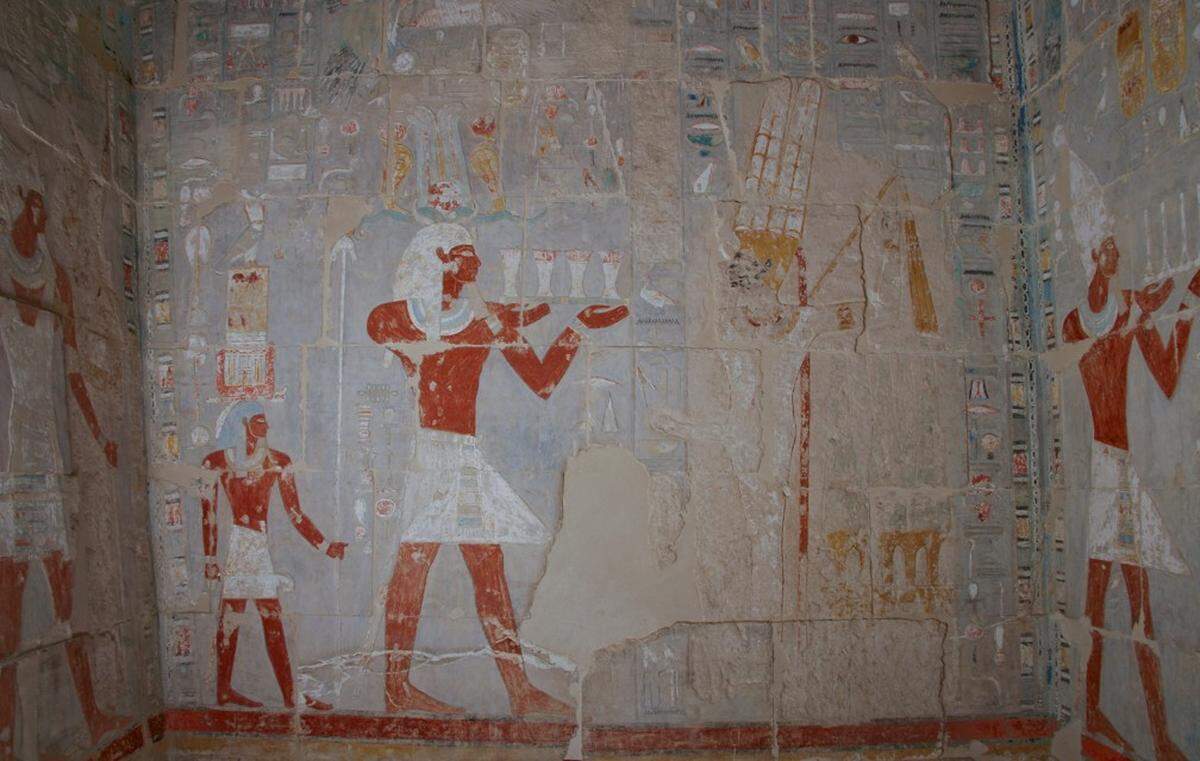
Colorful inscriptions on the walls indicated this purpose, researchers said. Photos of the southern wall show a red-orange figure carrying vessels, appearing to offer them to a worn-away figure in white.
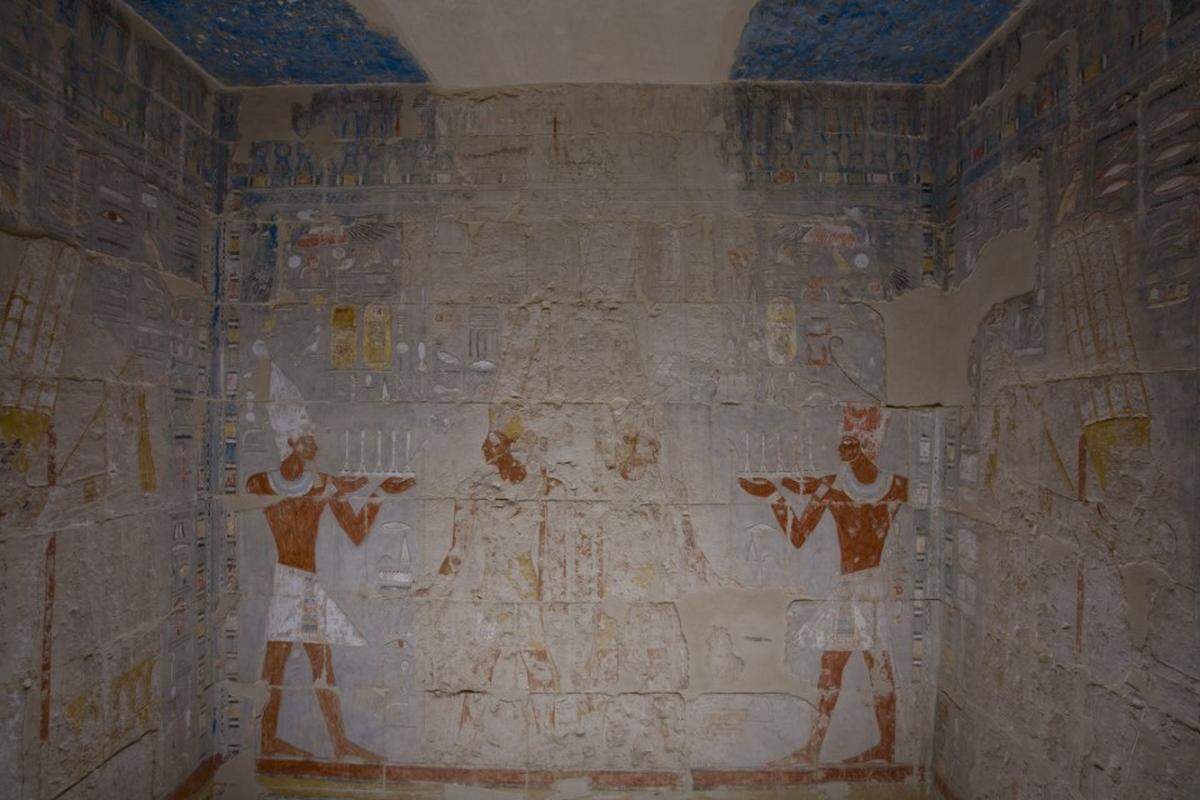
Another wall in the southern chamber shows two more figures presenting offerings to a central worn-away figure.
The Main Sanctuary of Amun-Ra was opened to the public in 2017, the release said.
The Northern Room of Amun remains the most mysterious. Researchers don’t know what this room was used for, according to the Polish Centre of Mediterranean Archaeology at the University of Warsaw’s release.
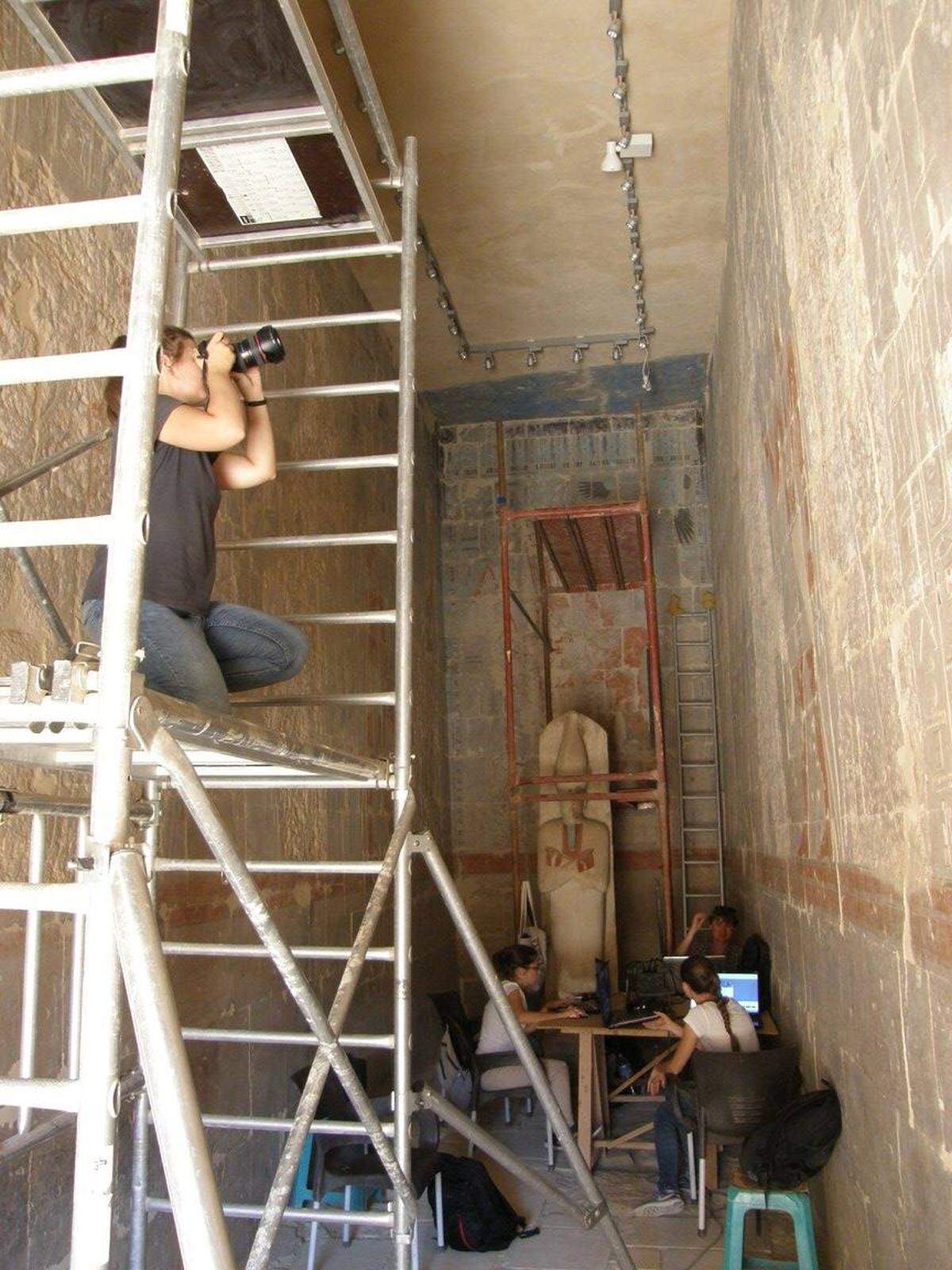
On the walls of the northern room, vibrant inscriptions show Queen Hatshepsut and King Thutmose III giving offerings to Amun-Ra, researchers said.
Before these inscriptions were added, the northern chamber was connected to a solar cult, the Polish-Egyptian Expedition to the Temple of Hatshepsut at Deir el-Bahari said in a news release. It’s unclear if this purpose persisted over time or ended after the inscriptions were added.
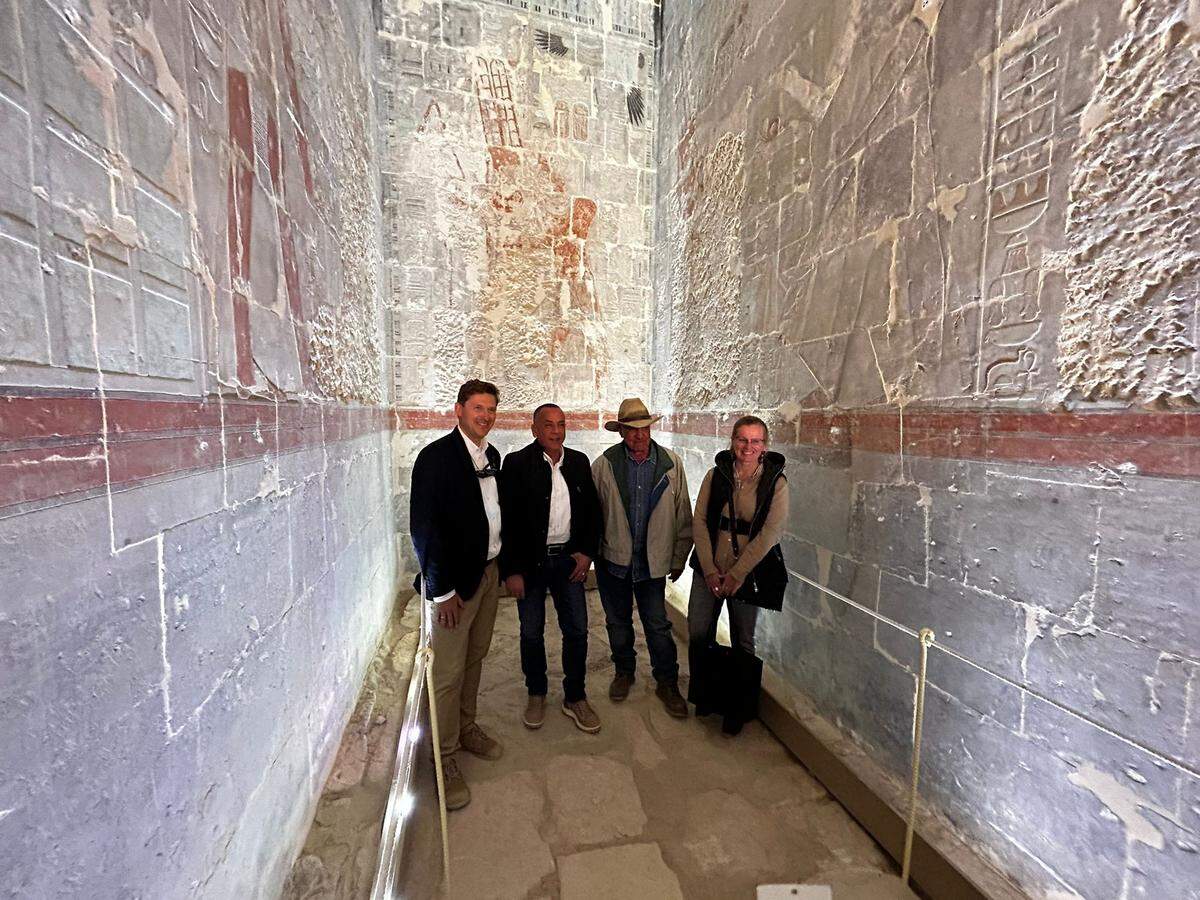
Notably, the Northern and Southern Rooms of Amun both have an inscription that doesn’t appear anywhere else in the Temple of Hatshepsut. Behind the doors, both rooms have a scene of Senenmut, “Hatshepsut’s most important courtier,” standing and a note explaining that the queen allowed his name to be engraved in the temple’s rooms, researchers with Science in Poland said.
Only in these two chambers, however, is Senenmut standing. All other depictions show him kneeling, “which may suggest a special function of these rooms,” researchers noted.
Excavation, documentation and restoration works are ongoing at the Temple of Hatshepsut.
The temple is part of Deir el-Bahari, a sprawling necropolis of tombs and monuments across the Nile from Luxor. The site is about 400 miles southeast of Cairo.
Facebook Translate and Google Translate were used to translate the news release from Egypt’s Ministry of Tourism and Antiquities.
This story was originally published February 21, 2023 at 3:37 PM with the headline "Vibrant chambers of 3,400-year-old Egyptian sanctuary to sun god now open. See inside."