Ancient body found buried with healing ring in Egypt. Then researchers find rare tumor
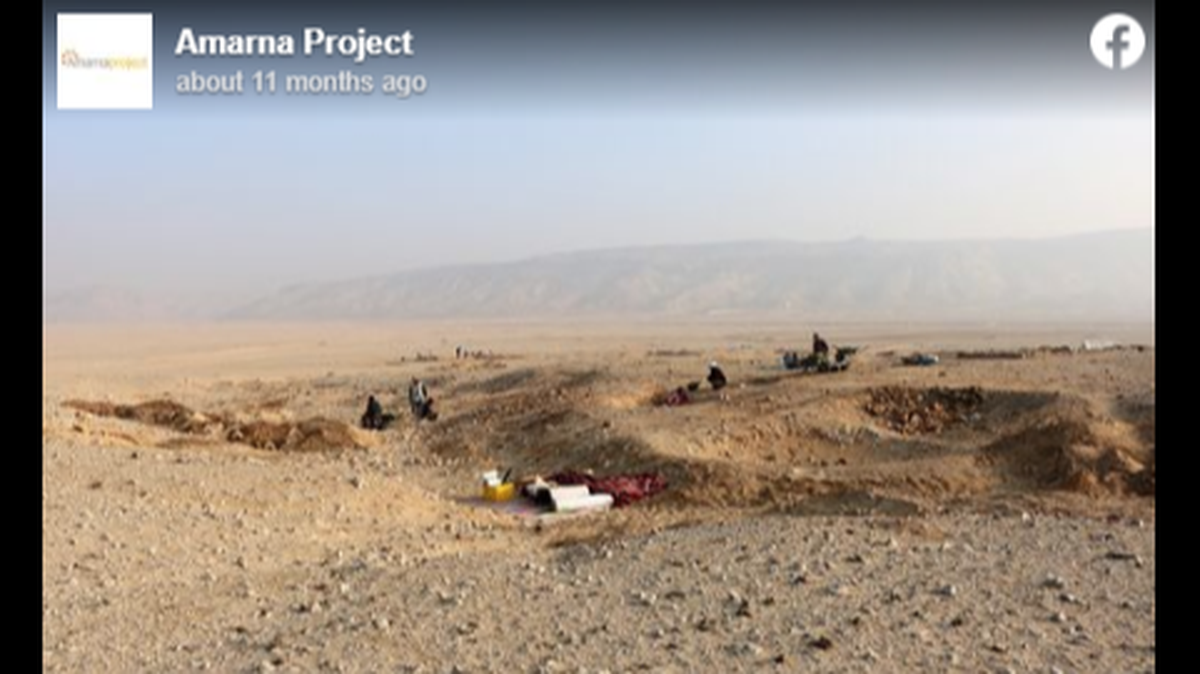
Nestled along the river Nile, halfway between the ancient cities of Cairo and Luxor, the city of Amarna remains one of the best preserved cities from the time of the pharaohs.
Built and then abandoned within decades, the ruins give researchers a “unique snapshot of urban life in Ancient Egypt,” according to a study published Oct. 30 in the International Journal of Paleopathology.
Equally preserved are the city’s cemeteries, such as the North Desert Cemetery which holds approximately 450 to 550 bodies.
The small but complex network of graves was being excavated for research when the forensic anthropologists came across a woman’s body that stood out from the others.
The god Bes, protector of women
The woman, roughly 18 to 21 years old at the time of her death, was wrapped in a plant fiber mat, the study said, a sign that she was not part of the elite class.
But, she was buried with “an unusually rich burial assemblage,” the researchers said.
She was covered in pendants, beads and rings, and her left hand was placed above her pelvis.
On her left hand, she had “a solid gold ring decorated with a figure of the god Bes, whose roles included a protector of women during childbirth, of children, and of household well-being in general,” according to the study.
When researchers took a closer look at her body, nestled in her pelvis they found an unusual growth.
She had an ovarian teratoma, a rare type of bony tumor in modern times, but even more rare in the archaeological record.
According to the study, only four cases have ever been reported in ancient remains, including three in Europe and one in Peru.
The find is the first recorded archaeological case of the tumor in Africa, and based on the time of burial (about 1345 B.C.), it is also the oldest.
A toothy tumor
Teratomas are a type of tumor that grows from germ cells, meaning hair, muscle and bone, the researchers said.
They are most common in the ovaries and testicles and are usually benign, according to the Cleveland Clinic, but in cases where the tumor swells or bursts, they must be surgically removed.
The ancient Egyptian woman’s tumor had grown so significantly, there were multiple teeth present in the bony structure.
Ovarian teratomas can go completely unnoticed, but the researchers suggest this woman was experiencing painful symptoms or infertility that was “treated” with the healing ring.
“In modern clinical study, 11% of women with teratomas were found to be infertile. With these issues of possible infertility and pain or discomfort in mind, the inclusion of a gold ring with the image of Bes, a figure associated with fertility and protection, may be noteworthy,” researchers said in the study. “Conceivably, the placement of the ring on the left hand, which was positioned on the left hip near the teratoma, could also be purposeful.”
Excavations of the graves in Amarna, as part of the Amarna Project, will continue, the researchers said, unveiling more mysteries of ancient Egypt.
This story was originally published November 8, 2023 at 12:00 PM with the headline "Ancient body found buried with healing ring in Egypt. Then researchers find rare tumor."