Stunning image of mythical winged goddess revealed at ancient Roman fort in UK
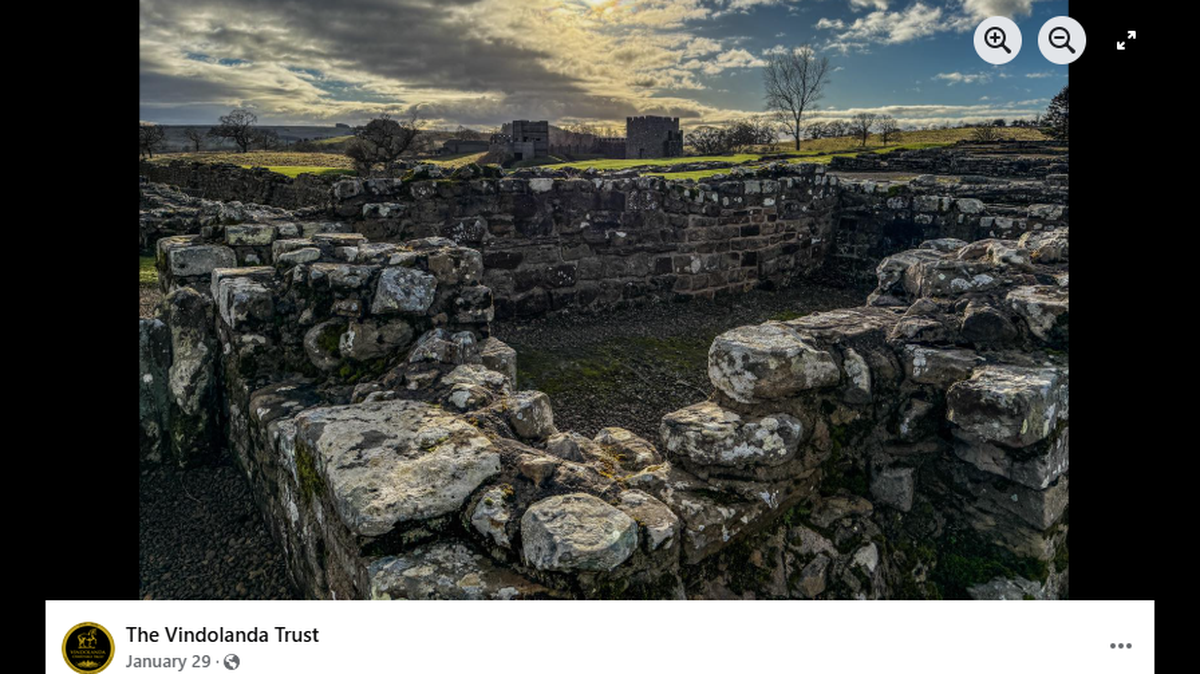
Centuries ago, a 73-mile-long stone wall marked the northwest border of the expansive Roman Empire.
The wall was built on order of Emperor Hadrian in 122 A.D and includes Vindolanda, a Roman fort.
For decades, archaeologists have been working along Hadrian’s Wall to better understand the daily lives of soldiers and those at the northernmost reaches of the empire, including by inviting volunteers to try their hand at excavations.
Sometimes those volunteers make their own discoveries.
On May 1, veteran volunteers Jim and Dilys Quinlan were looking through stones that had been reused above infantry barracks when they noticed a figure on one of the rocks, according to a May 21 news release from the Vindolanda Charitable Trust.
The relief depicts a woman, identified by archaeologists as the goddess Victoria, or Victory, according to the release.
%20The%20Vindolanda%20Trust.JPG "Victory stone relief (c) The Vindolanda Trust.JPG")
The counterpart to Greek goddess Nike, Victoria personified victory and was “highly revered by the ancient Romans, during times of war she was often credited for battlefield success,” according to the trust.
Victory is commonly depicted as a winged figure, holding a palm frond or laurel and descending from above as a messenger of the gods, according to the University of Chicago.
On the stone, the front of her body is visible, but the complete image has been damaged as the piece was reused for another construction.
“The stone is thought to be one side of a much larger relief which would have framed an inscription in its center. These particular barracks at Vindolanda were built at the end of a tumultuous time for the Romans in Britain, in (213 A.D.), just after the end of the Severan wars,” the trust said. “The barracks were once adorned with a large ornamental arch and gate, precisely the location where an inscription may have been present. The relief of Victory is poignant, representing the end of the war and the establishment of the fort at the site.”
%20The%20Vindolanda%20Turst.JPG "Volunteers Jim and Dilys Quinlan with Victory stone (c) The Vindolanda Turst.JPG")
Roman reliefs were commonly painted with bright colors, and it is likely this figure was painted at one time, according to the trust. Specialists will examine the image to see if there are any remnants of pigment that could be used to determine the colors once marking Victory’s body.
“Finds like this are increasingly rare these days from Roman Britain, but the beautifully carved figure vividly reminds us that Roman forts were not simply utilitarian, they had grandeur and of course the symbolism was a vital part of the culture here for the soldiers almost 2,000 years ago,” Andrew Birley, director of excavations, said in the release.
The Quinlans have been volunteering at Vindolanda for more than two decades, the trust said.
“I am also delighted for Jim and Dilys for their discovery,” Birley said. “It is just reward for their 21 years of hard work and dedication to this site.”
Hadrian’s Wall, and Vindolanda, have made headlines for past discoveries, particularly for a collection of phallic-shaped carvings, images and charms discovered among the rocks.
Vindolanda is located in Hexham in north-central England.
This story was originally published May 21, 2025 at 5:30 PM with the headline "Stunning image of mythical winged goddess revealed at ancient Roman fort in UK."