8-legged creatures — with virgin births — discovered as new species in Czechia

Across nature, there are endless ways to reproduce.
Bumblebees bring pollen from one flower to another, allowing the plant to fertilize their seeds. Salmon travel upstream to meet with other fish from the river and fertilize their eggs. Elephants mate in the grasslands and carry their young for nearly two years before birth.
In each of these cases, animals from both sexes are needed to bring new life into the world.
There is a different group of creatures, however, that can do it all on its own.
The process is called parthenogenesis, and it’s a type of asexual reproduction in which females of a species can create young without the help of male sex cells.
It’s more common in species like plants or invertebrates and is commonly referred to as “virgin births.”
Now, a new parthenogenetic species has been discovered in Czechia.
The new species — Dysdera parthenogenetica — uses a process called thelytoky parthenogenetic reproduction, where “generations are formed by females arising from unfertilised eggs,” according to a study published Sept. 2 in the peer-reviewed Journal of Zoological Systematics and Evolutionary Research.
The species is a harvestman spider, but “parthenogenesis is so rare in the order Araneae (spiders): most spiders are excellent dispersers, employing silk fibres as balloons for aerial dispersal,” researchers said. “Among over 52,000 species, parthenogenesis has been confirmed in only a few species. All parthenogenetic spiders are thelytokous.”
D. parthenogenetica was discovered at the Czech Agrifood Research Center in an area used as an apple orchard, according to the study.
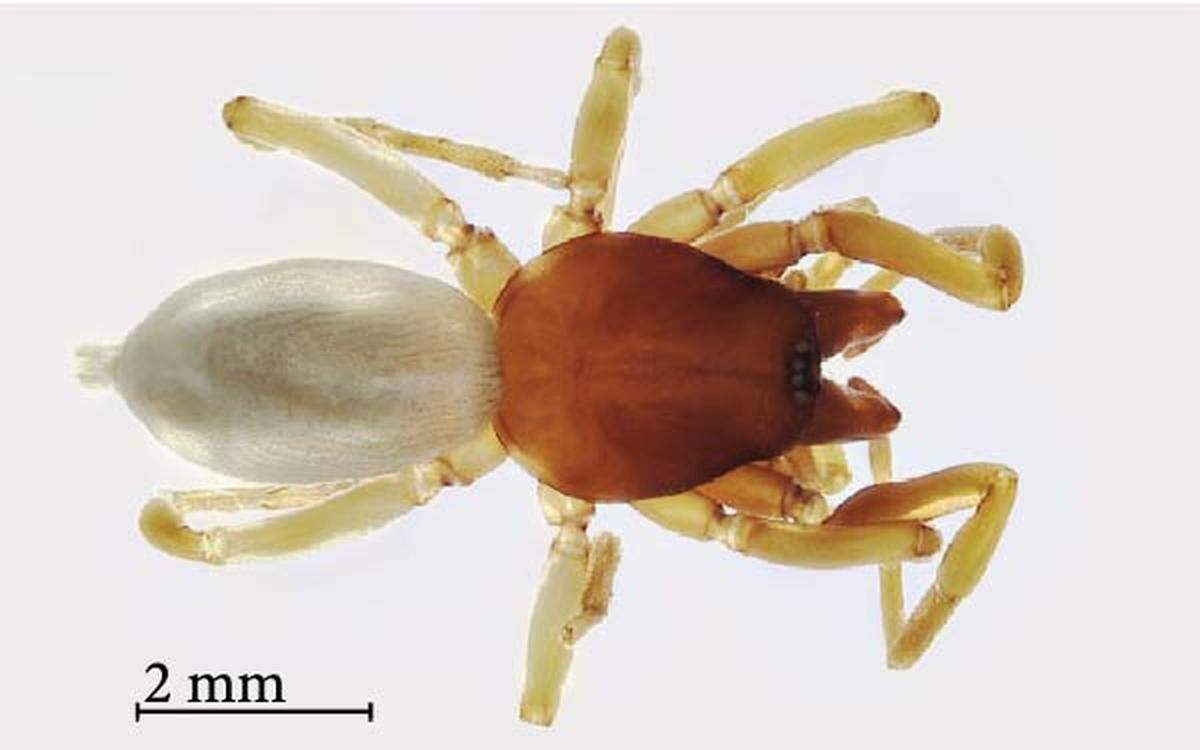
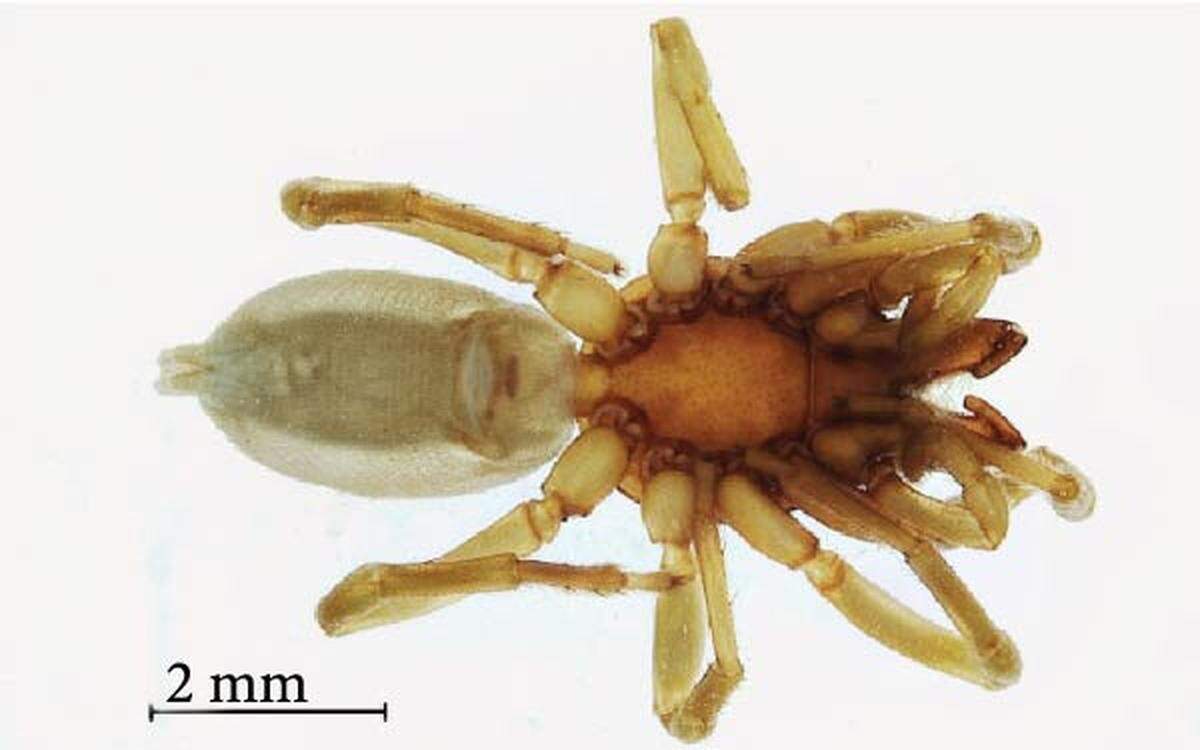
Females have a “gently wrinkled” carapace, or upper shell, with an “almost smooth, glossy” sternum with “pits bearing hairs,” researchers said.
The spider itself is just a few millimeters long, according to the study.
The parthenogenetic spiders are very similar to another known species, D. hungarica, but when researchers put the spiders together, the females of the new species refused to mate with males, according to the study.
Normally, when males and females of D. hungarica are together, the male “jerked its body towards the female, tapping its two frontal pairs of legs to the female’s frontal appendages,” researchers said. The two spiders would then go on to mate.
When females of D. parthenogenetica were presented with the same option, they “did not respond to their courtship behavior,” according to the study. In one case, when the female did respond, the male was unsuccessful when trying to mate, confirming their differentiation as two species.
The new species was found in a range of habitats across Czechia, some “unusual,” including salt marshes, wetlands, wet meadows, orchards, vineyards and fields, according to the study.
The females lay their eggs in June and July in clutches of about 20 eggs that hatch in August, researchers said.
When the baby spiders are old enough, they use silk “retreats” created by their mother to leave. They mature through the fall and live through the winter, according to the study. They feed exclusively on non-flying isopods.
“The separation of D. parthenogenetica is supported by the nature of its distribution range; it is extensive, continuous, and hardly overlaps with the range of sexual populations,” researchers said. “Finally, we found that parthenogenetic females refused to mate with males from sexual populations, and their copulatory organs were reduced.”
The new species was found in a district of Prague in central Czechia, or the Czech Republic.
The research team includes Milan Řezáč, Jiří Král, Ivalú Macarena Ávila Herrera, Martin Forman, Veronika Řezáčová, Nela Gloríková and Petr Heneberg.
This story was originally published September 9, 2025 at 12:22 PM with the headline "8-legged creatures — with virgin births — discovered as new species in Czechia."