180-year-old mystery involving ‘iconic’ extinct bird is solved — in Cincinnati
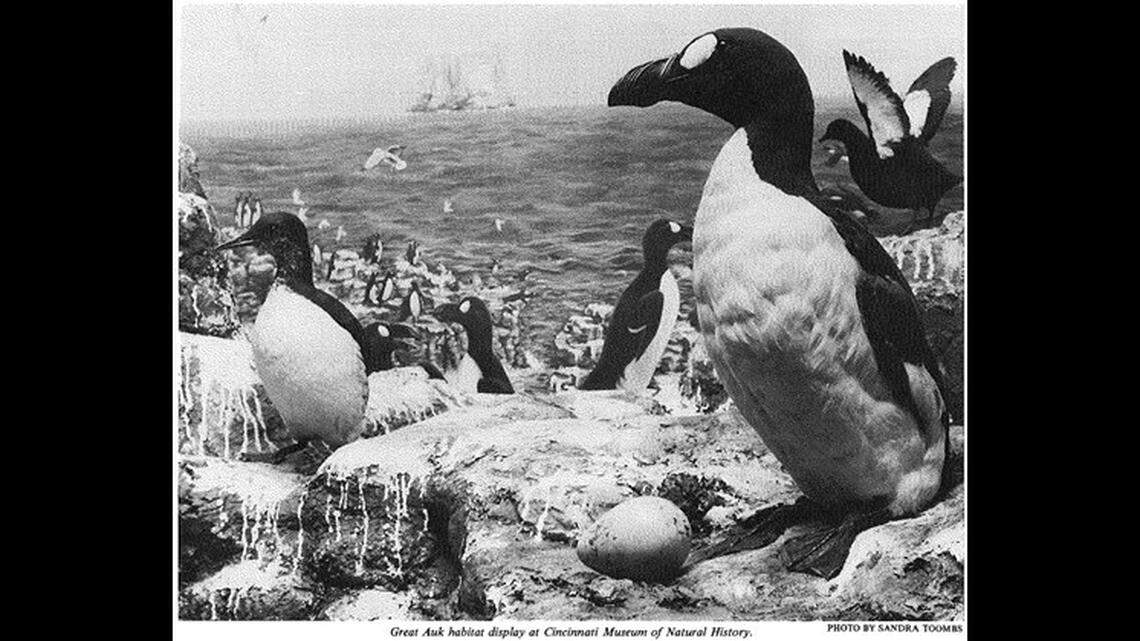
In the summer of 1844, on a small island off the coast of Iceland, the last two great auks on Earth stood guard over their single egg.
They were the only surviving members of the last colony decimated by collectors and institutions that sought their skins for “preservation and display,” according to experts.
Three hunters — Jón Brandsson, Sigurður Ísleifsson and Ketill Ketilsson — traveled to Eldey island one fateful day on behalf of a buyer who wanted the specimens. Two of the men captured and strangled the nesting pair, while the third crushed the egg beneath his boot, experts said.
The swift and violent moment marked the extinction of the species, according to a study published Sept. 19 in the Zoological Journal of the Linnean Society.
After their slaughter, the birds were sent to an apothecary in Reykjavík that skinned them and preserved their organs, which today are housed at the Natural History Museum of Denmark, Copenhagen.
But the whereabouts of the skins of this historically significant “last pair” became “an ornithological mystery” for more than 180 years, according to researchers.
In 2017, the male was tracked to the Royal Belgian Institute of Natural Sciences, but the location of the female remained a mystery — until now.
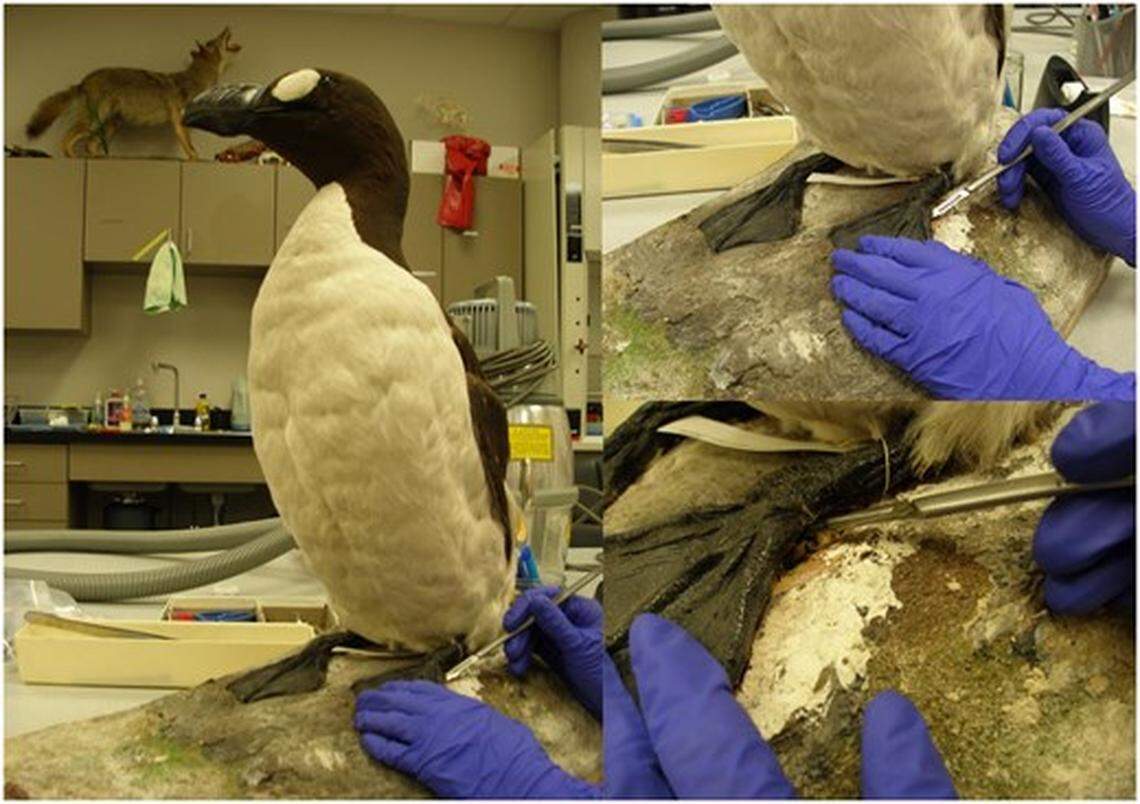
As it turns out, she’s been in Cincinatti for the last 50 years.
Following a paper trail including auction brochures, receipts, newspaper clippings and personal correspondences, researchers traced the long journey of the last female great auk.
Records can confirm both the male and female specimens were purchased by an amateur ornithologist named George Dawson Rowley around the 1870s. After his death, they were passed down to his son before eventually ending up at an auction in 1934, researchers said.
A Welsh aviator and “keen ornithologist” named Captain Vivian Vaughan Davies Hewitt won the specimens and added them to his massive collection of more than 100,000 skins and stuffed birds, according to the study.
Hewitt’s collection also contained between 500,000 and 1 000 ,000 bird eggs, researchers said.
In 1974 after Hewitt’s death, some of his collection, specifically four great auks including “the last pair” from Eldey, was auctioned off in London where the Cincinnati Museum of Natural History bought one auk specimen and one auk egg for $25,000, researchers said.
According to the study, the auction housed “mixed up” the identities of the specimens.
While it was assumed that Cincinnati Museum of Natural History had purchased a male auk, in the decades to follow, experts began to suspect this was false.
Skin alone is not a reliable indicator of a bird’s sex, according to the study.
After it was verified using DNA sequencing that the Royal Belgian Institute of Natural Sciences in Brussels had the last male great auk, researchers tested the Cincinnati specimen.
DNA sequencing has now confirmed the bird is the last great female auk, resolving “a natural history mystery that has puzzled great auk scholars and those within the museum industry for over 180 years,” researchers said.
“The breeding pair killed on Eldey Island in June 1844 are iconic and their death was highly significant in the tale of the great auk extinction,” the study said.
The research team included Emily L Cavill, Germán Hernández Alonso, Emily Imhoff, Heather Farrington, Michael Knapp, M Thomas P Gilbert and Jessica E Thomas.
This story was originally published October 1, 2025 at 4:20 PM with the headline "180-year-old mystery involving ‘iconic’ extinct bird is solved — in Cincinnati."