
Solar power purchase agreement grows controversial as local leaders clash over legal fees
In 2019, 15 Centre County local governments came together to explore a way to purchase solar energy as a group, with a goal of reducing energy costs and helping the fight against climate change.
Five years later, the Solar Power Purchase Agreement — called a “landmark project” due to its size and number of public sector groups involved — is behind schedule, with five fewer participants than it started with. And as the SPPA nears its next stage and the finish line, it has met controversy and divided local elected officials due to unanticipated legal fees.
“The taxpayers in this county deserve to know exactly what their dollars are being spent on, and to me it feels as a lot was hidden from them, as well as board members of the participating entities that aren’t a part of the working group,” said State College Borough Council member Josh Portney, who has been vocal about his concerns.
But members of the SPPA working group — composed of one representative from each participating entity — and other supporters of the project have pushed back about the criticism, much of which has been aired on local radio’s Tor Michaels Show.
“When talking about the SPPA project and the additional legal fees, one mustn’t forget that we’re national trailblazers in this field,” Betsy Whitman, a Patton Township supervisor and member of the SPPA working group, said during a recent Centre Region Council of Governments meeting. “To our knowledge, nobody else across the country has tried to make a SPPA between so many members work out like this. Perhaps the situation with the legal fees could’ve been handled better, yes, and perhaps better warnings could’ve been given, but that’s all a part of this learning curve that we’re all trying to understand.”
As the project moves forward, opponents continue to demand answers about the $123,334 in additional legal fees while supporters tout the benefits and historic nature of the agreement. Local governing bodies, meanwhile, have decisions to make about how to handle the additional legal fees and whether to continue on as part of the SPPA.
How did we get here?
The 15 entities that were originally part of the SPPA working group were: College, Ferguson, Halfmoon, Harris and Patton townships, State College Borough, CATA, the Centre County Recycling and Refuse Authority, the Centre Region Council of Governments, State College Area School District, State College Borough Water Authority, College Township Water Authority, Centre County Government, the Centre County Housing Authority and the Centre Hall Potter Joint Authority.
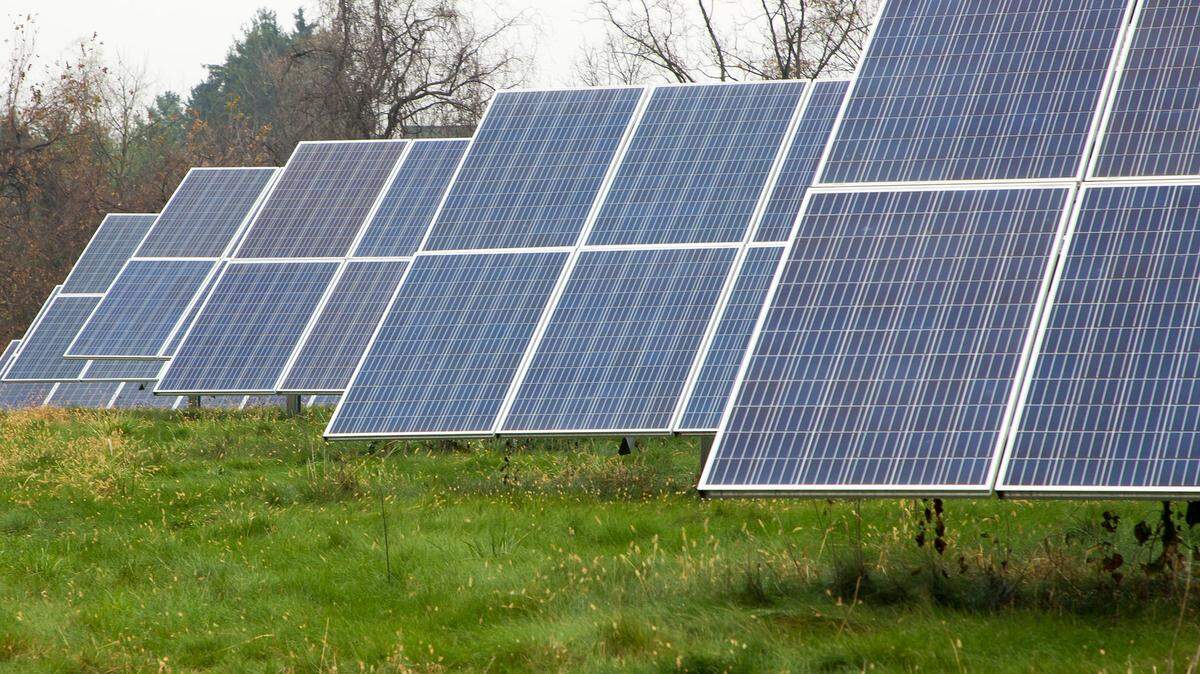
If contracts are signed, the participating entities would be locked into a 15-year contract where they would all be purchasing their clean energy at a lower rate than what it’s currently being offered at. Solar developer Prospect 14 would build and own a 22-megawatt solar array in Walker Township.
Overall, the project is looking to accomplish two main goals, SCASD school board and SPPA working group member Peter Buck said.
“This project tackles two of the most pressing issues school districts and other local governments face: fiscal stability and ways to take action on climate change,” Buck wrote in an email to the CDT. “By locking in a low electricity rate that is already beating the price of the dirty fossil grid, we project savings for every organization starting in year one.”
Each participating entity signed up to receive a percentage of energy that the SPPA would create. The leader in this field is SCASD, which makes up 54% of the overall deal. They’re followed by State College Borough Water Authority at 17.5%, Centre County Government at 7.8% and State College Borough at 7.5%.
The total cost of the project up to this point, according to Buck, sits at “around $420,000.” That total includes all legal fees, financial and technical services from GreenSky Development Group and future costs from Prospect 14.
However, that total is expected to lower to $360,000 due to reimbursements from Prospect 14, given that the remaining entities sign their contracts and the project goes through.
Last year, three of the working group’s founding members — Halfmoon Township, CATA and the CCRRA — withdrew from the project.
This spring, CCHA also dropped out of the agreement, and earlier this month Harris Township became the latest to exit.
“When we first learned of this project, I was supportive of it because I do think it’s something for the future that should be built,” Harris Township Supervisor Bruce Lord said at the township’s meeting on Sept. 9, during a discussion about legal fees. “Now, I feel like the working group is in over its head.”
According to Pamela Adams, the sustainability planner for the Centre Regional Planning Agency and a member of the working group, the SPPA is still fully intact and functional because the entities that dropped out had only held a small percentage of the overall energy consumption.
“If a larger member drops out, it will impact the rates and could jeopardize the project,” Adams said. “If SCASD withdraws that will most likely end the project.”
Buck told the CDT that the remaining entities have all confirmed their continued interest in the project. The 10 entities still part of the working group are expected to vote on contracts before the end of October, solidifying the scope of the SPPA.
The entities were originally looking to sign their contracts this spring, but unforeseen legal fees have held up the process — leading to strife among various Centre County officials.
At odds over legal fees
In February, the working group hired Chris Berendt of the Faegre Drinker law firm as the SPPA’s solicitor due to the law firm’s experience with SPPAs and electricity markets.
The entities authorized three phases of legal services and a $165,000 limit to be placed on those fees, according to a Patton Township meeting agenda from Sept. 11.
At the working group meeting in February, the group had felt that it would be best for Betsy DuPuis, solicitor for Centre County and Ferguson and Patton townships, to work with Berendt to finalize the contract documents due to the complexity of the contracts in regards to various Pennsylvania municipal laws, per the agenda. Berendt was told that the entities hadn’t approved for legal fees above the $165,000 limit, and he agreed to complete the remainder of the work at-risk until the contract work was finished.
Mike Bloom, College Township assistant manager and working group member, said at College Township’s Sept. 19 meeting that an additional $153,455 had been incurred, with another anticipated $40,000 to be incurred due to legal work taking place from June to August.
Faegre Drinker had agreed to waive $70,110 of the additional expenses, bringing the total amount of additional legal fees incurred to $123,334.
After the additional fees were revealed in August, the members of the working group were told to discuss these possible plans of action with their respective board for the additional legal fees:
Pay the additional fees up front
Pay a partial amount of the additional fees
Decline to pay the solicitor for their service, as fees were incurred at-risk
Find a fourth option
Each entity’s share of the legal fees would be determined by the percentage of energy they signed up to use, meaning that the smaller the percentage used by a participating entity, the smaller the legal fee said entity would have to pay.
For example, because Harris and Patton townships held a small percentage of the created solar energy, they’d be responsible for paying a small portion of the fees — Harris paid $469, and Patton paid $2,234.
These legal fees have been a source of tension among local elected officials, with several speaking out about why they weren’t discussed earlier and the overall transparency of the project.
A number of officials, including Portney, have taken to the airwaves to discuss the situation on numerous occasions throughout August and September. On Aug. 28 Portney called the agreement a “financial scandal” on the Tor Michaels Show.
At the State College Borough’s meeting on Sept. 9, State College Mayor Ezra Nanes addressed Portney about that comment and his questions regarding the SPPA, and asked him to take responsibility for his “inflammatory and provocative,” language.
But Portney has continued to defended his actions, and in an interview with the CDT, he clarified his previous comment, saying that the SPPA “could turn into a financial scandal,” if certain questions addressing the working group’s transparency weren’t answered.
“This whole ordeal feels like a massive hodgepodge of uncertainty,” Portney said. “In my experience, if a hard limit is set on any type of fee, then that limit should not be exceeded. Why weren’t the participating entities notified earlier of the additional fees? There was no communication with them, or anyone really, and I feel as if that shows bad faith among the working group.”
At the Aug. 27 Centre County Commissioners meeting, County Administrator John Franek, Jr. apologized for an oversight after putting the $7,820 of additional legal fees into the meeting’s check run where they were publicly authorized, instead of including them in the quarterly administrator’s report to be presented to the commissioners and approved through resolution.
Halfmoon Township Supervisor and COG chair Ron Servello has also spoken out about the legal fees and the lack of communication.
“I believe that if there were going to be known additional legal fees incurred by (the working group), some sort of estimate should’ve been presented to the various boards of the participating entities that would have allowed them to budget for those fees,” Servello said at the Sept. 19 COG Executive Committee meeting. “Why wasn’t this presented at each individual entity’s monthly meetings so that the potential fees incurred could’ve been approved beforehand? That’s my issue with this.”
But, at that meeting, State College Borough Council President Evan Myers likened the legal fees process to his borough’s process of repairing a vehicle.
“As far as voting on things before the money is spent — that’s not how I’m sure almost every municipality works, and (State College Borough) certainly doesn’t work that way,” Myers said. “For example, if there’s a vehicle that we need repaired, we don’t vote before we get the bill to see if the vehicle needs repaired ... If it needs to get fixed, it gets fixed and then we pay the bill after.”
The working group was aware that additional fees could’ve been incurred, Adams has said, but there was a gap in communication between the working group members and their respective entities.
“We tried to get the information out, and collectively, did the working group go back and tell their organizations or did it get lost in the shuffle? It probably got lost in the shuffle,” Adams told State College Borough Council earlier this month. “We should’ve gone and started bringing this forward.”
The additional legal fees have not drawn controversy in every entity involved. At College Township’s Sept. 19 meeting, all council members expressed their intentions to stay in the SPPA project, with councilwoman Susan Trainor saying that despite the additional incurred legal fees, the township should “stick with” the project.
At that same meeting, College Township resident Jackie Bonomo took to the podium to share why she thinks that staying in the SPPA is a good idea because of the positive effect it would contribute to the environment.
“(The SPPA) is our opportunity to do something that will slow climate change and hopefully someday counter and mitigate it,” Bonomo said. “This is something that we can do to make a change. I really hope College Township chooses to stay in this, to go the distance and make this happen.”
What’s next?
The next step for the SPPA is for the participating entities to decide how they’re going to handle the additionally incurred legal fees. After that, the working group anticipates that the remaining entities will have signed their contracts by the end of October.
Given that all of, or enough of, the entities sign onto the agreement, construction on the solar array can begin in Walker Township.
Harris Township may reconsider its decision to part ways with the SPPA, according to township supervisor Nigel Wilson, who called the vote earlier this month a “vote of frustration.”
Despite the delays from the legal processes, Adams anticipates construction to be complete by October 2026, with cost savings expected to begin the following year.
Others across the county remain optimistic about the future of the agreement.
“I have solar on my home and can personally attest to the cost stability and savings that solar brings to my family,” Franek wrote in an email. “The county currently has a solar array at its correctional facility, which has also been a very positive experience. So, I remain confident and optimistic that the SPPA will provide a similar experience to what I and the county have had with our respective solar arrays. Yes, the road has been long, but that tends to be the case with most anything worthwhile.”
The SPPA working group typically meets on the fourth Wednesday of the month, with the location of the meeting varying.
This story was originally published September 27, 2024 at 11:46 AM.