Trump’s H-1B visa changes could cost Penn State, Centre County businesses millions
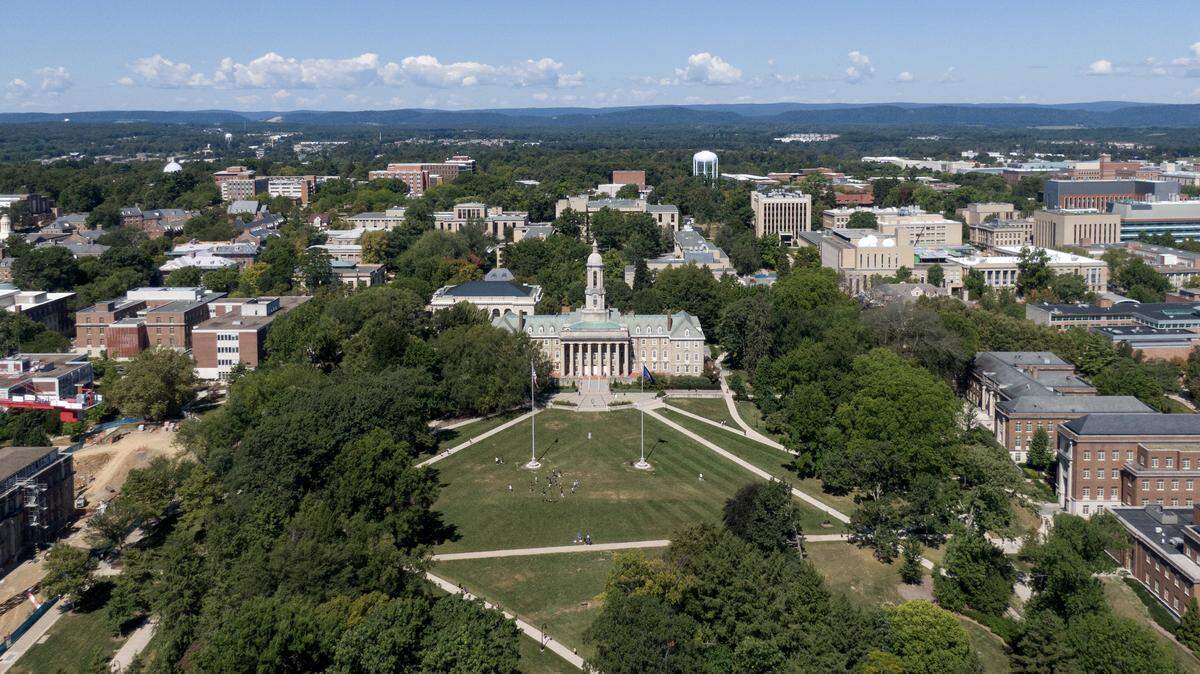
Penn State could be on the hook for millions of dollars in H-1B visa sponsorship payments after President Donald Trump slapped a $100,000 fee on new applications.
A handful of other Centre County employers could also be forced to pay the fee if the proclamation stands up to expected legal challenges.
The Trump administration instituted the fee earlier this month based on his belief American workers are being “replaced” by lower-paid, temporary workers from abroad, according to the text of the proclamation. Critics counter that visa recipients help staff rural hospitals and contribute to American innovation.
Most of the H-1B recipients in Centre County are in the education, tech and medical industries.
Who would be affected in Centre County by the H-1B visa application change?
Penn State has had an average of 74 new H-1B visa applications approved each year since 2015 at its flagship campus, according to data from the U.S. Citizenship and Immigration Services. The university employs dozens more recipients at its campuses throughout the commonwealth, and it is one of the top employers of H-1B holders in Pennsylvania. Visa recipients at the university range from early-career doctors to librarians to an assistant fencing coach.
Other area employers with workers on the program include the Centre Area Transportation Authority, AccuWeather and several tech firms. Fewer than a dozen applications for the visa program come from Centre County employers besides Penn State each year, based exclusively in State College and Bellefonte.
Trump’s proclamation only applies to new petitions, meaning no current H-1B visa holders would be affected. The visas last three years, and the White House said Sept. 21 visa renewal applications are not subject to the $100,000 fee.
Levent Kaya, the CEO and principal of a Ferguson Township charter school who employs foreign language teachers on the visa, said in an email, “we take these developments seriously and are in active contact with our immigration attorneys to understand the implications moving forward.”
“Students aren’t just learning how to conjugate verbs; they’re learning how holidays are celebrated, what foods are prepared, and how people interact in daily life,” the Young Scholars of Central Pennsylvania Charter School principal wrote. “That connection to culture makes the learning experience more engaging, meaningful, and memorable.”
Pennsylvania employers applied for 1,900 H-1B visas in the most recent fiscal year, with 1,860 of the applications approved. Top employers include the University of Pennsylvania, the University of Pittsburgh and health care group Penn Highlands DuBois.
A CATA spokeswoman said she did not have a comment. A spokesman for AccuWeather did not respond to a request for comment.
How much could the change cost?
If Penn State were to continue sponsoring new H-1B visa recipients at a rate matching its decade average, it could be facing a bill north of $10 million from the federal government.
While $10 million might be pocket change to a university system that typically takes home hundreds of millions more than it spends each year, the fee hike would add stress on top of massive federal spending cuts and Pennsylvania’s three-month budget impasse.
Days after announcing the $100,000 visa application fee, the Trump administration proposed an overhaul of the H-1B visa system that would favor workers making more than $100,000. Three-quarters of Penn State’s H-1B visa recipients since 2019 were for jobs with salaries less than $100,000, according to data from an H-1B salary database.
All told, the changes could make the visas financially unviable for smaller businesses in Centre County and beyond. The charter school, for example, has operated in the red in three of the last five fiscal years.
What can employers do?
It’s unclear. Melissa Roth, the director of membership at the Chamber of Business & Industry of Centre County, said the chamber doesn’t have any recommendations on the matter and no members have reached out as of Thursday.
Chamber CEO Greg Scott said in a statement Monday “the Chamber is committed to providing guidance and support to affected businesses and employers in our community.”
Penn State initially cautioned international faculty against travel outside the U.S. when the proclamation was signed last week, but took a less definitive stance after the government clarified H-1B visa restrictions did not apply to current visa holders.
Wyatt DuBois, a spokesman for the university, said it is “in touch with Penn State employees and prospective employees utilizing H-1B visas to provide support.”
This story was originally published September 29, 2025 at 5:00 AM.