
Snowy owls are moving south from the Arctic toward PA in what’s expected ‘to be a good year’ for sightings
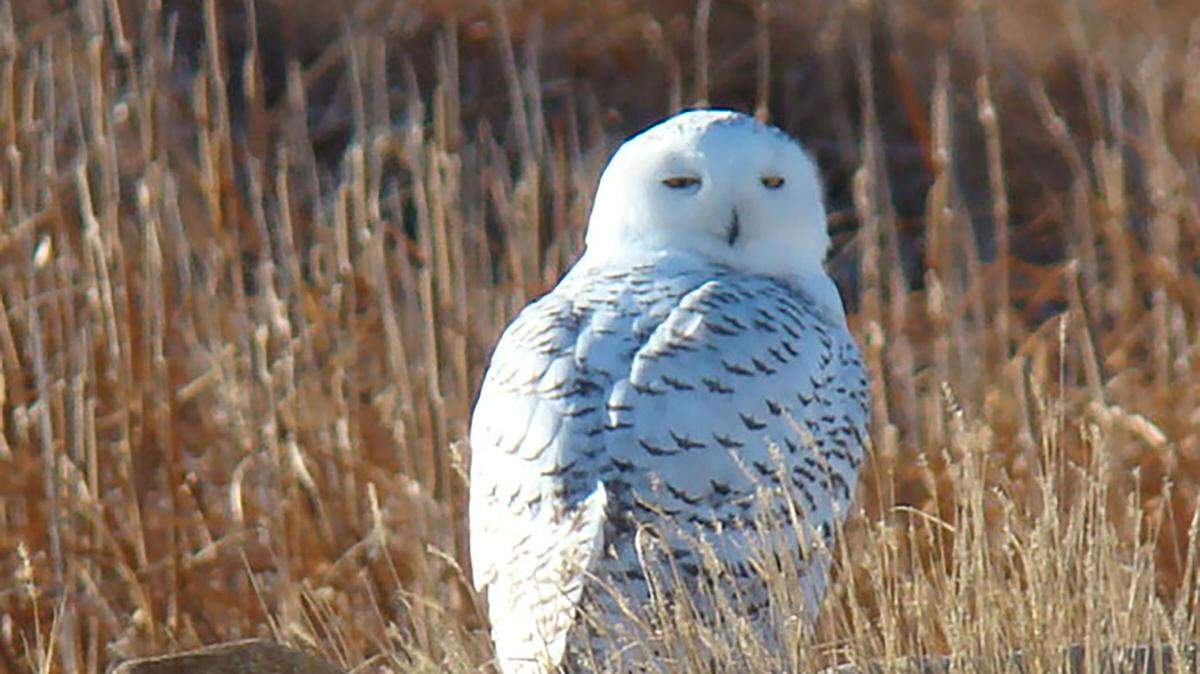
While Pennsylvania doesn’t seem to have produced any sightings yet this season (late fall 2021 into winter 2021-22), reports of snowy owls have started popping up not too far north of the state and one of the big white birds has been sighted as far south as Richmond, Virginia.
“Snowy owls are returning to northeastern areas of the United States and southeastern Canada, from the Great Lakes to Long Island, and it’s expected to be a good year for snowy owl sightings in that region throughout the winter according to Project Snowstorm,” noted Scott Weidensaul. He is the co-founder of Project SNOWStorm, a snowy owl-tracking organization run in part through the Millersburg-based Ned Smith Center of Nature and Art.
Recently in the organization’s blog, he wrote, “During the past week, snowy owls have been reported as far south as near Richmond, Virginia and St. Louis, Missouri. It’s always exciting to see a snowy owl, and many of us mark the beginning of winter by the sighting of our first snowy.”
The snowy owl is native to the tundra of the Arctic. Most years see only a dozen or so of the big, white birds showing up as far south as Pennsylvania, with the first reports usually emerging in January.
But, in an irruption year, strong breeding results and food shortages in the north force larger numbers of birds to move south in winter.
In winter 2013-14, which is remembered as the “mega-irruption” that prompted Weidensaul and others to launch Project SNOWstorm, about 400 snowies showed up in Pennsylvania, an epic increase over the 10 or so that visit the state most winters.
“The irruption of 2013-14 was historically huge, the biggest invasion since at least 1926-27, and possibly as far back as the 1890s,” he explained. “It’s a little hard to be precise, because no one was trying to accurately count owls back in those days, but the ‘13-14 invasion was clearly orders of magnitude bigger than anything we’d seen for decades.
“It was the result of historically high peaks in the lemming cycle in northern Quebec, exceptional high productivity among nesting owls, which likely gathered there from a wide area of the Canadian Arctic, and possibly weather or snow cover conditions that prompted many of the young birds to move south.”
Any of the owls that survive the many manmade pitfalls – motor vehicles, fences, energy-burning pressure from throngs pushing for a close-up look at the birds, and more – while in the south will return to the north to join the breeding population in the spring.
While the birds are with us, there are several things we can do to be better hosts, according to Project SNOWstorm.
“Snowy owls, coming down from the Arctic, can be remarkably approachable, especially young birds early in the winter. But because they are often so naive around humans, it’s easy for birders, photographers and the general public to approach them too closely.
“What is an exciting encounter for people can be continual, and at times even dangerous, harassment for the owl. The bird may be chased into traffic and a flushed owl is liable to be attacked by another raptor like an eagle or mobbed by crows.
“Our tracking data confirms that these owls are primarily nocturnal, and when undisturbed by humans they rarely move much in the daytime. An owl flying from spot to spot in daylight usually isn’t ‘just moving around’ like a lot of people assume, but responding to pressure and harassment, even if it’s not immediately evident to observers.
“Just because the owl may tolerate a fairly close approach doesn’t mean you should push the envelope. If the owl is visibly reacting to your presence — fidgeting, repeatedly staring at you, head-bobbing or changing position — you’re too close and need to back off immediately.
“Needless to say, if you’ve flushed the owl you were much too close and should reconsider your behavior next time.
“A vehicle makes a terrific blind, so stay in your car whenever possible. Use a spotting scope and a telephoto lens and be content to watch from a safe distance.
“Be patient, and if you can time your visit late in the day, when the owl typically will become more active, it may approach you, especially if you’re positioned near a favorite perch.”
In addition, the project notes, “many landowners who host snowy owls report problems with visitors ignoring common courtesy and sometimes even obvious ‘No Trespassing’ signs to get close to owls. Do not cross private property without permission.”
One of the worst behaviors sometimes exhibited by owl observers is feeding the bird. The offending human usually does it to attract the bird for a close-up photo, but sometimes out of a misplaced belief that the owl is starving.
Project SNOWstorm explains, “Because they have little innate fear of humans, snowy owls can very quickly become very habituated to people tossing them mice. Once they associate people with food, the owls are drawn into dangerous situations, such as swooping close to roads. They may also approach people who may harm them, either from fear and ignorance, or from malice.”
Founded in 2013, Project SNOWstorm has grown into one of the world’s largest collaborative research projects focusing on snowy owls, staffed by a largely volunteer team of scientists, banders and wildlife veterinarians. It is funded entirely by tax-deductible donations from the public. For more information, visit the website.
The snowy owl is one of the largest species of owl and the only owl with largely white plumage. The worldwide population is estimated at less than 100,000.
This story was originally published December 13, 2021 at 9:58 AM.