
Pa. State System overhauls university funding formula and leaves the Legislature with a choice
Pennsylvania’s state university system Wednesday overhauled the way hundreds of millions of public dollars are allocated each year to campuses in a bid to better promote student success, including that of poorer students and underrepresented minorities.
By design or otherwise, the State System of Higher Education board of governors did something else by its unanimous vote: It laid down a challenge to the state Legislature, whose members are nearing a historic decision about university aid in next year’s state budget.
Without the system’s asked-for jump in its appropriation, said one board member, the formula’s math “doesn’t work.”
The formula was developed over months to encourage universities to bolster student success generally and reach underrepresented households earning $75,000 or less. It is predicated on the system’s request for a near-historic increase in its state appropriation — from the current $477 million to $552 million, plus additional funds including $200 million targeted to direct student aid.
At the current appropriation level, the formula will not work, said state Rep. Tim Briggs, D-Montgomery, a system board member.
“It’s not sustainable,” he said before Wednesday’s vote. “We’re moving deck chairs on the Titanic, as they say, if we don’t address the appropriateness of the allocation.”
Chancellor Daniel Greenstein agreed that no formula will succeed long term without a major increase from the $477 million funding level, an amount near the bottom among states in per-capita support — 48th according to the latest tally by the State Higher Education Executive Officers Association.
The allocation formula, as approved, distributes 25% of the appropriation to base operating needs of the 14 campuses regardless of enrollment. The lion’s share, though, is based on a combination of full-time enrollment plus incentives for serving groups targeted by the board for attention, including poor households, first-generation students and underrepresented minorities.
In recent days, there have been signs that the system request is resonating with the Legislature. State House Education Committee Chairman Curt Sonney, R-Erie, penned an op-ed in which he said he strongly supports the full requested amount as necessary for Pennsylvania and said the system has done what was asked of it.
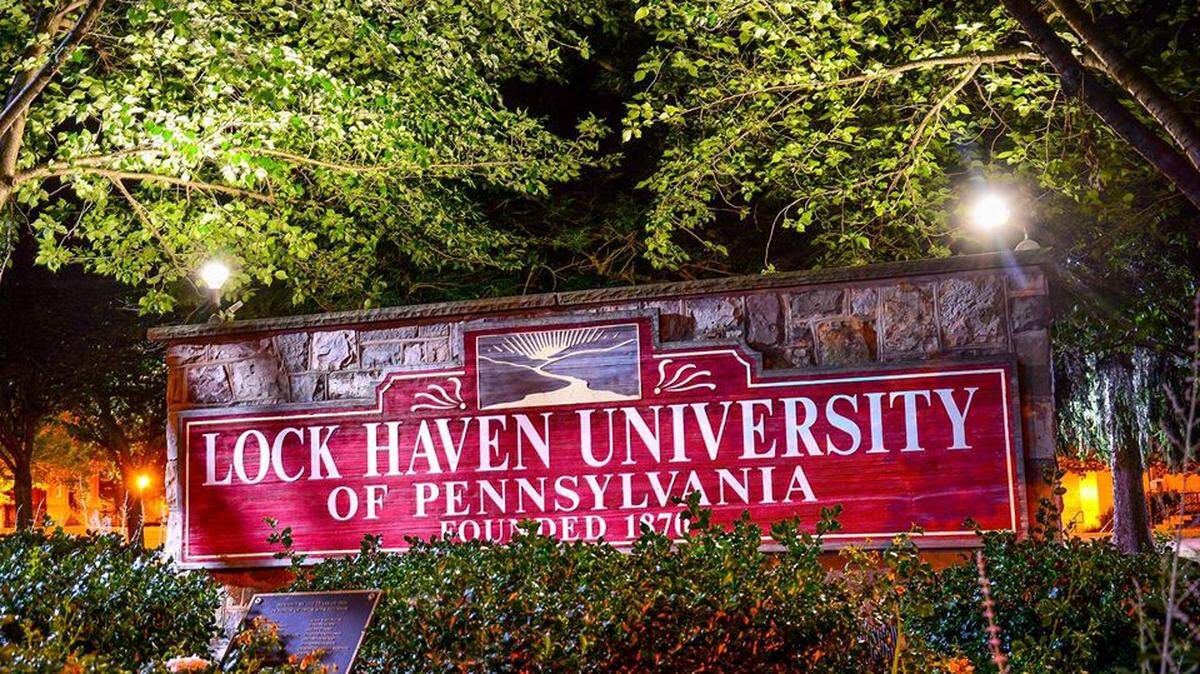
It has merged six of its 14 campuses, including California, Clarion and Edinboro in the west and Bloomsburg, Lock Haven and Mansfield in the northeast, paring the workforce and cutting expenses in a controversial, yearslong process.
“We depend on the state-owned universities so local students can stay and work here. They are our health care workers, engineers, teachers, small business owners and many others,” he wrote. “Going to a state system university lets students get an affordable college degree closer to home and build rewarding lives near their families while enhancing our local workforce.”
The State System has frozen tuition for four consecutive years at $7,716, but other fees including room and board over the years have driven up the total average cost above $22,000 — due to spending decisions and other issues related to how Pennsylvania funds its universities.
It costs more to feed and house students on some campuses than to educate them, in part due to massive dorm and dining projects the schools undertook to capture an enrollment boom that peaked a decade ago.
Across the system, almost 1 in 5 who enroll are from underrepresented groups, which the State System defines as American Indian, Alaska native, Black or African American, Hispanic or those from two or more races, according to data last year.
But underrepresented minorities, first-generation students and the poor are part of a double-digit gap in graduation and persistence rates. About 44% of minorities graduate in six years, versus 65% for white students.
Michael Driscoll, president of Indiana University of Pennsylvania, who was deeply involved in the formula revisions, said it provides for base financial needs on the campuses, but also does more.
“There is an incentive, or recognition, of additional costs to encourage us all to do the right thing for students from underrepresented households,” he said.
Schools receive additional funds if they are adequately serving students needy enough to be eligible for federal Pell Grants and under-represented minorities.
Kenneth Mash, president of the 5,000-member Association of Pennsylvania State College and University Faculties, told the board that as in most things “the devil is in the details.”
He added, “I know the formula was shared with some of my colleagues, I’m not sure that they left confident that they understood all of the details and the impact that the new formula will have on specific universities and how those universities will be affected in the future should there be changes to the state allocation.”
About 89,000 students attend a State System campus. In addition to those being merged in the west and northeast, they include IUP, Slippery Rock, Cheyney, Kutztown, Millersville, Shippensburg, East Stroudsburg and West Chester universities.
This story was originally published June 15, 2022 at 8:28 AM.