
Sen. Bob Casey bill would phase out subminimum wage for workers with disabilities
Roughly 120,000 Americans with disabilities are earning less than the minimum wage, and half of those are earning less than $3.50 an hour, according to a report from the Government Accountability Office. Not only is this legal, but the employers received a certificate from the government to do it.
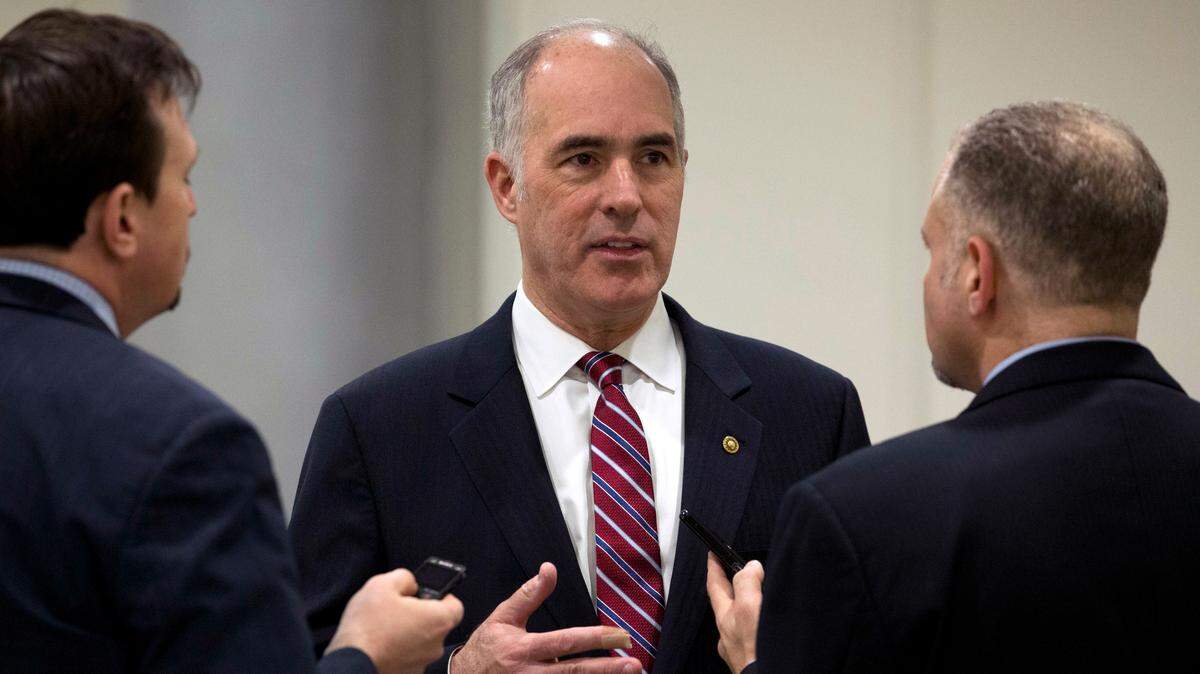
Paying a subminimum wage for people with disabilities has been legal since 1938, but has become less common in recent years as states have tried to ban or limit the practice. Now, Senator Bob Casey, D-PA, has reintroduced a bill to end the subminimum wage nationwide.
Employers can pay their disabled workers a subminimum wage under the Fair Labor Standards Act if they obtain a 14(c) certificate from the federal government. The certificate allows a business to pay employees less than minimum wage if their productivity is less than a normal worker’s.
Forty-five employers in Pennsylvania have a certificate to pay their workers less than minimum wage, according to the Department of Labor, and these businesses have 3,567 employees.
Most employers that pay a subminimum wage hire people with intellectual disabilities to work in “sheltered workshops,” doing menial tasks under heavy supervision. Advocates for sheltered workshops argue that their employees couldn’t be hired anywhere that pays minimum wage.
Steve Pennington, director of the Pennsylvania Client Assistance Program, said sheltered workshops are not just underpaying their employees but also prevent them from developing skills to work elsewhere.
In a workshop, employees are doing the same repetitive, menial tasks every day — often things like sorting hangers, counting screws, stuffing envelopes or packaging products — and don’t get to interact with non-disabled people, Pennington said.
The idea that a competitive, integrated workplace is better for people’s development than a sheltered workshop has shaped Pennsylvania’s policy in recent years, Pennington said. The number of Pennsylvanians earning a subminimum wage has declined by almost 10,000 people since 2014.
Under Casey’s bill, states would receive funding and have a 5-year transition period to get that number down to zero.
BARC Developmental Services, a business with sheltered workshops in Quakertown and Warminster, would be forced out of business if Casey’s bill passed, according to its executive director Mary Sautter.
Like most sheltered workshops, BARC contracts with businesses to fill menial tasks like sorting or packaging objects, and it wouldn’t be able to get those contracts if it had to pay its workers a minimum wage, Sautter said. She’s contacted Casey’s office to ask him to withdraw his bill.
Skills of Central PA, a Centre County-based group that runs four sheltered workshops with 150 employees, would likely lose its contracts if it had to pay minimum wage, according to vice president Mary Kay Fultz. The businesses would probably go back to doing the work themselves, Fultz said, and she doubted that they would be willing to hire Skills’ employees.
Unlike BARC, Fultz said Skills would not close if it lost its contracts, but would transition to finding activities and volunteer work for its employees.
About 20 of BARC’s 129 subminimum wage employees earn somewhere from $3.50 to $8 per hour, according to Scott Kulp, BARC’s director of vocational and developmental programs. BARC also has employees earning just $10 per week, based on their productivity.
The top three executives at BARC, including Sautter and Kulp, all made more than $100,000 in 2020, according to tax documents.
Wages at Skills are also based on productivity — how many pieces of work an employee can complete — and the average wage last year was $5.27 per hour, Fultz said.
“We strive to help each of the folks that we serve become as productive as they possibly can, but realizing that, with very few exceptions, they’re not going to be able to work anywhere near what’s considered standard for individuals who don’t have a disability,” Kulp said.
BARC and Skills have programs to match people with intellectual disabilities with minimum wage jobs in the community, but those workplaces are usually not willing to schedule employees with intellectual disabilities for more than 15 hours per week, Sautter said.
Fultz said Skills’ former employees have also struggled to get hours when they find a minimum wage job. Often, Sautter said, these people end up coming back to the workshop for the rest of the week so they can work full time.
If not for BARC’s subminimum wage jobs, its employees “may be sitting at home unengaged, and potentially a family member has to now quit their job or work less because they have to care for that person,” Sautter argued.
But Pennington said workshop programs like BARC’s are just a short-term solution to the problems of people with intellectual disabilities and their families, and they don’t develop skills that they would in a minimum wage job with an integrated workforce.
“What’s more important,” Pennington said, “Providing daycare and, within that, the opportunity to make $1 an hour sorting hangers or putting screws in boxes? Or the opportunity to develop real-life skills and becoming independent?”
Casey has been introducing a bill to end the minimum wage for years, usually with bipartisan cosponsors in both houses of Congress, but the bill has never gained traction.
Even if the bill doesn’t pass, the number of people with disabilities making subminimum wage has been declining for years, and will likely continue to decline. From 2010 to 2019, the number of employers paying subminimum wages to people with disabilities dropped from 3,100 to less than 1,600, the GAO report found.
Last year, the Department of Education created a grant to 14 states to help them phase out the subminimum wage, awarding Pennsylvania $13 million over five years. Pennington, who serves on the advisory committee for the grant in Pennsylvania, said the Office of Vocational Rehabilitation will begin implementing the grant in the next fiscal year.
“It’s easy to look at a person with an intellectual disability and say, ‘That person can’t do anything,’” Pennington said. “But that’s more opinion than fact.”